Dakota Hogback, Geological ridge in Front Range, United States
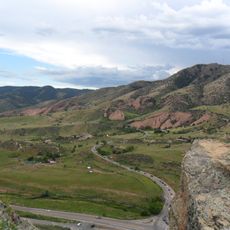
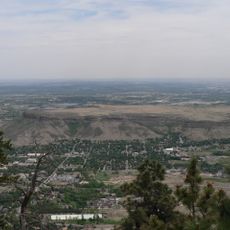
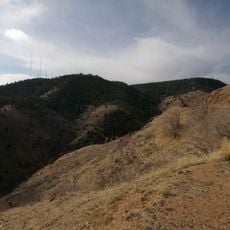
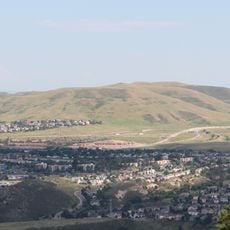
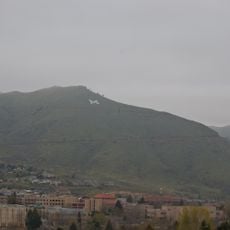
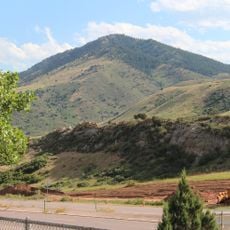
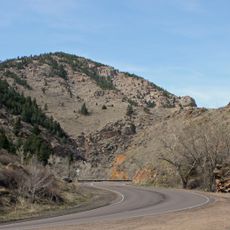
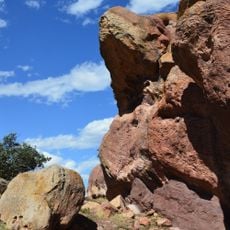
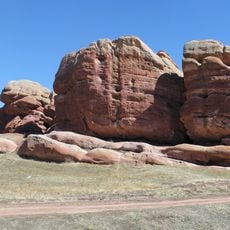
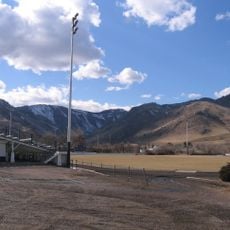
Dakota Hogback is a prominent sandstone ridge that runs along the eastern front of the Rocky Mountains, displaying dramatically tilted rock layers. The formation reveals colorful geological strata that showcase the mountain-building processes that shaped this region.
The formation developed around 50 million years ago during the Laramide mountain-building event, when tectonic forces lifted and tilted previously horizontal rock layers. These forces created the distinctive angle that remains visible along the ridge today.
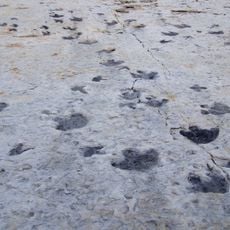
The Dakota Formation contains numerous dinosaur footprints from the Jurassic Period, including Diplodocus tracks discovered near Denver in the 1980s.
The ridge can be viewed from multiple overlooks along Interstate 70 near Morrison, Colorado, which provides clear visibility of the rock layers. Plan for several stops to observe the geological features from different angles and distances for best views.
The sandstone ridge maintains a remarkably consistent tilt angle throughout its length, creating an unusually uniform edge line that runs without interruption. This regularity in geological formation catches the attention of visitors observing the ridge from various vantage points.
The community of curious travelers
AroundUs brings together thousands of curated places, local tips, and hidden gems, enriched daily by 60,000 contributors worldwide.