Touchet Formation, Geological formation in south-central Washington, United States.
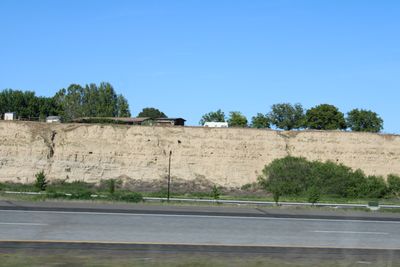
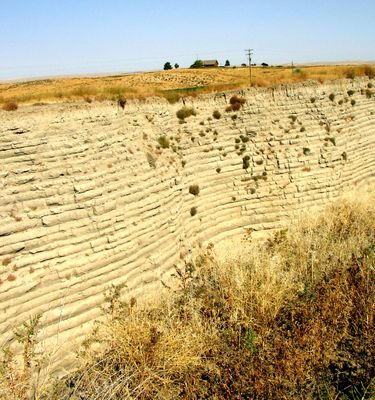
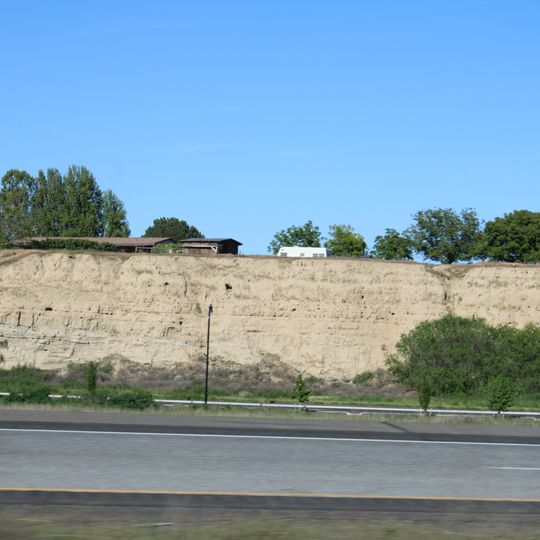
The Touchet Formation is a set of well-bedded sands and silts overlying Columbia River Basalt in south-central Washington and north-central Oregon. It comprises 40 to 62 rhythmites, each graded from coarser grains at the base to finer at the top. Thickness reaches 330 feet (100 m) at lower elevations and thins to a few layers at 1,150 feet (350 m).
Richard Foster Flint first documented this formation in 1938 at the confluence of Touchet River and Walla Walla River. The layers formed through repeated flooding events that occurred thousands of years ago.
The name comes from Touchet, the census-designated place in Walla Walla County, itself named for the Touchet River. The beds are the reference record used since the 1920s to argue for repeated Missoula Floods, and geologists still read the Burlingame Canyon exposure west of Walla Walla, where R. B. Waitt counted at least 41 layers in 1980.
The formation can be viewed at multiple locations including highway cuts and river valley areas west of Walla Walla. Visitors should prepare for uneven terrain and bring appropriate clothing for outdoor conditions.
The layers contain between 40 and 62 separate rhythmites, each marking an individual flood event from an ancient glacial lake. Each thin band tells the story of a single prehistoric flood episode.
The community of curious travelers
AroundUs brings together thousands of curated places, local tips, and hidden gems, enriched daily by 94,189 contributors worldwide.