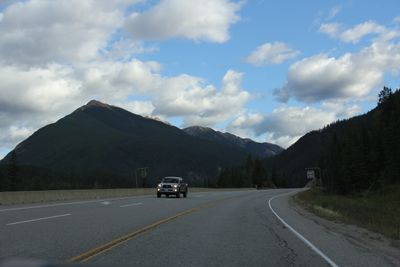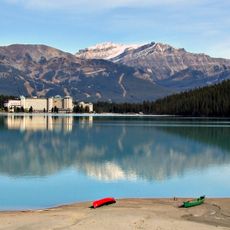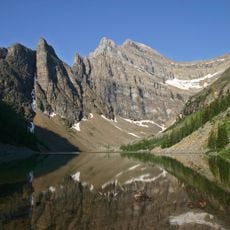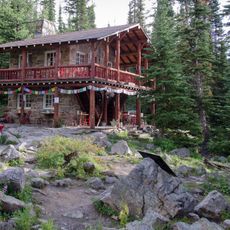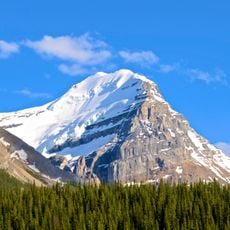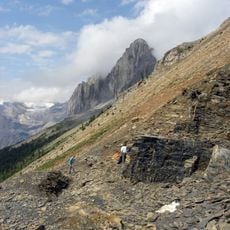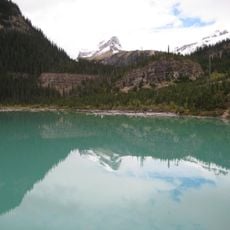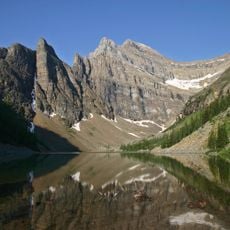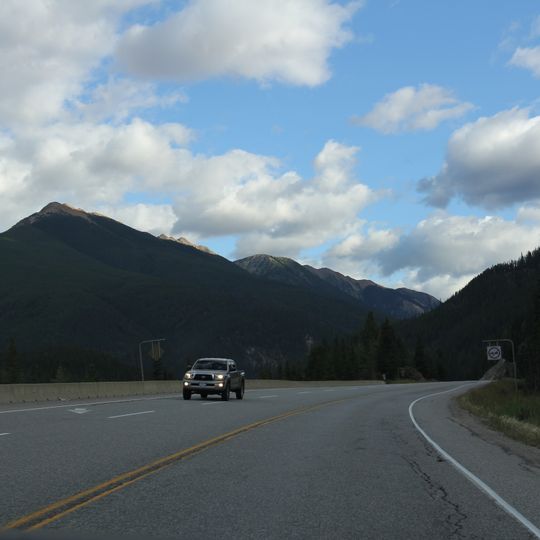
Kicking Horse Pass, Mountain pass in Banff National Park and Columbia-Shuswap Regional District, Canada.
Kicking Horse Pass is a mountain crossing in the Canadian Rockies that connects Alberta and British Columbia at an elevation of 1627 meters. Both the Trans-Canada Highway and the Canadian Pacific Railway traverse this pass, making it a major transportation corridor linking the two provinces.
The Canadian Pacific Railway selected this pass in the 1880s as its main route through the Rocky Mountains to connect eastern and western Canada. This choice became pivotal in shaping the nation's transportation network and economic development.
The pass and the Kicking Horse River take their name from James Hector, the expedition's geologist and surgeon, who was kicked in the chest by his horse on 31 August 1858 while recapturing it. His Stoney Nakoda guide Hector Nimrod had led him to the pass. The name was first applied to the river, then to the pass.
The pass is accessible year-round via the Trans-Canada Highway, though winter conditions can make driving challenging. Visitors should check current road conditions and prepare for rapidly changing weather at this elevation.
Two spiral tunnels were built in the early 1900s to reduce the steep railway grade and make train operation safer along this route. These tunnels remain engineering achievements that visitors traveling by rail can still observe today.
The community of curious travelers
AroundUs brings together thousands of curated places, local tips, and hidden gems, enriched daily by 94,048 contributors worldwide.