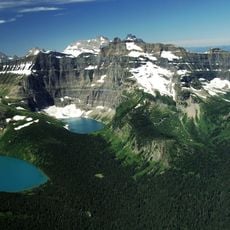
Waterton-Glacier International Peace Park, International Peace Park in Montana and Alberta, United States and Canada.
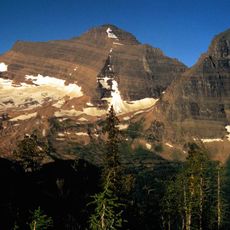
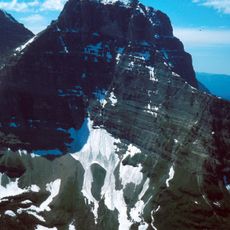
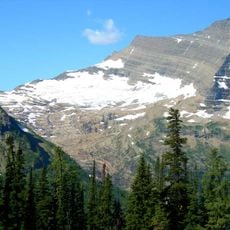
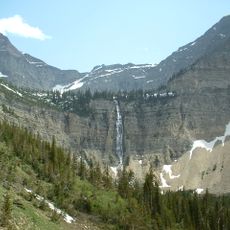
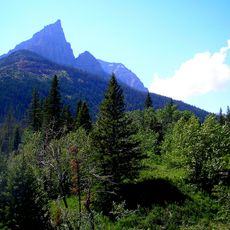
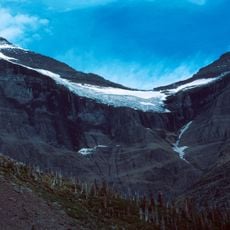
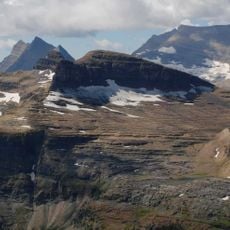
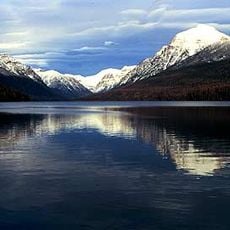
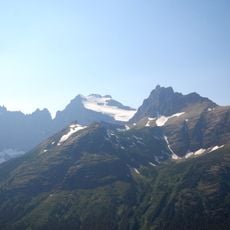
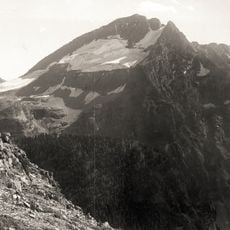
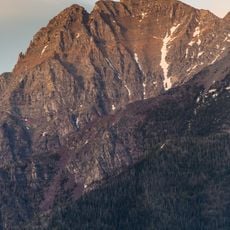
Waterton-Glacier International Peace Park joins Waterton Lakes National Park in Alberta and Glacier National Park in Montana across roughly 4,577 square kilometres of the Rocky Mountains. A thin brown line on the map marks the Canada-United States border, with yellow lines tracing both park edges. Dark blue elongated lakes fill the valleys, including one long lake running north-south near the centre, below ridges and snow-streaked peaks.
The two parks were established in 1932 as the world's first International Peace Park, symbolizing cooperation between the United States and Canada. This idea grew from a desire to manage the landscape together across the international border.
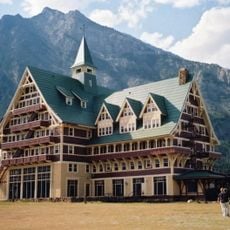
The park's name comes from its two halves: Waterton Lakes National Park in Alberta and Glacier National Park in Montana. The Rotary Clubs of Cardston, Alberta, and Montana met at the Prince of Wales Hotel on July 4–5, 1931, and drafted the resolution that led both governments to create the park. The Canadian dedication was delayed by the Great Depression until July 1936, when Lieutenant Governor William L. Walsh dedicated a cairn to ranger Kootenay Brown.
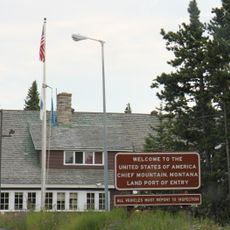
Visitors need separate entrance permits for each park section, which can be purchased at the gate or in advance. The Chief Mountain Border Crossing connects the American and Canadian territories and is the main route between the two sides.
The territory hosts over 300 animal species, including grizzly bears, wolves, and mountain goats, distributed across three separate watershed systems. This arrangement means that watching wildlife here offers views of animals in genuinely wild settings without built structures interrupting the sight.
The community of curious travelers
AroundUs brings together thousands of curated places, local tips, and hidden gems, enriched daily by 94,452 contributors worldwide.