Fitzpatrick Wilderness, Protected wilderness area in Fremont County, Wyoming.
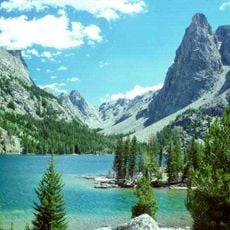
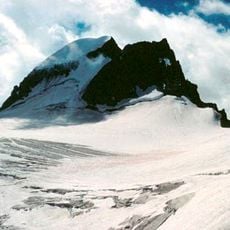
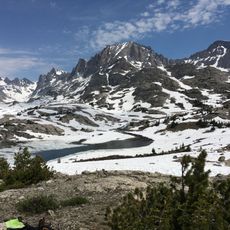
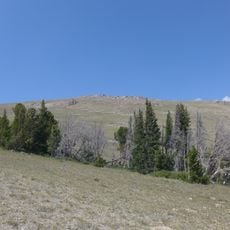
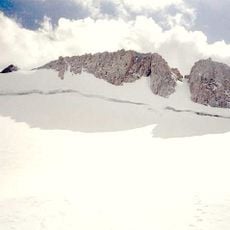
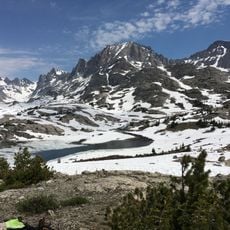
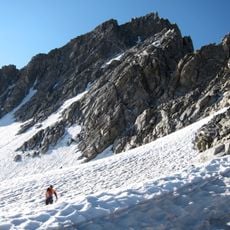
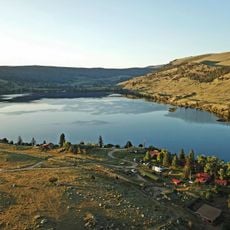
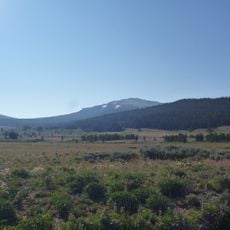
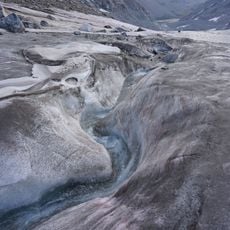
Fitzpatrick Wilderness is a protected area of about 800 km² in Shoshone National Forest, on the eastern flank of the Wind River Range in Wyoming. It has the rough shape of an inverted triangle, bounded east by the Wind River Indian Reservation and west by the continental divide. Its eastern side is more broken than the west, holding 44 small glaciers, 60 lakes and many streams feeding the Wind River. Gannett Peak (4,207 m) and Downs Mountain (4,096 m) lie on its boundary.
The area was first protected as the Glacier Primitive Area and was redesignated a wilderness in 1976. It is named after Thomas Fitzpatrick, a trapper and explorer who was among the first white men to explore parts of the Rocky Mountains in the 1820s; in 1842 he served as a scout for John Charles Fremont, who made the first surveys of key points of the range.
The wilderness takes its name from Thomas Fitzpatrick, a trapper and explorer who was among the first white men to travel parts of the Rocky Mountains in the 1820s and who served as a scout for John Charles Frémont in 1842. Its eastern boundary runs exactly north-south along the Wind River Reservation, territory of the Eastern Shoshone and Arapaho.
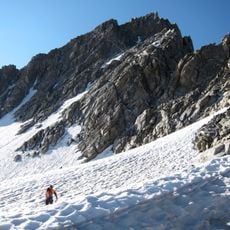
No road enters or crosses the wilderness; trails, including the usual route to Gannett Peak, are only rudimentarily maintained. Vehicles of any kind, mountain bikes included, are prohibited. Trekking and small-group horseback riding are allowed, as are fishing and hunting under the applicable regulations.
The wilderness takes its name from Thomas Fitzpatrick, a trapper who was among the first white explorers of parts of the Rocky Mountains in the 1820s and served as a scout for John Charles Fremont in 1842. Its eastern boundary runs exactly north to south, where the Wind River Reservation of the Eastern Shoshone and Arapaho begins.
The community of curious travelers
AroundUs brings together thousands of curated places, local tips, and hidden gems, enriched daily by 94,337 contributors worldwide.