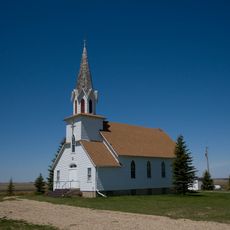
Williston Basin, Structural basin in Saskatchewan, North Dakota, and Montana.
The Williston Basin is a structural depression underlying parts of Saskatchewan, North Dakota, and Montana. It holds major deposits of oil, natural gas, and potash within its layered sediments.
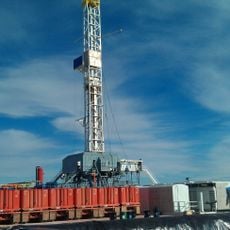
Oil was first discovered in 1951 at the Nesson Anticline by Amerada Corporation. This discovery prompted rapid development, with most potential oil areas leased within a few years.
The geological formations draw researchers and professionals from multiple institutions who study the basin's sedimentary patterns and resource distribution patterns.
The region is documented through thousands of wells that provide extensive geological data to research institutions. Scholars can examine the layers and rock formations using drill core samples and seismic surveys.
Beneath the basin lies the Trans-Hudson Orogenic Belt, whose deep structures formed around two billion years ago. These ancient geological foundations created the conditions that allowed this large depression and its resource concentrations to develop.
The community of curious travelers
AroundUs brings together thousands of curated places, local tips, and hidden gems, enriched daily by 92,641 contributors worldwide.