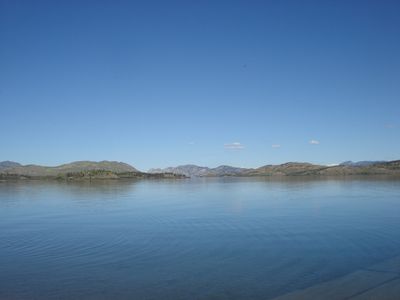
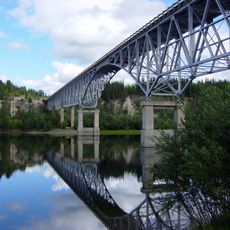
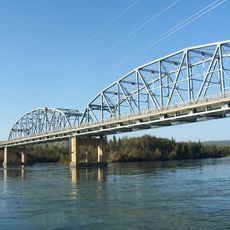
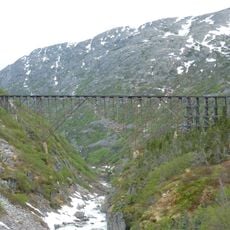
Lake Laberge, Glacial lake in Whitehorse region, Canada
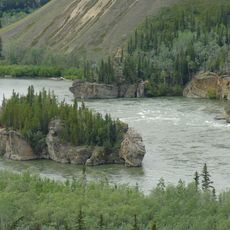
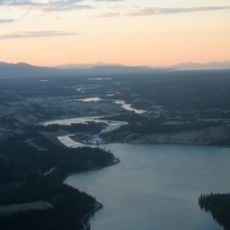
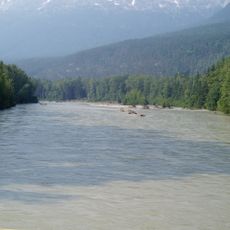
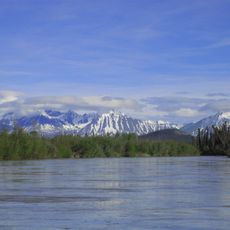
Lake Laberge is a widening of the Yukon River about 50 kilometres long and two to five kilometres wide, with an average depth of 54 metres and a maximum of 146 metres. Its surface covers 201 km², its water stays very cold, and its weather is often harsh and suddenly variable.
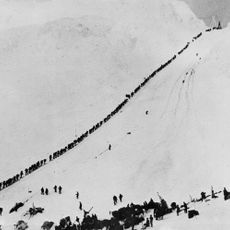
The lake lies in the traditional territory of the Ta'an Kwach'an First Nation, a Southern Tutchone group whose name derives from it. In 1867 Michel LaBerge, a French-Canadian from Chateauguay, Quebec, passed through en route from Fort Yukon to Fort Selkirk while scouting a route for the Collins Overland Telegraph; the lake was later named for him. During the Klondike Gold Rush of the 1890s, prospectors crossed it on their way down the Yukon River to Dawson City.
The lake lies in the traditional territory of the Ta'an Kwach'an First Nation, a Southern Tutchone group whose name derives from it. Southern Tutchone called it Tàa'an Män, the Tagish Kluk-tas-si and the Tlingit Tahini-wud. Villages stood at Deep Creek and Jackfish Bay, and people gathered at Horse Creek in October and November to catch whitefish and trade with Chilkat visitors from the coast.
The Klondike Highway from Whitehorse passes the southern end of the lake before turning north-northwest, so the lake is reached by road from the city. The lake sits at 628 m elevation, and its weather is often harsh and suddenly variable, with water that is always very cold. A sign posted in 1999 at the lake's camping area warned against eating burbot livers and against lake trout more than twice a month per person, due to toxaphene contamination.
The wreck of the A.J. Goddard from 1901 rests at the bottom with intact items like a phonograph and records still inside. The ship was not discovered until 2009, making it a rare window into early settlement life.
The community of curious travelers
AroundUs brings together thousands of curated places, local tips, and hidden gems, enriched daily by 92,653 contributors worldwide.