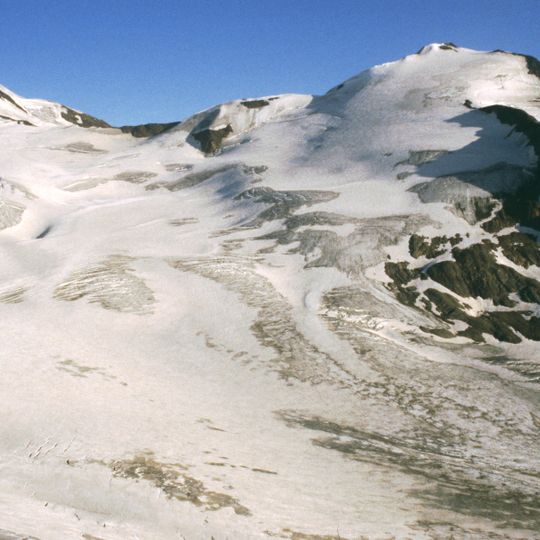
Langtauferer Spitze, Mountain peak in Ötztal Alps, Austria and Italy
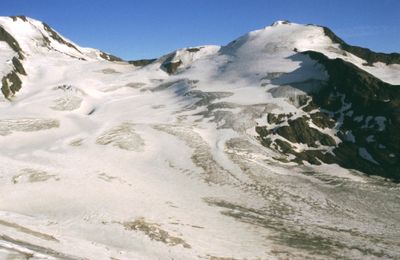
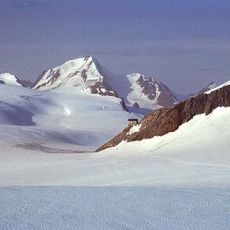
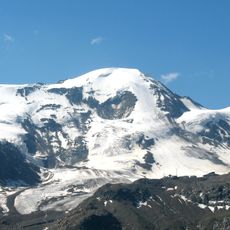
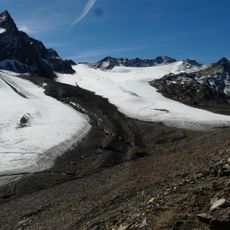
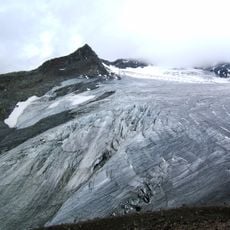
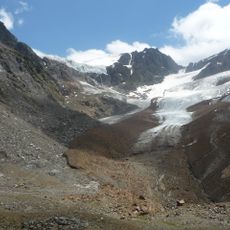
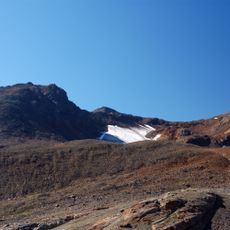
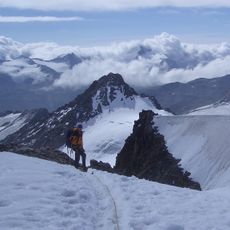
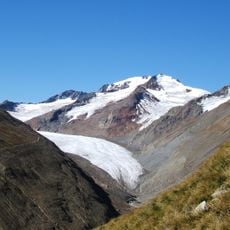
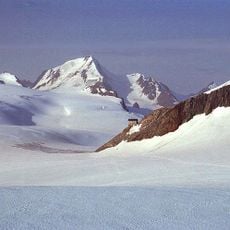
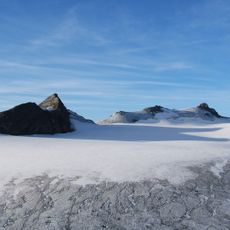
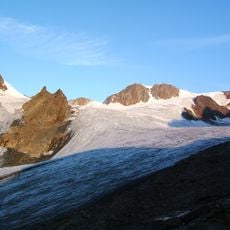
Langtauferer Spitze is a 3,528 m summit in the Weisskamm group of the Ötztal Alps, on the border between Tyrol, Austria, and South Tyrol, Italy. Its flanks fall away as steep glacier slopes on every side: the Langtauferer Ferner to the east, the upper Hintereisferner to the south and the Langtauferer-Joch-Ferner to the northwest. A snow ridge links it to the Weißkugel, 1.5 km to the southwest, with the Weißkugeljoch as the lowest notch between them.
The sources record no first ascent date for the Langtauferer Spitze, so the 1865 claim is unsupported. What they document is the mountain's position on the border between Tyrol in Austria and South Tyrol in Italy, and its setting in the Weisskamm group of the Ötztal Alps. Its climbing history is tied to the surrounding glacier terrain: every route to the 3,528-metre summit requires ice experience.
The mountain carries two names reflecting the region's languages: Punta Vallelunga in Italian and Langtauferer Spitze in German. This naming reflects how the Alps form a cultural boundary between Italian and Austrian communities living on either side.
The easiest ascent starts at the Langtauferer Joch northeast of the summit, reached from the Hochjochhospiz in the Rofental, the Weißkugelhütte in the Langtauferer Tal or the Brandenburger Haus. From the Joch the route climbs the rocky north ridge to a firn shoulder, crosses south over the Langtauferer-Joch-Ferner to the east ridge and follows its firn crest to the top. Allow about four hours from the Weißkugelhütte or Brandenburger Haus and five from the Hochjochhospiz; all routes need ice experience.
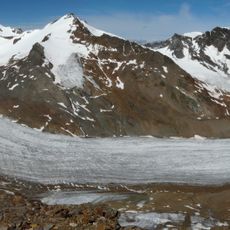
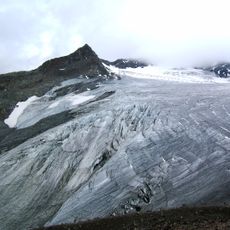
From the summit, visitors can see the Hintereisferner glacier system, one of the largest glacial areas in the region. The various technical climbing routes traverse varied alpine terrain with different levels of difficulty.
The community of curious travelers
AroundUs brings together thousands of curated places, local tips, and hidden gems, enriched daily by 93,748 contributors worldwide.