Yusif ibn Kuseyir Mausoleum, Medieval mausoleum in Nakhchivan, Azerbaijan.
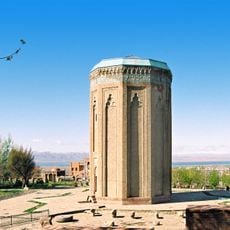
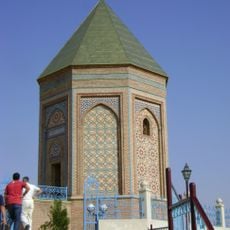
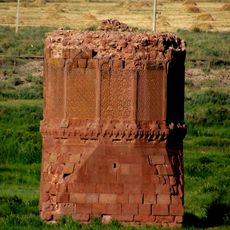
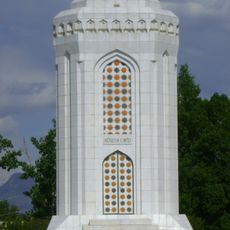
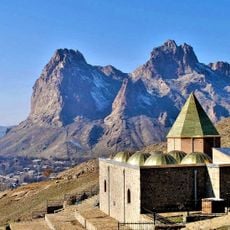
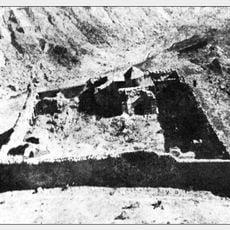
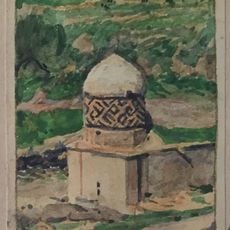
Yusif ibn Kuseyir Mausoleum is an octagonal tower of baked brick with a pyramid-shaped stone tent roof, its two levels both octagonal in plan; the crypt below ground makes it look single-storeyed from outside. The west face holds the arched entrance and its inscription, while the north face has a second doorway set in a deep niche. The interior is undecorated; the exterior is covered in dense geometric brickwork, and a Kufic inscription band runs between the walls and the pyramid roof.
Built in 1161–1162, the mausoleum is attributed to the architect Ajami ibn Abubakr Nakhchivani, whose name is inscribed on the first face left of the entrance. Its construction inscription, dated Shawwal 557 AH (1162), names the buried man as Yusif Küseyir oğlu, a sheikh and religious leader. The building belongs to the Nakhchivan-Maragha school, and its pyramid roof has survived more than 800 years.
The building displays Islamic religious texts carved into its brick walls using Arabic Kufic script. This integration of sacred writing into the structure itself reflects how faith and craftsmanship were united in medieval sacred architecture.
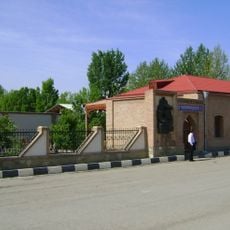
The mausoleum stands in Nakhchivan, and its exterior is fully visible from outside; the inner chamber is reached through a door on the north face, set deep in a niche beneath a large inscription panel. The west face holds the main entrance with the construction inscription. Walk around all eight faces to see the varied brick ornament and the Kufic frieze between body and pyramid roof.
One of the eight sides of the building is distinctly different from the others, featuring the entrance door and its own set of geometric brick patterns. This asymmetry in an otherwise symmetrical design makes the structure architecturally intriguing.
The community of curious travelers
AroundUs brings together thousands of curated places, local tips, and hidden gems, enriched daily by 94,311 contributors worldwide.