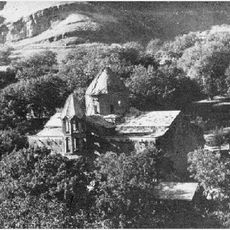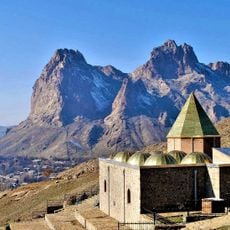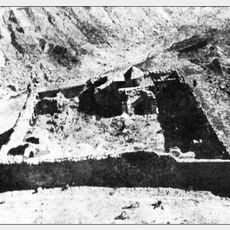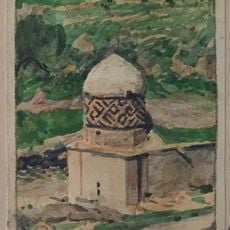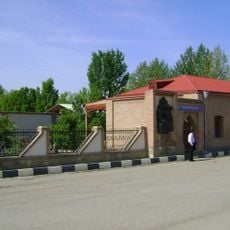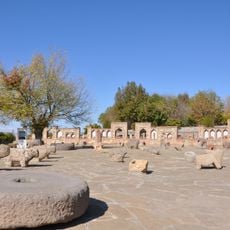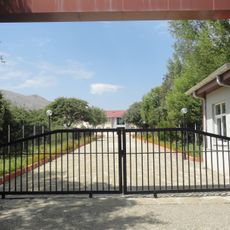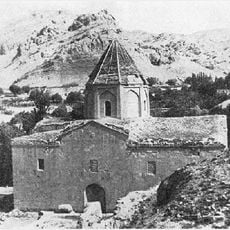
Gulustan Mausoleum, Medieval mausoleum in Julfa District, Azerbaijan.
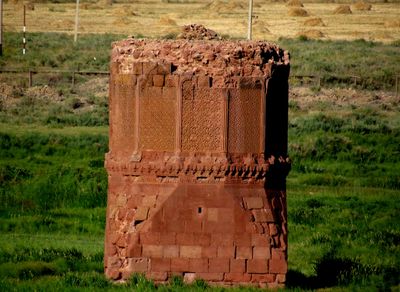
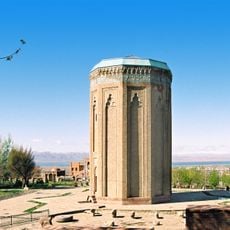
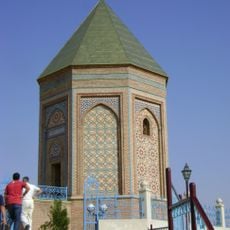
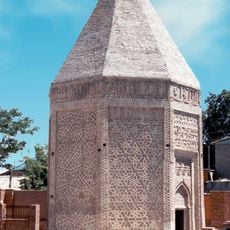
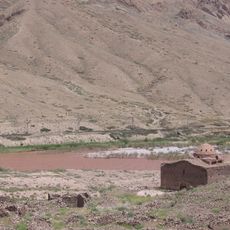
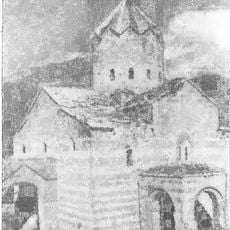
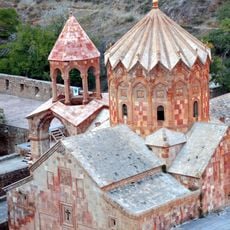
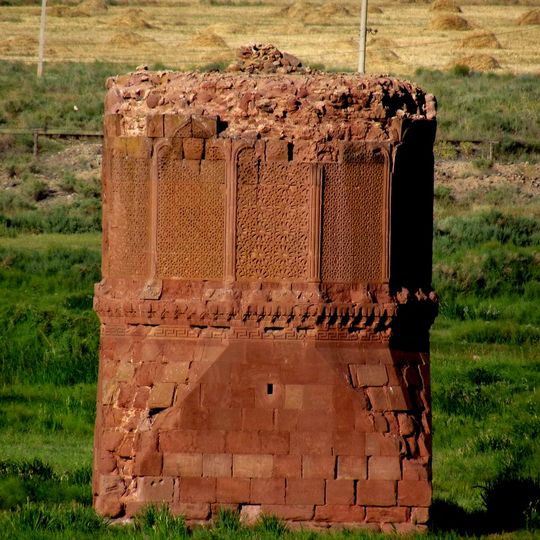
Gulustan Mausoleum is a twelve-sided burial structure built from red sandstone with triangular feather-like ornaments covering its surfaces. The building rests on a raised base, and entry to the underground chamber is through an opening in the northern wall, where small window openings allow some natural light inside.
Built around 1300, this mausoleum marks an important moment in medieval Azerbaijani architecture and construction methods. Historical records refer to it by an earlier name, Kesik Gunbez, showing how the site gained new significance over time.
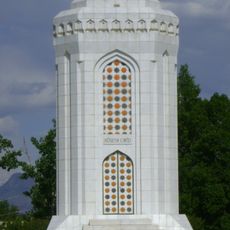
The geometric patterns carved into the red sandstone show how Seljuk and Azerbaijani building traditions came together in one structure. The twelve-sided shape and its ornamental details reflect artistic practices that were common across the region during medieval times.
The mausoleum is fairly straightforward to explore, though the underground chamber is dimly lit due to its limited window openings. It is best to visit during daylight hours to see the interior details and architectural features more clearly.
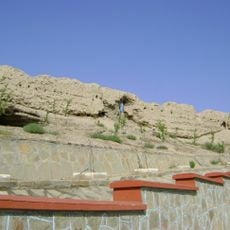
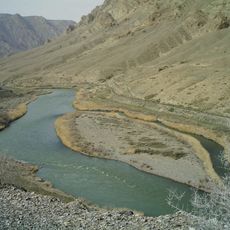
The structure sits in a green hollow near the Aras River, occupying a spot that was once used as a rose garden. The name itself translates to heavenly garden, a reference to the natural beauty that has long characterized this corner of the landscape.
The community of curious travelers
AroundUs brings together thousands of curated places, local tips, and hidden gems, enriched daily by 91,637 contributors worldwide.