Armenian Monastic Ensembles of Iran, Religious heritage complexes in East and West Azerbaijan provinces, Iran
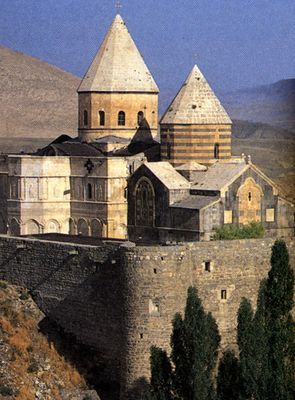
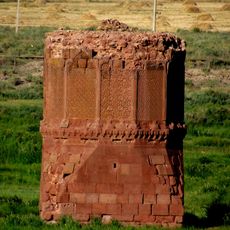
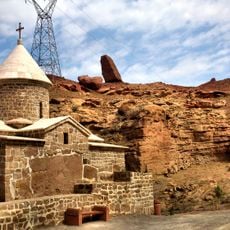
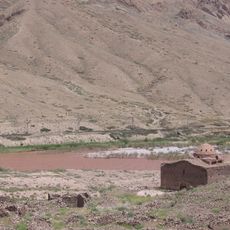
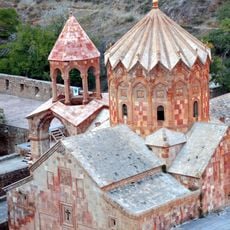
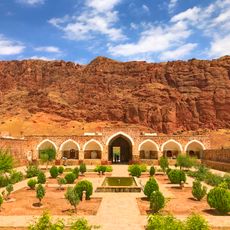
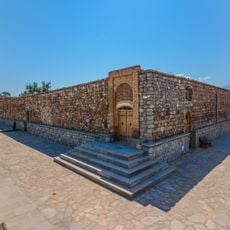
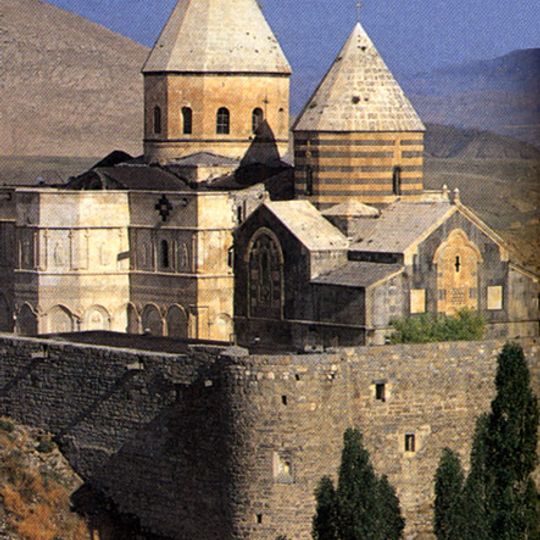
The Armenian Monastic Ensembles of Iran comprise three main religious structures spread across mountainous terrain in East and West Azerbaijan provinces. These complexes feature elaborate stone architecture with churches, prayer halls, and supporting buildings arranged within expansive sanctuary grounds.
The monastic ensembles originated in the 7th century with key construction occurring around 649 CE, and were repeatedly rebuilt following earthquakes over subsequent centuries. These sites preserve the continuous presence of Armenian Christianity in the region throughout their long history.
The monastic complexes blend Byzantine, Persian, and Armenian architectural styles visible in their domes, bell towers, and intricately carved stone facades. This design reflects centuries of cultural exchange within the mountainous region.
The monasteries are spread across separate mountainous locations and require planning to visit multiple sites. Travel between them can be challenging depending on weather and road conditions, so timing your visit during milder seasons is advisable.
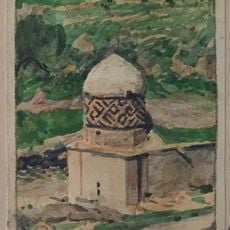
The Chapel of Dzordzor was completely relocated in the 1980s to save it from submersion caused by dam construction, an unusual preservation effort that kept its structure intact. This rescue operation stands as a remarkable example of protecting religious heritage through physical relocation.
The community of curious travelers
AroundUs brings together thousands of curated places, local tips, and hidden gems, enriched daily by 92,590 contributors worldwide.