Bovurkhan Monastery, Armenian monastery in Khojaly District, Azerbaijan.
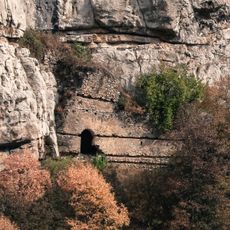
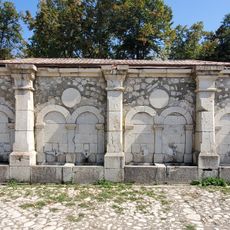
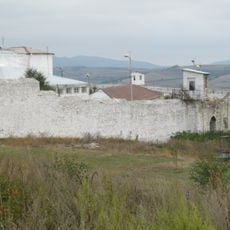
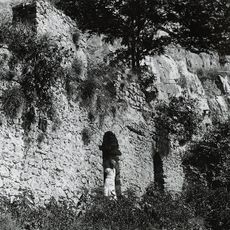
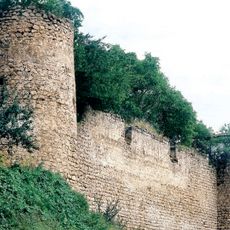
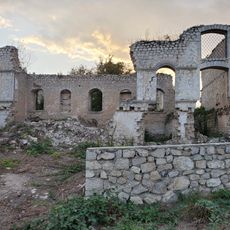
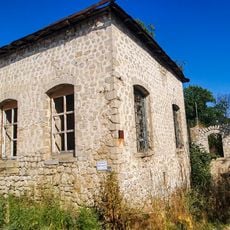
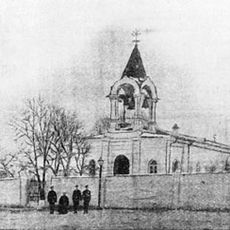
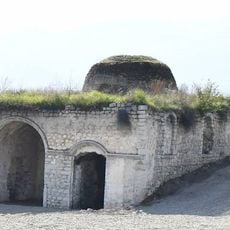
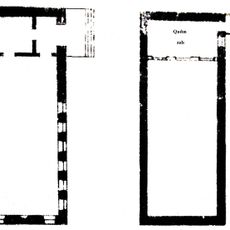
Bovurkhan Monastery is a walled Armenian monastic complex on the eastern slope of Mount Baghirkan, 3 km southwest of Nngi village. Its single-nave basilica, 9 by 5.6 metres, has a barrel vault on one pair of pilasters and a rectangular vestry attached to the north. The walls, 1 metre thick, enclose an area of 40 by 18.5 metres and end in a round tower with a 2.4-metre-diameter chamber.
The monastery was founded by Melik Baqr, a prince of Vərəndə from the Melik-Shahnazaryan dynasty who ruled from the early 17th century until 1646. Its buildings show 17th-century architectural forms. In the 1890s the ethnographer Makar Barkhudaryants recorded two inscribed cross-stones here, neither of which survives.
The name Bovurkhan is linked to Melik Badir, ruler of the Varanada principality until 1646, and the monastery is also called Baghir Khan or Bulukhan. Makar Barkhudaryants recorded two inscribed cross-stones here, now lost; their style points to the 17th–18th centuries. The monks' cells do not connect to each other, each with its own entrance, a layout typical of "desert" monasteries.
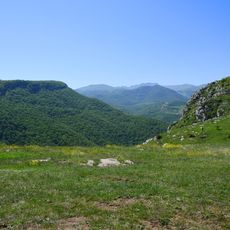
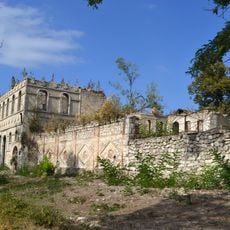
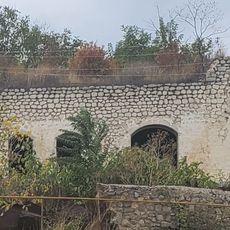
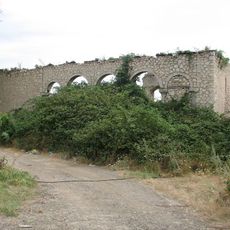
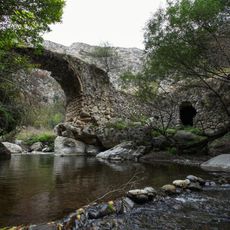
The monastery stands on the eastern slope of Mount Baghirkan, 3 km southwest of Nngi village, at the end of an ancient road. The complex is heavily ruined and overgrown with forest, so the church and the round tower room are the main standing structures. The site has no regular wall on the north, where cliffs replace it.
Makar Barkhudaryants recorded two inscribed cross-stones (khachkars) at the site, but neither has survived; only his transcriptions remain. The round tower room, 2.4 m across with five inward-widening windows, is among the best-preserved parts of the complex.
The community of curious travelers
AroundUs brings together thousands of curated places, local tips, and hidden gems, enriched daily by 93,389 contributors worldwide.