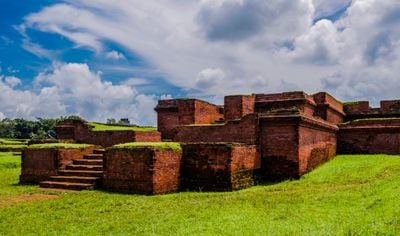
Shalban Vihara, Buddhist monastery ruins in Cumilla District, Bangladesh.
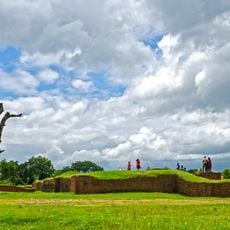
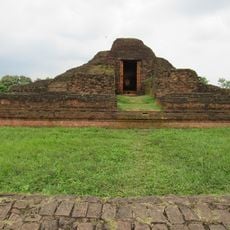
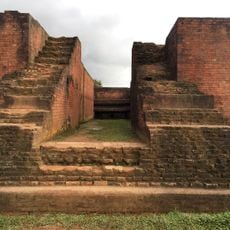
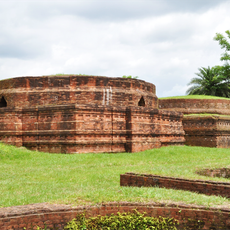
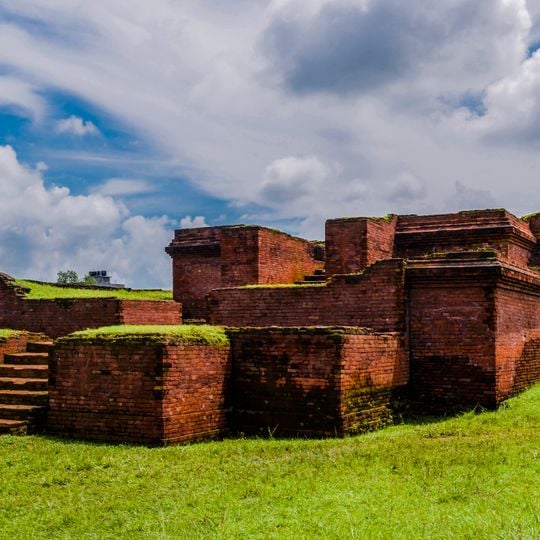
Shalban Vihara is a square Buddhist monastery ruin whose four sides each measure 167.7 metres, with walls five metres thick and 115 monk cells built against them. A single entrance stood at the middle of the north block, and a cruciform central shrine occupied the middle of the courtyard. The brick walls survive as low, staggered sections with projecting horizontal bands, standing on a grassy lawn.
The monastery was founded in the late 7th to early 8th century by Bhava Deva, fourth ruler of the Early-Deva dynasty, on the outskirts of Devaparvata, the Samatata capital beside the Lalambi forest. Known earlier as Shalban Rajar Bari, it was renamed after excavation uncovered terracotta seals and copper plates identifying a residential monastery. Its central shrine shows six building phases and the monastery four, with work continuing into the 9th and 10th centuries; it operated until the 12th century.
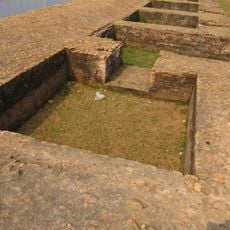
The monastic cells feature wall niches where monks once kept religious objects and oil lamps for their daily spiritual practices. These spaces reveal how Buddhist community life was organized within the complex.
The site lies approximately 8 kilometers from Cumilla city center and is accessible by CNG vehicles or auto-rickshaws from there. Comfortable walking shoes are recommended since exploring the grounds requires moving through the ruins on foot.
Excavations at this site uncovered eight copper plate inscriptions, hundreds of gold and silver coins, and numerous terracotta seals. These discoveries reveal the wealth and importance this monastery once held in the Buddhist world.
The community of curious travelers
AroundUs brings together thousands of curated places, local tips, and hidden gems, enriched daily by 94,085 contributors worldwide.