Mainamati, Archaeological site in Cumilla District, Bangladesh
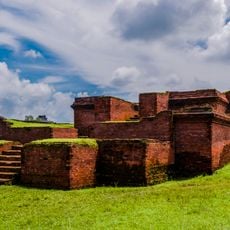
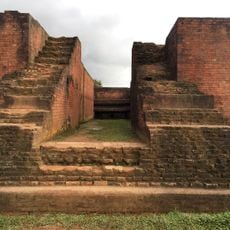
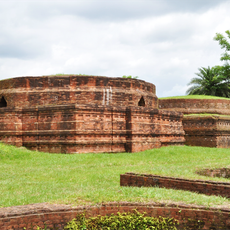
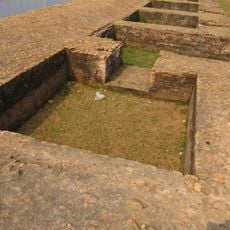
Mainamati is a low, dimpled hill range in Cumilla District, about 12 km from Cumilla city, holding more than 50 Buddhist settlements from the 8th to 12th centuries. Its centrepiece, Shalban Vihara, is a square monastery about 167.7 m per side with walls roughly 5 m thick, 115 cells around a courtyard and a cruciform temple facing a single north gateway.
This region was a major Buddhist cultural center from the 8th to the 12th century in the Vanga-Samatata region. Numerous monasteries and temples were built during this period, making it an important hub for religious life and learning.
Mainamati takes its name from Queen Mainamati, mother of King Govindachandra of the Chandra dynasty. Local folk songs known as 'Mainamatir Gan' tell that Govindachandra married Aduna and Poduna, the two daughters of King Harish Pala. The excavated site is identified with the ancient city of Jaykarmantabasaka, and its terracotta plaques show both Buddhist and Hindu imagery.
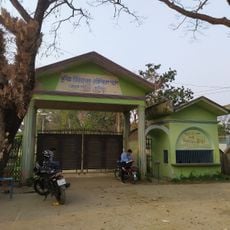
The ruins lie along the Lalmai-Mainamati hill range west of Comilla city, about 12 km from town and 114 km from Dhaka via National Highway 1. Shalban Vihara sits in the middle of the range at Kotbari, with Kutila Mura about 5 km north inside the Comilla Cantonment and Charpatra Mura roughly 2.5 km northwest of Kutila Mura. The Mainamati museum, founded in 1965, stands beside Shalban Vihara, so start there before walking the mounds.
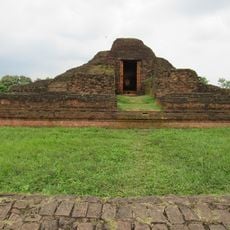
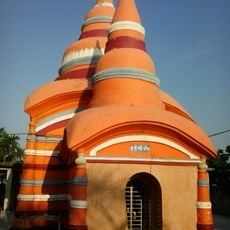
Kutila Mura lies on a flattened hillock about 5 km north of Shalban Vihara, inside the Comilla Cantonment. Its three stupas stand side by side, representing the Buddha, Dharma and Sangha. The site is reached through the cantonment, and a colonial-era cemetery stands nearby.
The community of curious travelers
AroundUs brings together thousands of curated places, local tips, and hidden gems, enriched daily by 94,224 contributors worldwide.