Cave of Lorette-Rochefort, Limestone cave in Rochefort, Belgium.
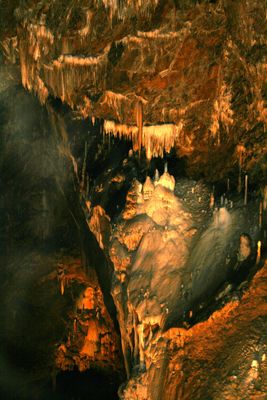
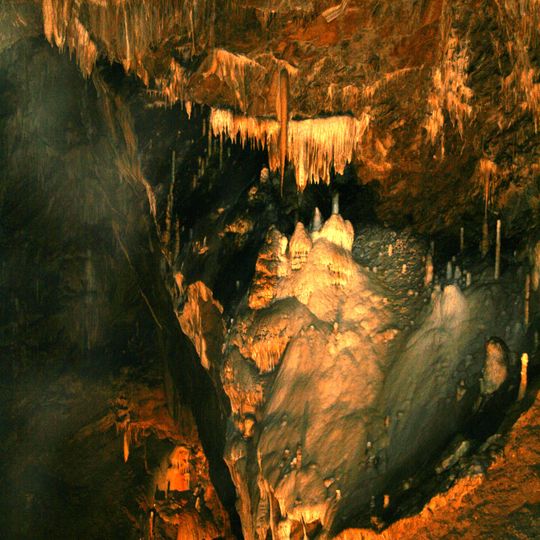
The cave of Lorette-Rochefort is a limestone system beneath Rochefort with vertical passages and multiple chambers throughout its interior. Natural stone formations become visible as visitors move through the different levels and sections.
The cave was officially discovered in 1865 by Alphonse Collignon and opened to the public in 1870. Earlier mentions of caves at Rochefort date from 1771 by Abbé de Feller and from 1822 by Jean Kickx and Adolphe Quételet. In 2003 the visit route was extended to include the smaller chamber called "le Cataclysme".
The cave was long known only as the Grotte de Rochefort; it was renamed Lorette after the listed Notre-Dame-de-Lorette chapel nearby, to shed its sinister reputation. The Sabbath Room's name comes from the supposed witches' sabbath that the first visitors claimed to witness there, seeing a large witch seated high while others formed a circle below.
Visitors should know that it is cool underground, so warm clothing is advisable. The passages have varying difficulty levels, and some areas require careful steps on uneven ground.
The Sabbath Room, 65 m underground, is 35 m high and 65 by 125 m in plan; for over a century guides have released a small illuminated hot-air balloon there during a sound-and-light show to convey its height. Since 2003 the tour also passes through the smaller chamber called "le Cataclysme".
The community of curious travelers
AroundUs brings together thousands of curated places, local tips, and hidden gems, enriched daily by 94,085 contributors worldwide.