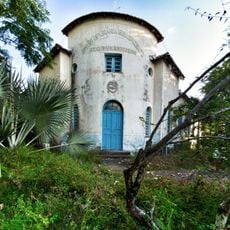
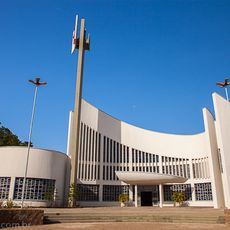
Fuerte de São Joaquim do Rio Branco, Portuguese colonial fortress in Bonfim, Brazil.
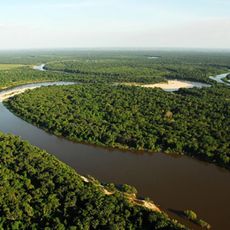
Fuerte de São Joaquim do Rio Branco sits where the Rio Branco and Tacutu rivers meet, displaying the solid stone walls characteristic of Portuguese border fortifications. The ruins reveal the original layout and give insight into the colonial military design used throughout the Amazon region.
A royal provision of 14 November 1752 ordered a fortress on the Rio Branco after Dutch raiders from Suriname entered the river to trade in and capture Indigenous people. Construction only began in 1775, when engineer captain Phillip Sturm led a force to expel Spaniards who had settled on the Uraricoera. The fort was finished in 1778 with Indigenous labour and a garrison of 30 soldiers plus Indigenous militia.
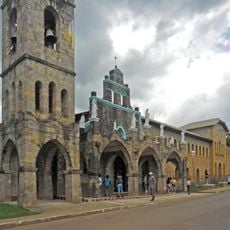
The fort was named for Saint Joachim, and a chapel with a chaplain's residence stood within the complex; Alexandre Rodrigues Ferreira's 1783–1792 expedition recorded a plan of the chapel and residence. Five indigenous villages were counted around the fort in 1777, their inhabitants serving the garrison.
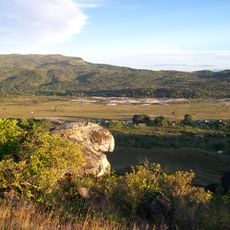
The site is accessible via the town of Bonfim and sits along the river banks where you can see the surrounding landscape clearly. Sturdy footwear is recommended since the ground is rough and the paths are uneven.
Among the artillery at the fort were two bronze pieces of caliber 1, cast in Belém do Pará in 1763, older than the fort itself. Baena's 1839 account also records three stonemasons taken from the Spanish post of São João Batista among the garrison.
The community of curious travelers
AroundUs brings together thousands of curated places, local tips, and hidden gems, enriched daily by 94,076 contributors worldwide.