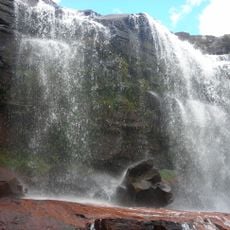
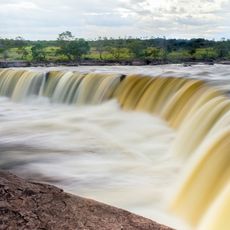
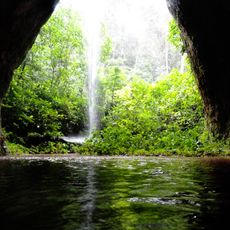
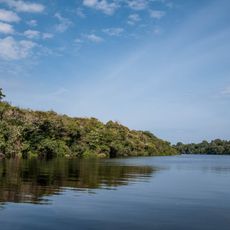
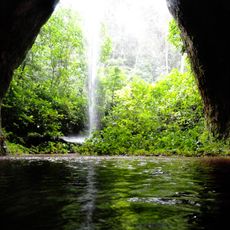
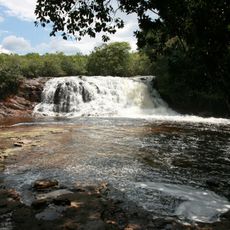
Viruá National Park, National park in Caracaraí, Brazil.
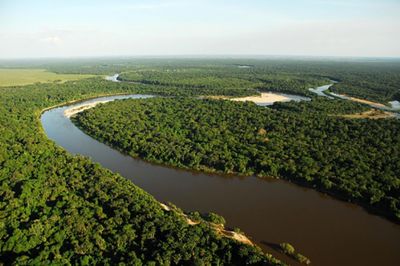
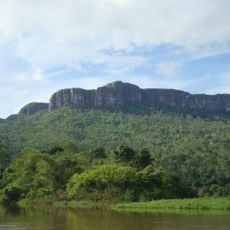
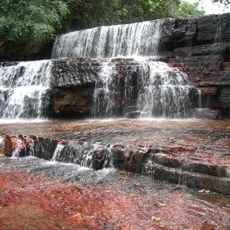
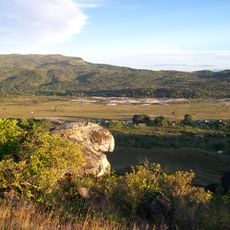
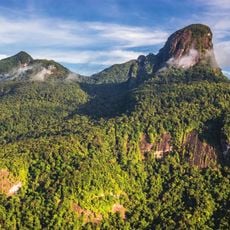
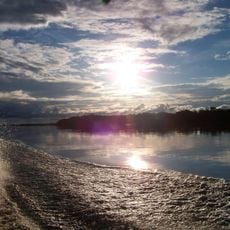
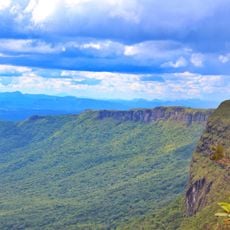
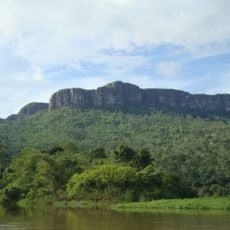
Viruá National Park is a protected area in Roraima state covering more than 240,000 hectares of sandy plains and forests along the Branco River. The landscape features a distinctive ecological type called Campinarana, characterized by sandy soils and a particular mix of vegetation adapted to these conditions.
The park was created by decree on 29 April 1998 as an IUCN category II protected area, administered by the Chico Mendes Institute for Biodiversity Conservation. A public consultation on expanding its area began on 4 November 2010, a consultative council was formed on 20 November 2012, and the management plan was approved on 17 April 2014.
The park's name comes from the Viruá Igarapé, the blackwater stream that drains its sandy plain. Its stated aims combine scientific research and ecological tourism with environmental interpretation and education, and it is run by the Chico Mendes Institute for Biodiversity Conservation under the Amazon Region Protected Areas Program.
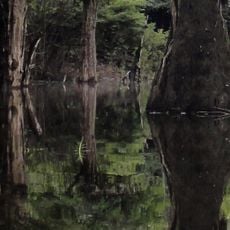
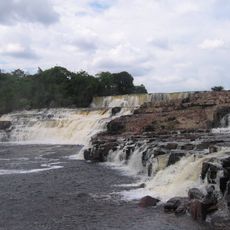
The park lies in Caracaraí municipality, with the Branco River as its western boundary and the Viruá Igarapé flowing into the Anauá along the southern limit. The Caracaraí and Niquiá ecological stations sit on the opposite shore of the Branco. The park is subject to seasonal flooding, so plan around water levels; the management plan was approved in 2014.
The park holds the Viruá alluvial megafan, a vast sandy fan deposited by seasonal floods. Its soils are so nutrient-poor and acidic that farming, grazing and forestry are impossible, yet more than 2,000 plant species have already been identified, with an estimated total above 5,000.
The community of curious travelers
AroundUs brings together thousands of curated places, local tips, and hidden gems, enriched daily by 93,861 contributors worldwide.