Stave Lake, lake in British Columbia, Canada
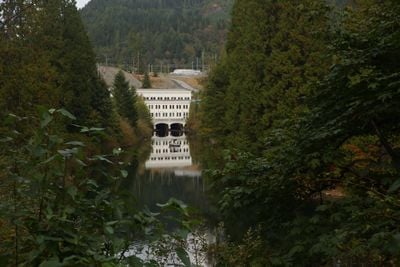
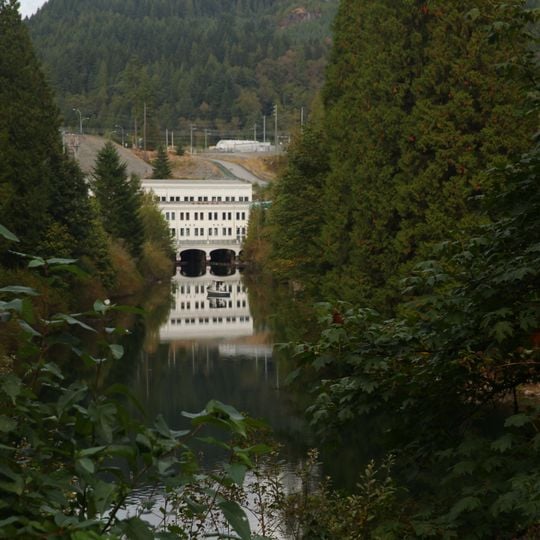
Stave Lake is a hydroelectric reservoir on the Stave River, about 65 km east of Vancouver at the northern edge of Mission, British Columbia. Its main arm runs roughly 20 km north to south, with a southwest arm about 9.5 km long ending at Stave Falls Dam; the reservoir covers about 55 square kilometres. The concrete Stave Falls powerhouse stands at the end of a channel, its pale facade in three levels of small dark windows above two arched openings, conifers at either side and its reflection in the still water.
The Stave Falls Power Company, later a subsidiary of the British Columbia Electric Railway, dammed the Stave River in 1920–22, raising the Upper Stave and flooding its forests; the lake had been about one-third its present main-arm size. Ruskin Dam and Powerhouse, completed in 1930, formed Hayward Lake downstream. The reservoir's level was later lowered for years to recover cedar timber left standing in the flooded river.
The area around the lake is accessible through several trails of varying difficulty that offer views over the water. The best time to visit is during warmer months when trails are in good condition and weather is more stable.
Stave Lake's southwest mud flats draw 4x4 drivers and dirt bikers, who use them when reservoir levels are drawn down. A large raft floats around the lake in summer and appears on satellite images. The reservoir also flooded forest; from the 1980s to the 1990s, crews from a prison camp near Sayres Lake pulled out the drowned cedar during prolonged low-water periods.
The community of curious travelers
AroundUs brings together thousands of curated places, local tips, and hidden gems, enriched daily by 93,381 contributors worldwide.