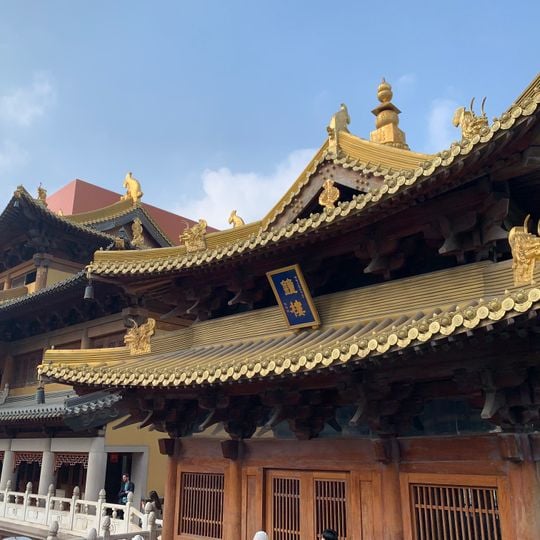
Jing'an Temple, Buddhist temple in central Shanghai, China
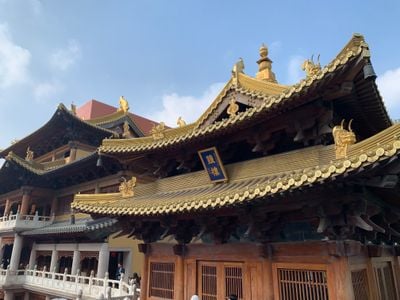
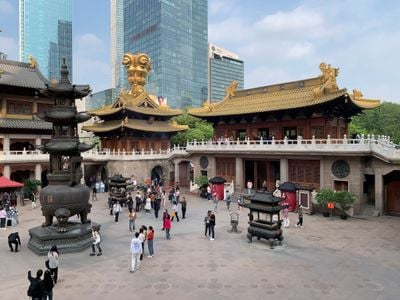
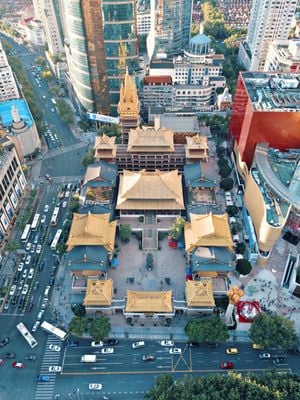
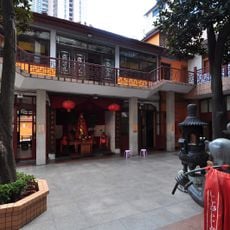
Jing'an Temple is a Buddhist temple in central Shanghai with three large halls including the Mahavira Hall, the Hall of Heavenly Kings, and the Three Saints Hall. The grounds occupy a central block surrounded by busy streets and contain courtyards, decorated roofs, and a six-story tower visible from the surrounding roads.
Founded in 247 in the Wu Kingdom as Hudu Zhongyuan beside Suzhou Creek, the temple was renamed Jing'an in 1008. Abbot Zhongyi moved it to the present site in 1216 after river erosion undermined the old foundations. Rebuilt in 1880 with funding from Hu Xueyan, it was razed during the Cultural Revolution and turned into a plastics factory; worship resumed in 1983 and rebuilding continued, with the pagoda finished in 2010.
The temple's name means "Temple of Peace and Tranquility"; it was called Bubbling Well Temple after a spring at its old gate, praised as the "sixth spring under heaven". From 1881 a fair was held each year on the Buddha's birthday, the eighth day of the fourth lunar month, until 1963. Master Chisong, abbot from 1953, established a Shingon altar and enshrined the Mandala of the Two Realms, and the temple still practises Tangmi Buddhism.
Jing'an Temple Station on lines 2, 7, and 14 brings visitors directly to the entrance, with most halls and courtyards accessible on foot. Mornings tend to be quieter, while Buddhist holidays and Chinese New Year attract many worshippers.
A large silver Buddha statue sits in the Mahavira Hall, surrounded by carved wooden columns and gilded decorations. The copper roof tiles catch the light on sunny days, giving the buildings a warm metallic glow.
The community of curious travelers
AroundUs brings together thousands of curated places, local tips, and hidden gems, enriched daily by 93,920 contributors worldwide.