Three Gorges, Canyon system in Chongqing and Hubei, China.
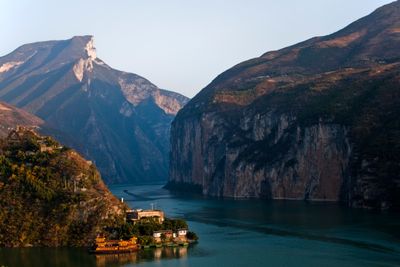
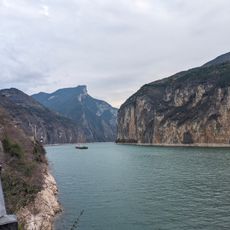
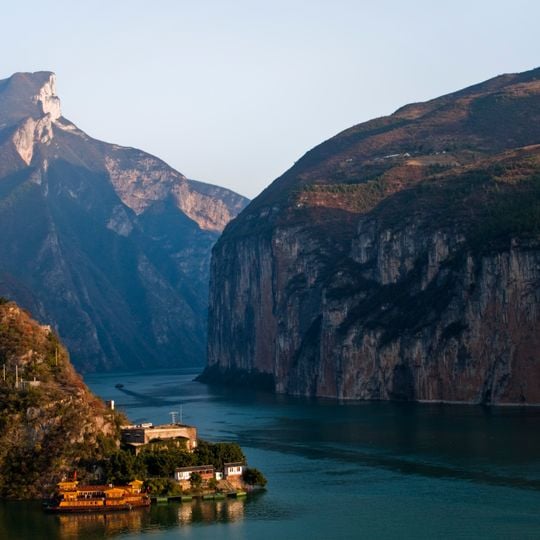
The Three Gorges are three consecutive gorges on the middle Yangtze in Chongqing and Hubei, spanning 193 km (120 mi) from Baidicheng in the west to Nanjin Pass at Yichang in the east. They comprise the Qutang, Wu and Xiling gorges, cut through limestone as narrow, steep-walled channels; in the photograph a multi-tiered boat with yellow-lit decks sits on the greenish-blue water between a pale gray jagged peak on the left and a dark gray and reddish-brown cliff on the right.
The gorges formed roughly 70 million years ago through mountain folding and erosion as the Earth's crust underwent dramatic shifts in this region. These geological processes carved out the steep rock walls and river valley that the Yangtze River now flows through.
The gorges have inspired poets and artists for centuries and are considered embodiments of classical Chinese landscape by many. People visit to witness the same views that ancient scholars and painters once captured in their works.
River cruises operate year-round through the gorges and offer the best way to see the rock formations from different angles and perspectives. Plan for several days to fully experience each gorge section and appreciate how the landscape changes as you travel.
At Baiheliang, a stone ridge in the river at Fuling, about 165 inscriptions dating from the Tang year 763 record low-water levels using carved stone fish as gauges. To save them from the reservoir, engineer Ge Xiurun proposed in 2001 a pressure-free container built on the riverbed, linked to the bank by a corridor so visitors can view the carvings in place.
The community of curious travelers
AroundUs brings together thousands of curated places, local tips, and hidden gems, enriched daily by 92,796 contributors worldwide.