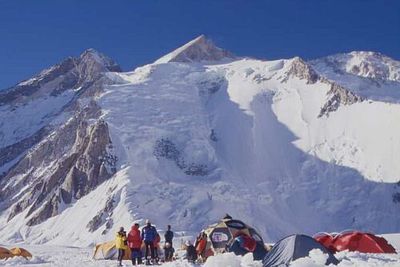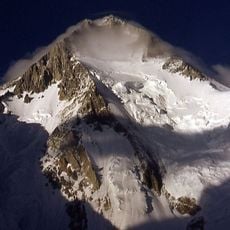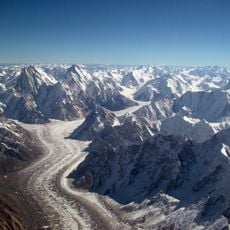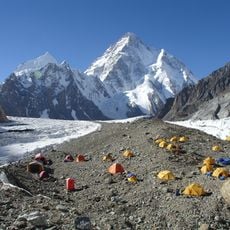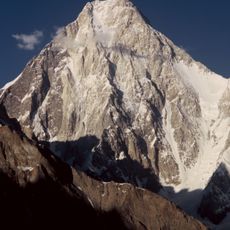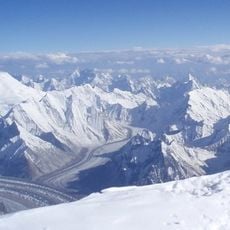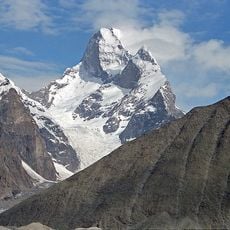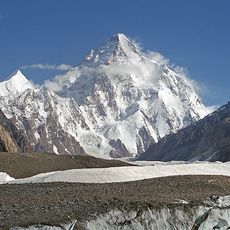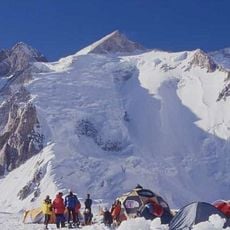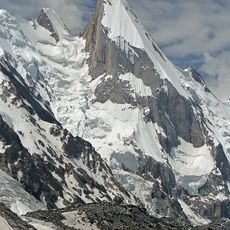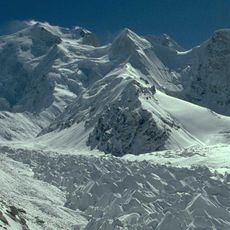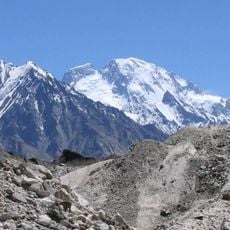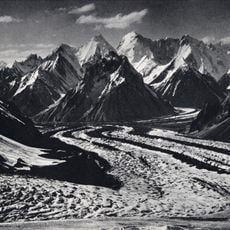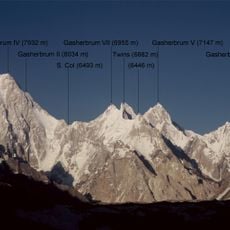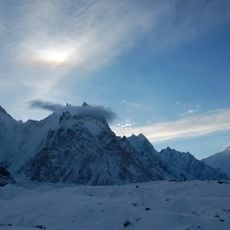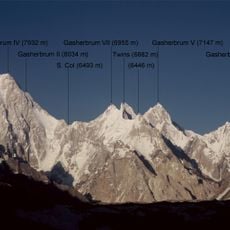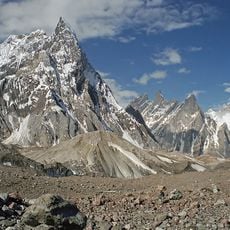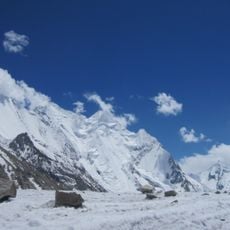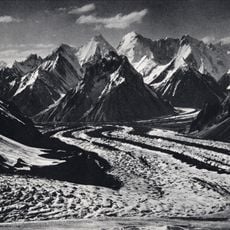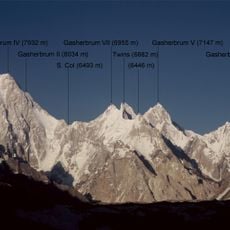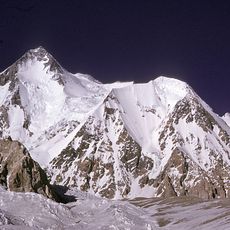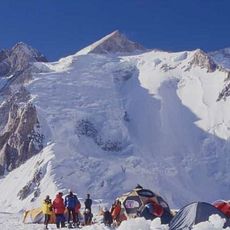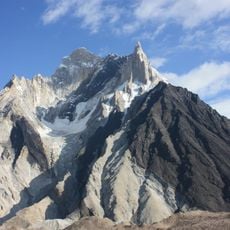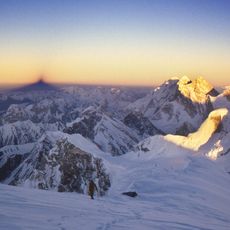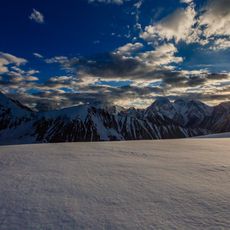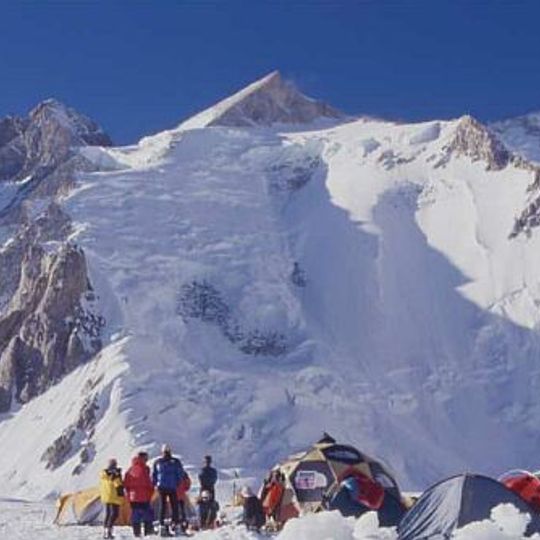
Gasherbrum II, Mountain summit in Karakoram Range, Pakistan and China.
Gasherbrum II rises to 8,034 meters in elevation, making it the thirteenth highest mountain on Earth, with steep ice walls and glacial terrain forming a harsh alpine environment. The summit is surrounded by broad snow fields crisscrossed with deep crevasses that extend for several kilometers across the massif.
An Austrian expedition team led by Fritz Moravec, Josef Larch, and Hans Willenpart achieved the first successful ascent of Gasherbrum II in 1956. This milestone opened the mountain to future climbers and established it as an important objective for high-altitude mountaineers.
The name comes from the Balti language and means Beautiful Mountain, expressing how local communities view this peak as part of their identity. People in the region regard it as a sacred landmark tied to their heritage and mountain traditions.
The climbing season runs from June through August, with expeditions typically taking about four weeks from base camp to summit, including necessary acclimatization time. Visitors should prepare for extreme cold and difficult conditions and work with highly qualified guides and porters throughout the ascent.
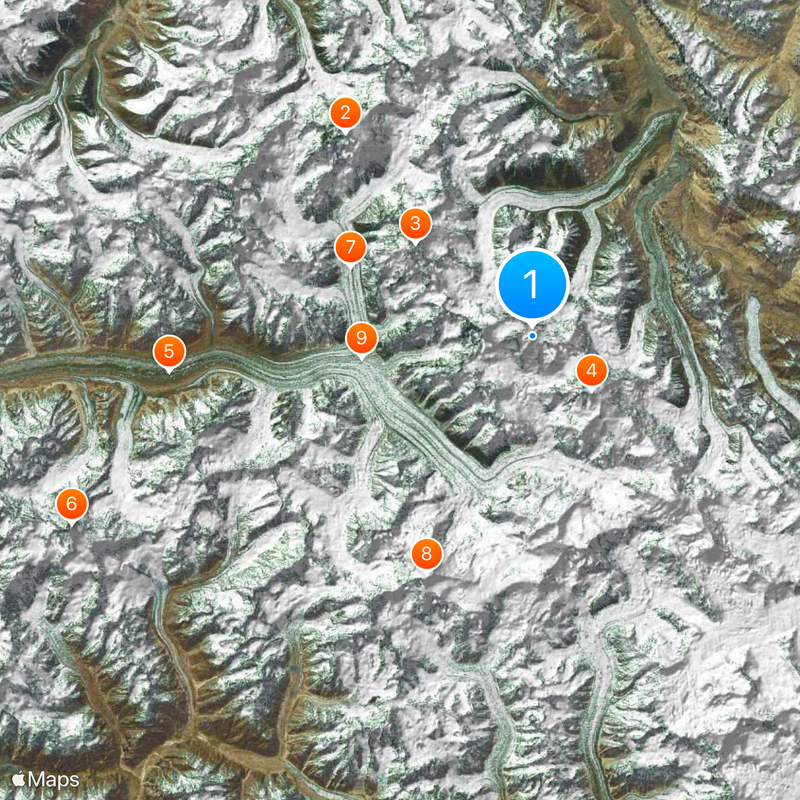
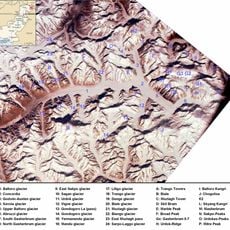
The mountain is part of the Baltoro Glacier system, where climbers navigate through extensive crevasse fields that can collapse suddenly without warning. Temperatures drop below minus 40 degrees Celsius, making it one of the coldest and most technically demanding summits in the region.
The community of curious travelers
AroundUs brings together thousands of curated places, local tips, and hidden gems, enriched daily by 91,184 contributors worldwide.