Gasherbrum, Mountain peak in Karakoram Range, Pakistan and China
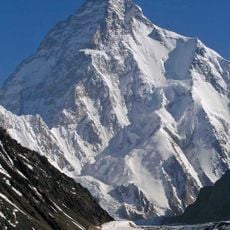
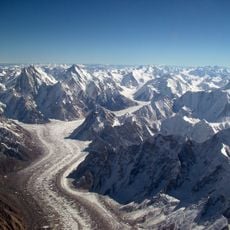
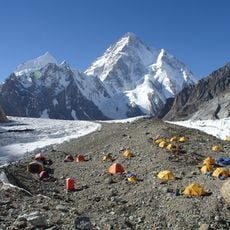
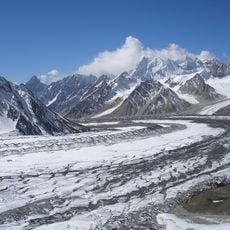
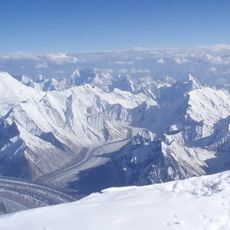
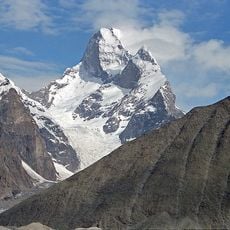
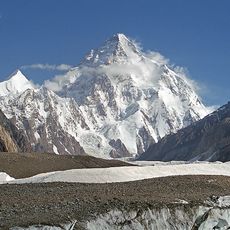
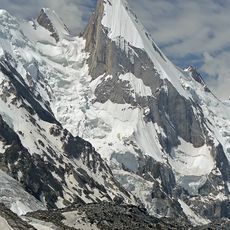
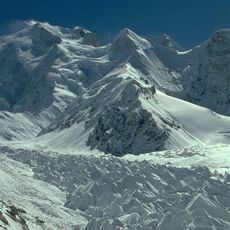
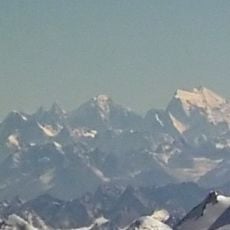
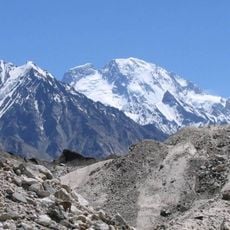
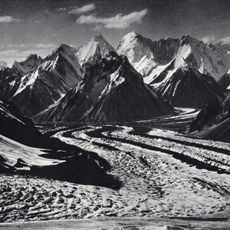
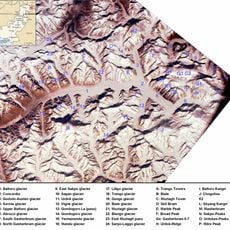
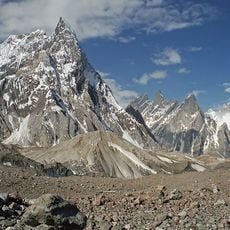
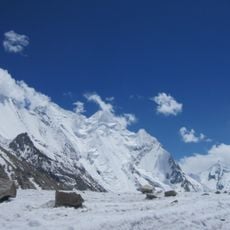
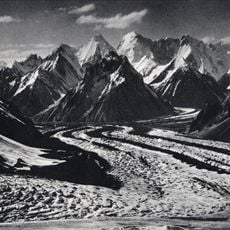
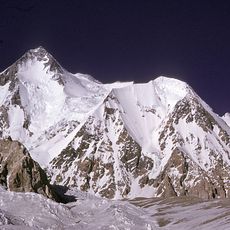
Gasherbrum rises to 8,080 meters (26,509 feet), making it the eleventh highest mountain on Earth and the third highest peak in Pakistan. The walls climb from glacier valleys and form a massif of rock and ice that stretches across the border between Pakistan and China.
Gasherbrum I was first climbed on 5 July 1958 by Pete Schoening and Andy Kauffman of an eight-man American expedition led by Nicholas B. Clinch, via the IHE Spur and southeast ridge. In 1975 Reinhold Messner and Peter Habeler made the second ascent by a new northwest route in alpine style, without supplementary oxygen. A day later Hanns Schell's team reached the summit by the American route.
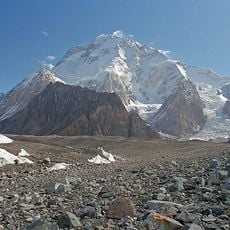
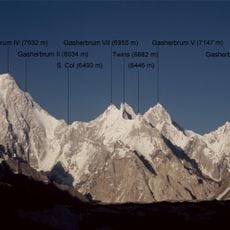
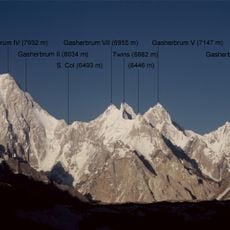
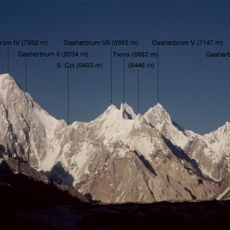
The name Hidden Peak was given in 1892 by the British explorer William Martin Conway, not by local people: the mountain stays out of sight from the Baltoro Glacier behind Gasherbrum IV, V and VI. Gasherbrum itself comes from Balti rgasha (beautiful) and brum (mountain), so it means "beautiful mountain"; the label "Shining Wall" belongs to neighbouring Gasherbrum IV.
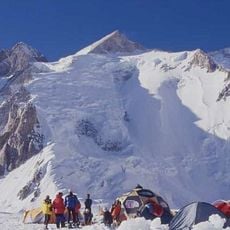
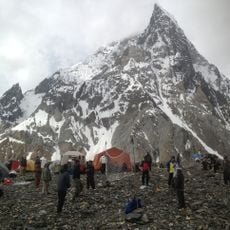
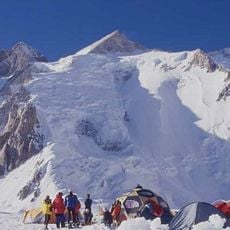
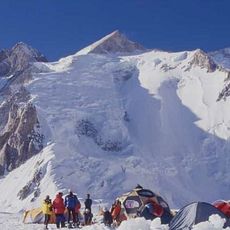
The climb passes through several high camps, with temperatures dropping below minus 60 degrees Celsius (-76 Fahrenheit) and oxygen levels thinning sharply above 8,000 meters (26,247 feet). Climbers should expect long approaches through crevasse fields and steep ice slopes that require experience in extreme altitude.
The Japanese Couloir on the southwest face is named after a Japanese team that climbed the Clinch route with fixed ropes in 1981. Polish climber Artur Hajzer died there on 7 July 2013 during a summit attempt. Access from the Abruzzi Glacier is closed by the Pakistani government, so the mountain is reached only from the Gasherbrum valley.
The community of curious travelers
AroundUs brings together thousands of curated places, local tips, and hidden gems, enriched daily by 92,789 contributors worldwide.