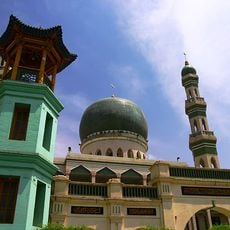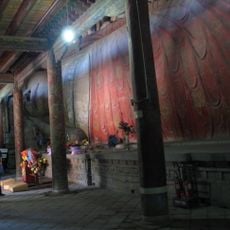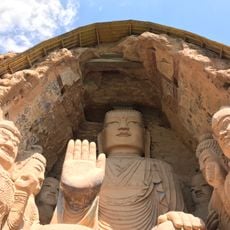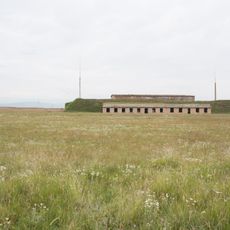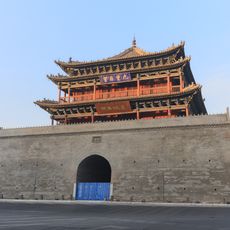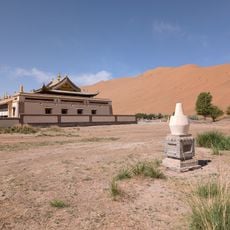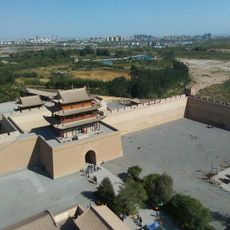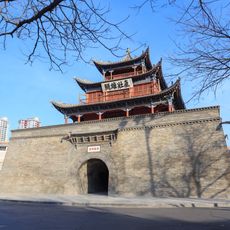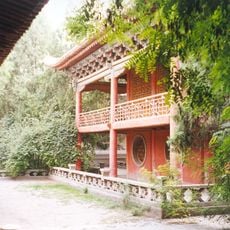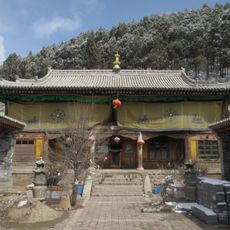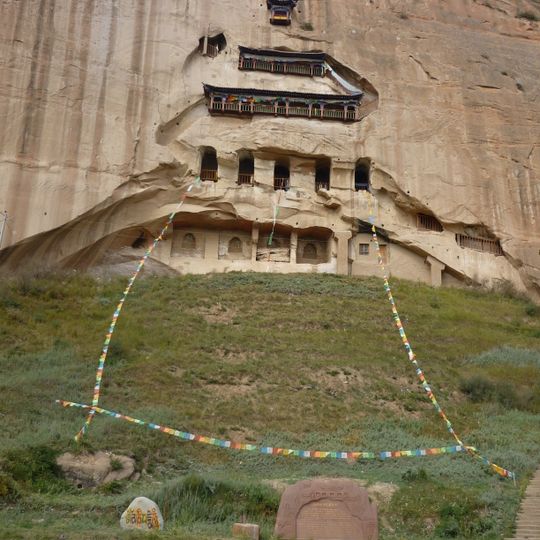
Matisi Grottoes, Buddhist cave complex in Sunan, China.
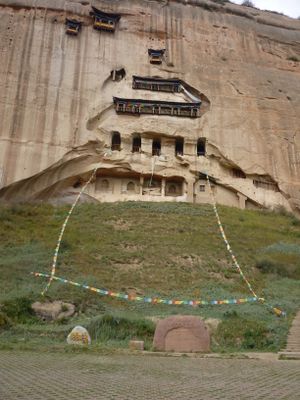
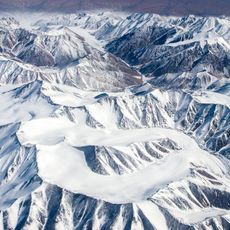
The Matisi Grottoes are a Buddhist cave complex containing 21 chambers arranged across seven levels within a 100-meter-high cliff face in the Qilian Mountains. The caves hold numerous sculptures, murals, and artifacts distributed throughout these stacked levels.
The complex was established roughly 1,600 years ago during the Eastern Jin Dynasty and served as an important site for Buddhist worship and meditation. The caves played a key role along the Silk Road where believers and travelers gathered.
The caves display a blend of Indian, Tibetan, and Han Chinese artistic styles visible in the sculptures and painted walls. Visitors can observe how these different traditions came together in the depictions of Buddhist figures throughout the complex.
Visitors must climb narrow stone stairs and navigate through multiple levels to reach the topmost cave containing the Bodhisattva Lyudumu shrine. The pathways are confined and require good balance and careful movement through the stacked chambers.
The Puguang Temple section displays an ancient mark in stone thought to be a horse hoof print, which inspired the complex's name. This unexpected link between a natural formation and local legend adds a mysterious layer to the site.
The community of curious travelers
AroundUs brings together thousands of curated places, local tips, and hidden gems, enriched daily by 92,651 contributors worldwide.