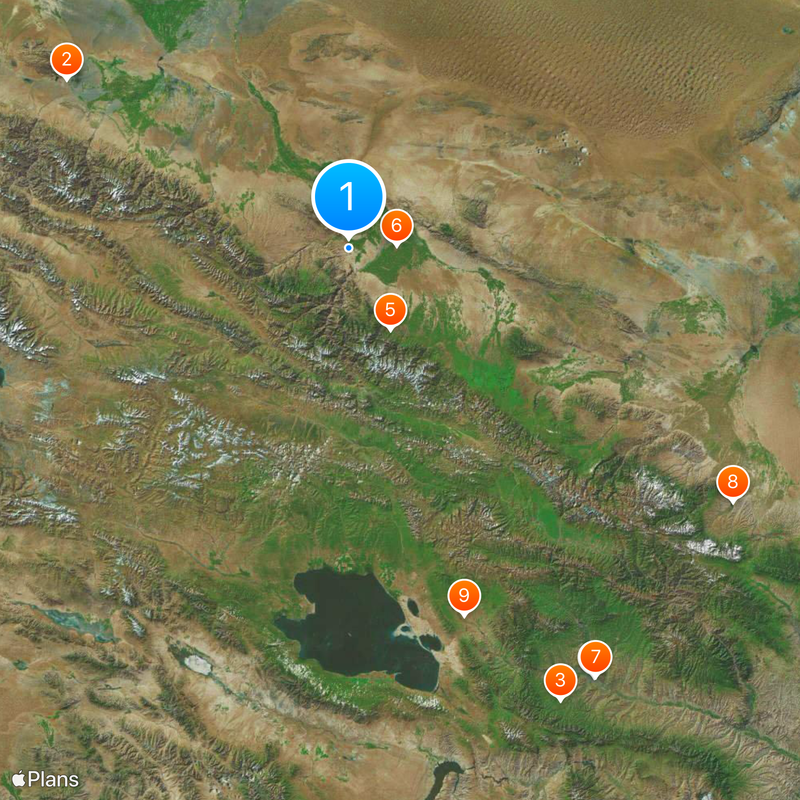
Zhangye Danxia National Geological Park, Geological park in Linze County, China.
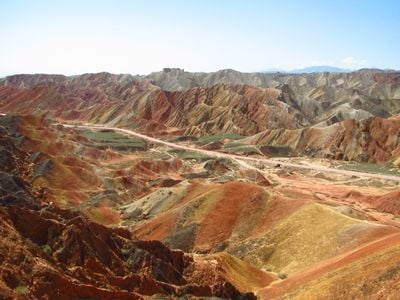
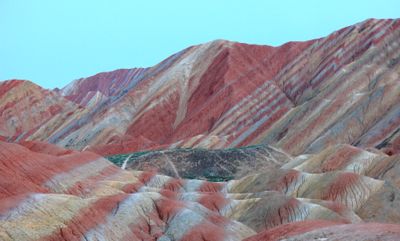
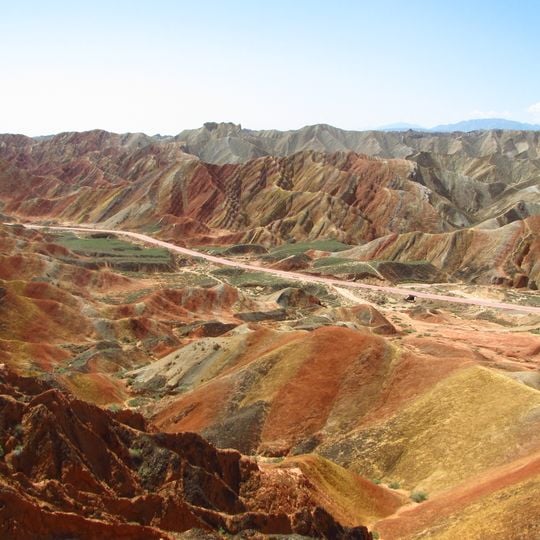
The park spans 510 square kilometers (197 square miles) and presents layered sandstone formations in various mineral hues extending across valleys and ridges. Visitor pathways lead to multiple observation points from which the colorful rock strata become visible. Erosion has created wavelike patterns and steep cliffs that shift in appearance depending on sunlight conditions throughout the day.
Sediment accumulation began approximately 24 million years ago during the Tertiary geological periods and was uplifted through tectonic activity. The layers developed under varying climate conditions that left behind different mineral concentrations. Chinese authorities established the protected area in 2005 and UNESCO designated it a geopark in 2010. Scientific expeditions have investigated the site since the 1920s to understand regional geological processes.
The formations have provided literary and artistic inspiration, drawing painters and photographers from across China to document the terrain. Regional communities use the landscape as a symbol of geological wonder in educational programs. The site serves as an important example of erosion patterns in semiarid climates and functions as a study subject for research institutions examining sediment geology and landscape formation processes.
The two main areas of Linze and Binggou have separate entrances with shuttle buses transporting visitors to designated viewing platforms. Sunset and early morning provide the best light for photography. The nearest city of Zhangye lies 30 kilometers (19 miles) to the west and offers accommodation options as well as organized transport services. Visitors should bring sun protection and water, as pathways are exposed to the elements.
Certain rock strata contain goethite and hematite responsible for the intense red tones, while limonite and chlorite produce the yellowish and greenish color ranges. Rain temporarily intensifies colors through surface saturation. The geological processes have also preserved fossilized plant and animal remains in some sediment layers, providing insights into prehistoric ecosystems that existed millions of years before human habitation in the region.
The community of curious travelers
AroundUs brings together thousands of curated places, local tips, and hidden gems, enriched daily by 60,000 contributors worldwide.