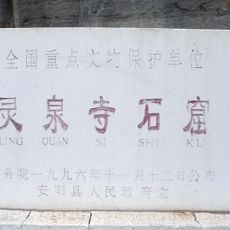
Xiangtangshan Caves, Buddhist cave temples in Handan, China
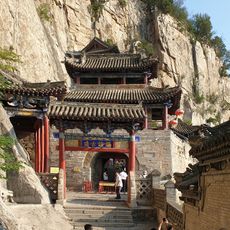
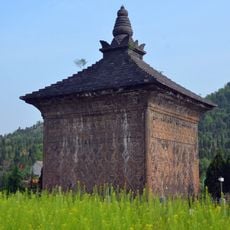
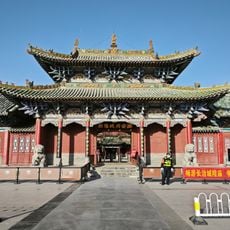
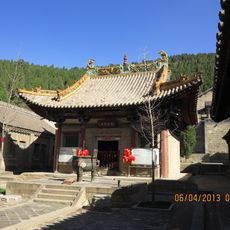
The Xiangtangshan Caves comprise 36 Buddhist cave temples in three groups: the northern group on Mount Gu near Hecun, the southern group on Mount Fu, and the Shuiyusi site. The northern group's three main caves—the North, Central, and South Caves—use central-pillar and three-wall designs, with the North Cave's central pillar topped by a square niche. The southern group has seven caves in two tiers, cut in 565 under monk Hui Yi and official Gao Anahong.
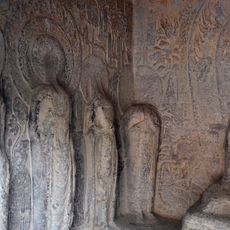
Sculptors began carving these caves during the 6th century under the Northern Qi dynasty, creating spaces filled with religious artwork. The work spanned many decades as successive groups of craftspeople added to the complex, each generation building on what came before.
The name Xiangtangshan means "Mountain of the Echoing Halls." The monk Hui Yi of Linghua Temple began the southern caves in 565, funded by the official Gao Anahong. Tang Yong carved sutras into the rock between 568 and 572, using stone so the texts would outlast paper and silk.
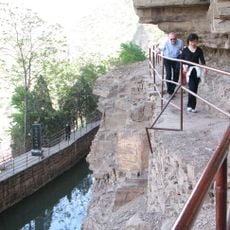
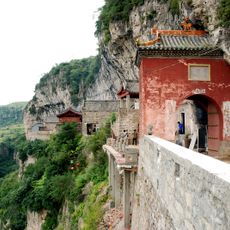
The caves sit in a mountainous area where pathways are uneven and often involve climbing steps carved into the rock. Sturdy footwear is essential, and visiting early in the day provides better light for exploring the carved details throughout the chambers.
Many of the original sculptures were removed from the caves over centuries and now sit in museums around the world. Researchers work to map where these scattered pieces belong and use advanced scanning to piece together their original placement.
The community of curious travelers
AroundUs brings together thousands of curated places, local tips, and hidden gems, enriched daily by 93,832 contributors worldwide.