Dayun Temple, Buddhist sanctuary in Shanxi, China
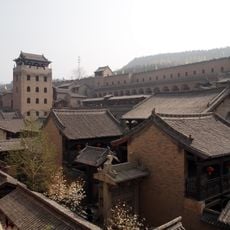
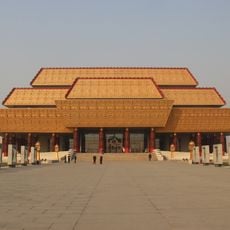
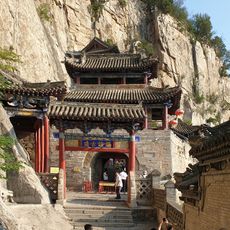
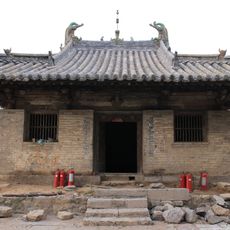
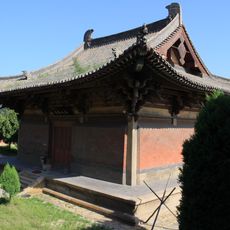
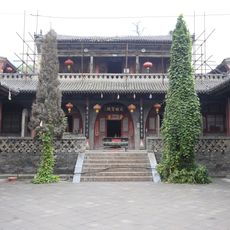
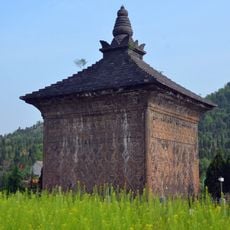
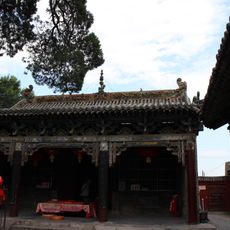
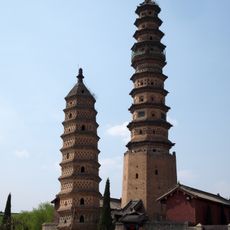
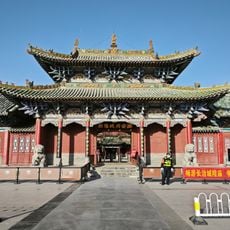
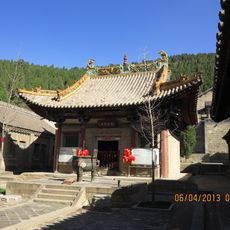
Dayun Temple stands in Shihui village, Beidanche township, Pingshun county, Changzhi, Shanxi, in the Zhuozhang River valley. Its Buddha Hall, three bays wide and six rafters deep under a single-eaved hip roof, is one of the few surviving Five Dynasties buildings in China; the Seven Treasures Pagoda, 6 m tall and originally seven storeys, stands southwest of the temple.
The monk Fengjing from Youzhou founded the temple in 938, the third year of Tianfu of the Later Jin, as a thatched hermitage called Xianyan Yuan. A Buddha hall and abbot's quarters were built from 940, and in 954, the first year of Xiande of the Later Zhou, the Seven Treasures Pagoda was added. In 983, the eighth year of Taiping Xingguo of the Northern Song, it was renamed Dayun Chan Yuan; it was repaired in the Ming and Qing dynasties.
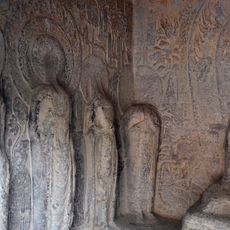
The name changed with dynasties: founded in 938 as Xianyan Yuan, also called Dayun Si, it became Dayun Chan Yuan in 983 under the Northern Song. The monk Fengjing preached in the abbot's quarters from 946. The temple's fame rests on its Five Dynasties murals, the only surviving temple murals from that period in China.
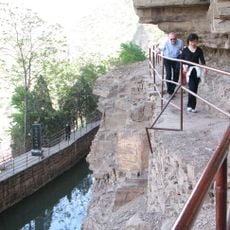
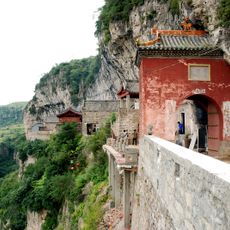
The site sits between Changzhi and Jincheng cities and is accessible by footpaths that wind through the surrounding mountains. Guided tours help visitors understand the artworks from different periods and how the complex was constructed.
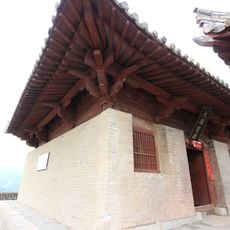
The Buddha Hall preserves the earliest known use of the pupaifang, a horizontal timber laid across the column tops. Earlier Tang and Five Dynasties builders set the cap block directly on the column; here a bearing beam was added, a detail visible above the 18 columns. The hall also uses reduced columns, leaving only two interior pillars.
The community of curious travelers
AroundUs brings together thousands of curated places, local tips, and hidden gems, enriched daily by 94,518 contributors worldwide.