Liyuan, Classical Chinese garden on Li Lake shore in Jiangsu, China
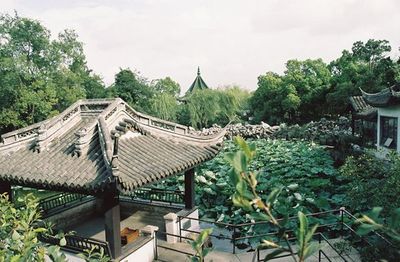
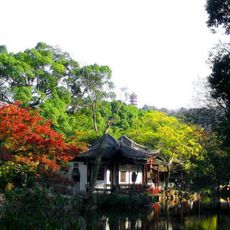
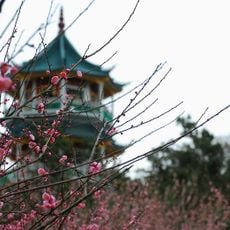
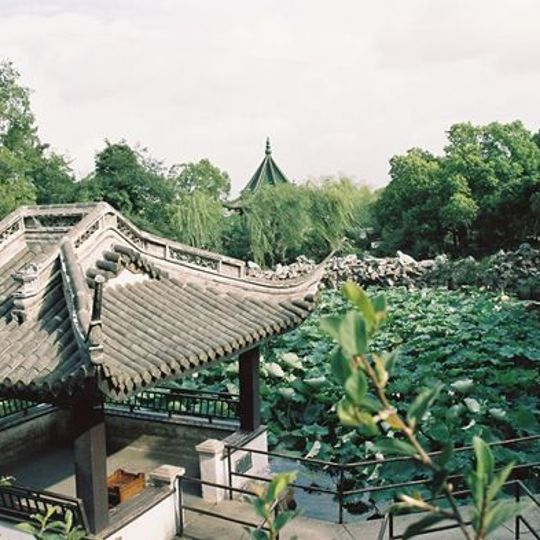
Liyuan is a garden of 8.2 hectares on the north shore of Li Lake in Binhu District, Wuxi, Jiangsu, with 3.5 hectares of water. Its three parts are a rockery area in the centre, a lakeside causeway with the Four Seasons Pavilion in the west, and a 289-metre covered corridor along the water in the east, ending at a lake pavilion and the 1982 Cengbo Dieying extension. The waterside pavilion beside the small Ningchun Pagoda is the garden's emblem.
The garden is named after Fan Li, a senior minister of the state of Yue who retired after conquering the state of Wu and once went boating on the lake with Xi Shi. In the early Republic of China, Yu Xunzhen of Qingqi village laid out the Eight Views of Qingqi on this site. From 1927 to 1936, Wang Yuqing and his son Wang Kangyuan built Liyuan, while in 1930 their relative Chen Meifang, enriched in Shanghai, added the Fisherman's Villa, also called Sai Liyuan. In 1952 the two gardens were merged and opened as a public park.
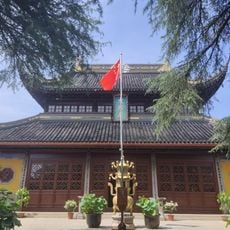
The garden's name comes from Fan Li, the Yue minister who, according to legend, boated on the lake with Xi Shi after the defeat of Wu; the lake and garden took his name. The Four Seasons Pavilion, built in 1954, has yellow roofs and red columns, with plum by the spring pavilion, oleander by summer's, osmanthus by autumn's and wintersweet by winter's. Near the water pavilion stands the small Ningchun Pagoda, the garden's emblem.
Liyuan lies on the north shore of Li Lake in Binhu District, Wuxi, Jiangsu. The garden covers 8.2 hectares, of which 3.5 hectares are water, so allow time for the 289-metre Thousand-Step Corridor along the lake and the roughly 200-metre corridor added in 1952 to link the garden with the former Fishing Villa. The Four Seasons Pavilion area and the central rockery are reached on foot within the grounds.
The garden's name comes from Fan Li, a Yue minister who, after defeating Wu, retired and boated on the lake with Xi Shi; the lake was then named after him. The garden itself began with the Qingqi Eight Views laid out by Yu Xunzhen of Qingqi village in the early Republic, before Wang Yuqing and his son Wang Kangyuan built Liyuan between 1927 and 1936.
The community of curious travelers
AroundUs brings together thousands of curated places, local tips, and hidden gems, enriched daily by 94,155 contributors worldwide.