The Plum Garden, Historical botanical garden in Wuxi, China
The Plum Garden is a botanical garden between Dragon Mountain and Taihu Lake in Wuxi, spanning a large area with thousands of plum trees of various varieties. The garden displays a collection of plum bonsais and features areas with special stones and traditional structures such as pagodas.
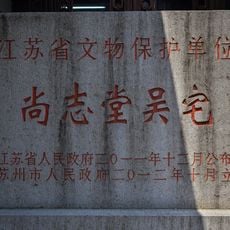
The site was originally the Xiaotaoyuan of Qing scholar Xu Dianyi. In 1912 Wuxi entrepreneur Rong Desheng bought it, planted 3,000 plum trees and named it Meiyuan. Rong Yiren donated the garden to the state in 1955, except for the Lean villa. It was expanded to Hengshan in 1960, listed as a Wuxi heritage unit in 1994 and as a Major Historical and Cultural Site Protected at the National Level in 2006.
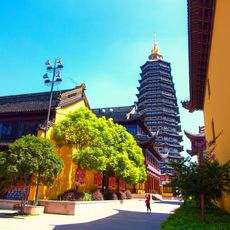
The garden's name comes from the plum trees planted by Rong Desheng in 1912 under the motto "Spread Fragrance to the World". The Nianqu Pagoda, built in 1930 by brothers Rong Zongjing and Rong Desheng for their mother's 80th posthumous birthday, was renamed by scholar Qian Zhenhuang after lines in the Shijing, the Book of Songs, on a mother's toil. The Songbin Hall, known as the Nanmu Hall, takes its name from the Bin Feng section of the Shijing, on farmers' hard labour.
The garden is easily accessible by public transportation and features clear paths that guide visitors through different areas. Comfortable walking shoes are recommended since the grounds are explored on foot, and different plants bloom at various times of the year.
The pagoda was first named Nianci; the calligrapher Qian Zhenhuang, invited to write its inscription, proposed Nianqu instead, citing the Shijing lines on a mother's toil. The name stuck, and the 18-metre brick tower remains the garden's highest point.
The community of curious travelers
AroundUs brings together thousands of curated places, local tips, and hidden gems, enriched daily by 93,862 contributors worldwide.