Shek Pik Rock Carving, Ancient petroglyph in Islands District, Hong Kong.
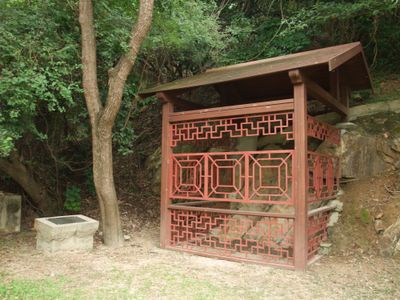
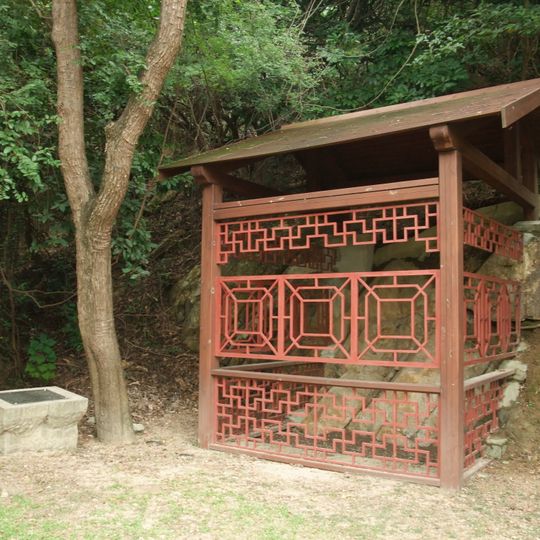
Shek Pik Rock Carving is a carved rock face east of Shek Pik Prison, below the eastern end of the Shek Pik Reservoir dam on southern Lantau Island. Its patterns are built from concentric squares and circles, resembling motifs on ancient bronzes. The rock now stands behind a shelter of four reddish-brown posts carrying a flat board roof, with red lattice panels in front.
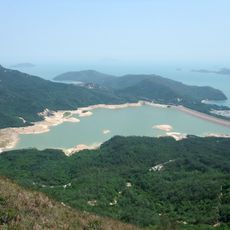
Chen Gongzhe discovered the Shek Pik carving in 1938, east of Shek Pik Prison and below the eastern end of the reservoir dam, about 300 metres from the coast, which was likely the shoreline when it was cut. Its concentric squares and circles resemble patterns on ancient bronzes, so archaeologists date it to roughly 3,000 years ago, to the Bronze Age.
The carvings show early artistic expression by people who lived in this region, created by scratching and pecking techniques into the stone. They offer a window into the creative activities of prehistoric inhabitants.
The site lies away from main roads and requires a walk through natural paths along the coast. Visitors should wear sturdy shoes and watch for tides, as access can be limited during high water.
The carvings were found in 1938 by Chen Gongzhe, who came upon the rock while surveying the area. The site now lies about 300 metres from the sea, below the eastern end of the Shek Pik Reservoir dam and east of Shek Pik Prison, though the sea once reached it.
The community of curious travelers
AroundUs brings together thousands of curated places, local tips, and hidden gems, enriched daily by 93,901 contributors worldwide.