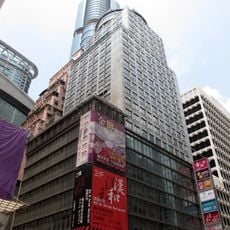
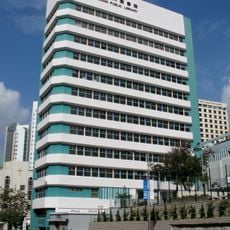
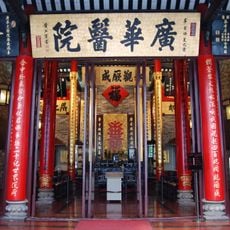
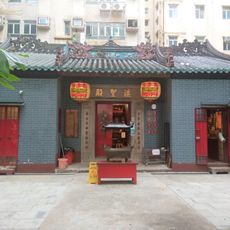
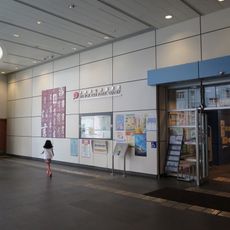
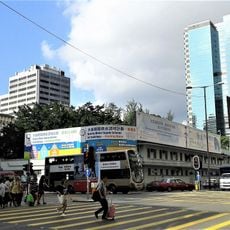
Emperor Guan Temple on Nathan Road, Mong Kok, Chinese shrine in Mong Kok, Hong Kong.
The Emperor Guan Temple on Nathan Road was a small makeshift shrine built by Occupy Mong Kok participants on 9 October 2014 within the occupied zone on Nathan Road. It consisted of a Guan Yu statue placed behind barricades, with offerings and incense set up by a female worker known as "Agu", who spent over HK$1,000 on the statue and furnishings. It was destroyed during the police clearance on 26 November 2014.
The temple honors Guan Yu, a general from the Three Kingdoms period who became a symbol of loyalty and righteousness in Chinese tradition. This Mong Kok shrine connects ancient Chinese history with the spiritual practices of modern Hong Kong.
Worshippers light incense and leave offerings at the altar to express prayers and requests for guidance. These daily rituals show how Guan Yu remains a protective figure in modern Hong Kong life and practice.
The shrine stood within the occupied zone on Nathan Road at the junction with Argyle Street, not at a fixed address. It was a makeshift altar of barriers and offerings, so there were no opening hours; it existed from 9 October to 26 November 2014. On 13 October police briefly blocked access, and on 28 October fire officers warned the barriers near the statue were a fire risk.
The shrine became a gathering place during the 2014 Hong Kong protests, where people sought spiritual support and solace. This unexpected role showed how religious spaces can become centers for personal reflection during times of social change.
The community of curious travelers
AroundUs brings together thousands of curated places, local tips, and hidden gems, enriched daily by 93,086 contributors worldwide.