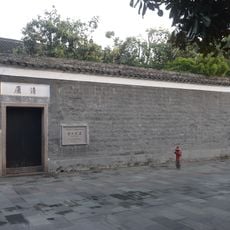
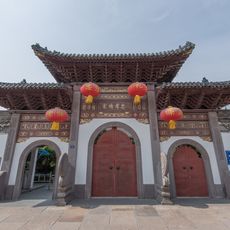
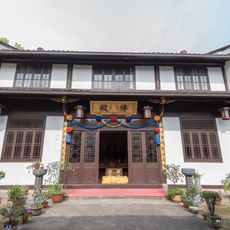
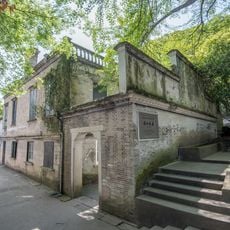
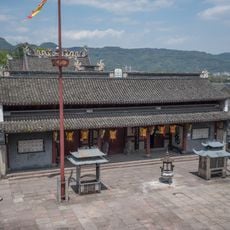
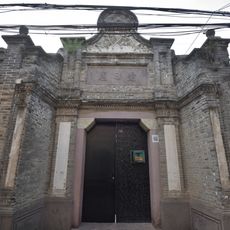
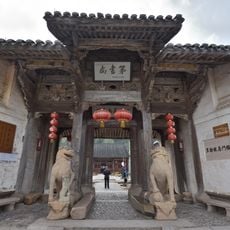
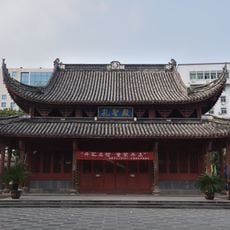
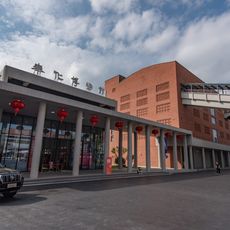
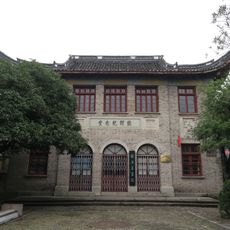
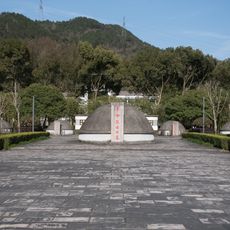
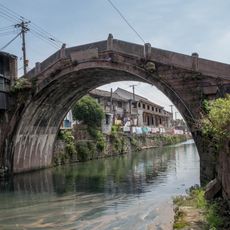
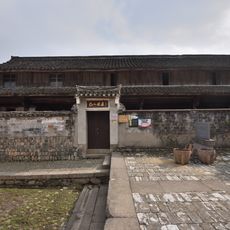
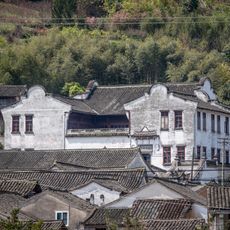
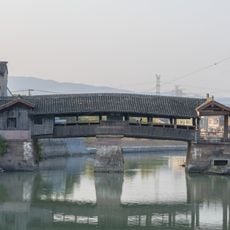
武山庙, Ancestral temple of the Jiang family in Xikou, Fenghua District, China.
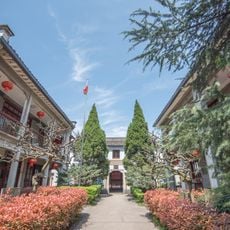
This temple is a religious structure in Fenghua with traditional Chinese architectural features including finely crafted wooden beams and ornamental roof elements. The complex consists of multiple buildings and courtyards arranged according to classical Chinese temple design principles.
Wu Shan Temple existed by the Hongwu era of the Ming dynasty, as its steles record. Five Xikou clans—Ren, Song, Shan, Zhang and Jiang—worshipped here together; after the Qing, the Jiang led as the town's largest clan. Repairs and extensions in 1790 and 1796 added corridors and the gate, and the temple reached its present size under Chiang Kai-shek's father, Chiang Zhaocong. In 2006 it was incorporated into the Jiang family residence national protection unit.
The temple began as a joint shrine of Xikou's five surnames — Ren, Song, Shan, Zhang and Jiang — and after the Qing the Jiang clan, as the town's largest, supplied its head. Since 2010 it has hosted the "Dream Back to Xikou" temple fair performances, and in 2016 it was listed as a Zhejiang example of good use of an immovable cultural relic.
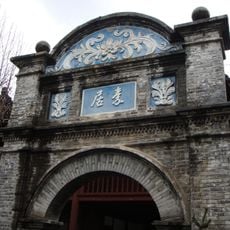
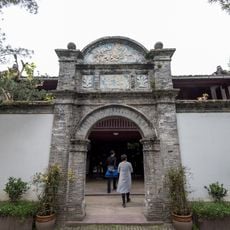
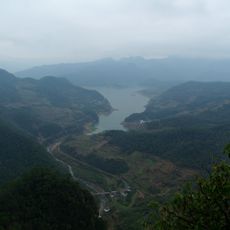
The temple stands at the foot of Wushan in Xikou, facing southeast, and is entered through the mountain gate into a courtyard with a stage in the central well and covered corridors on both sides. Since 2010 it has served as the venue for the "Dream Back to Xikou" temple fair performances, so visits may coincide with staged shows rather than quiet worship.
The temple's name appears in a stele inscription confirming it existed by the Hongwu era of the Ming dynasty. Chiang Kai-shek, while watching a play here in December 1936, learned of the Xi'an Incident; his brother Chiang Jieqing suffered a stroke and died three days later.
The community of curious travelers
AroundUs brings together thousands of curated places, local tips, and hidden gems, enriched daily by 94,071 contributors worldwide.