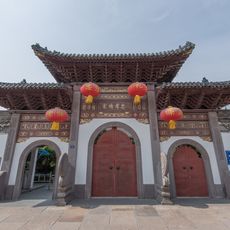
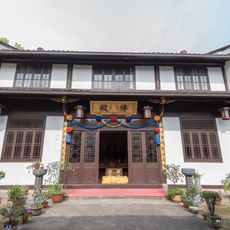
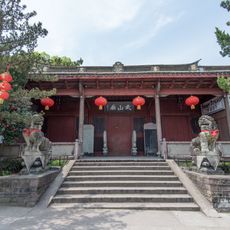
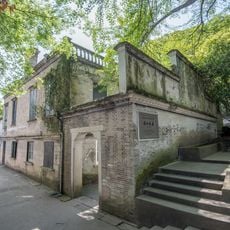
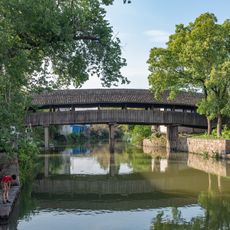
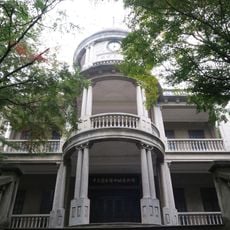
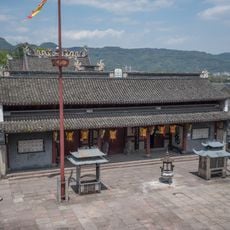
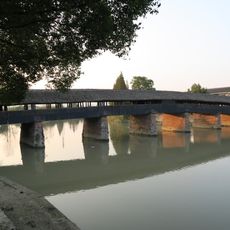
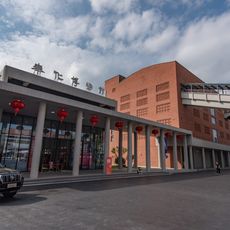
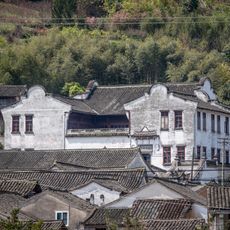
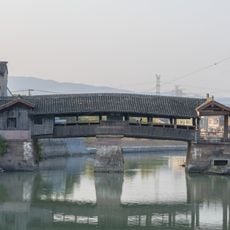
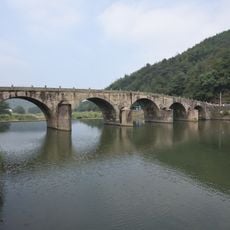
Yutai Salt Store, Historical salt trading building in Fenghua District, China.
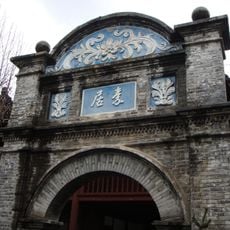
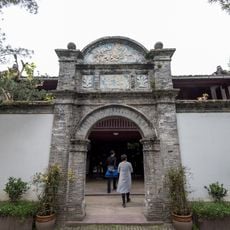
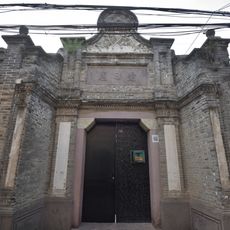
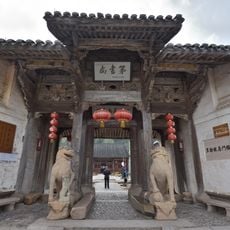
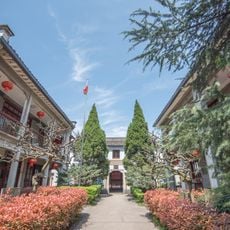
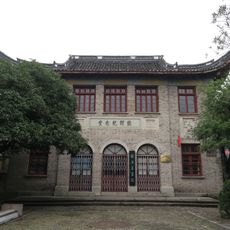
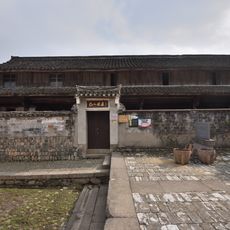
The Yutai Salt Store, also called Qinglu, is a stone-gate courtyard in Xikou, Fenghua District, Ningbo, Zhejiang. The present complex, rebuilt in 1948, covers 815 square metres: a two-storey hard-mountain-roof building with four bays at the front, a courtyard, and three single-storey rooms behind, the leftmost being the kitchen. The gate plaque reads "Qinglu"; a foundation stone at the lower right corner bears Chiang Kai-shek's inscription "Yutai Salt Store Original Site".
Jiang Jiecheng opened the salt shop after years as a peddler; it was destroyed during the Taiping occupation and rebuilt after October 1862, when his son Jiang Zhaocong took over and obtained an official salt licence. Jiang Jieshi was born in the upstairs east room on 31 October 1887. The shop closed in 1919, burned again in 1921, and the present stone-gate courtyard was rebuilt in 1948 after termite damage.
The building shows how salt trading shaped life in this region and what business methods local merchants used at that time. You can still see the rooms where salt was stored and sold, which reveals the economic importance of this trade.
The building is within walking distance from central Fenghua and sits in an area with other historical sites. Visitors should wear comfortable shoes to explore the interior spaces and neighboring areas at ease.
Chiang Kai-shek was born on 31 October 1887 in the east room on the upper floor of this salt shop, which his grandfather Jiang Siqian had founded. The shop held an official salt licence from the Ningbo salt administration and employed a bookkeeper, clerks and apprentices, with capital of about two to three thousand silver dollars.
The community of curious travelers
AroundUs brings together thousands of curated places, local tips, and hidden gems, enriched daily by 93,108 contributors worldwide.