Stadion Rote Erde, Football stadium in Dortmund, Germany.
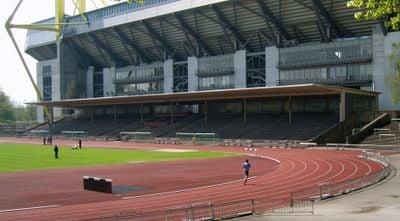
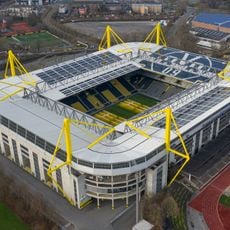
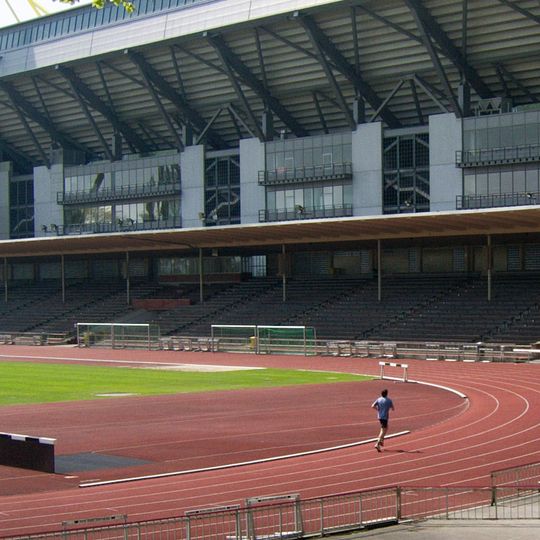
Stadion Rote Erde is a football stadium in Dortmund with a main grandstand, a running track, and concrete terraces that can hold up to 25,000 spectators. The facility sits right next to Signal Iduna Park and is used for reserve team matches and athletic competitions.
The stadium opened on June 6, 1926, with a match between Dortmund and FC Wacker München. It served as home to Borussia Dortmund until 1974, when the club moved to the new Westfalenstadion.
The name Rote Erde is an old designation for Westphalia, not a reference to the ground. The stadium opened in 1926 with two separate ceremonies: civil sports clubs held the first, broadcast on radio, and workers' gymnastics clubs followed a week later. It is listed as a monument in Dortmund's heritage register.
The stadium is a listed monument next to the Westfalenstadion's east stand on Strobelallee. Its floodlights reach only 586 lux, below the 800 lux required for third-division football, and the ground lacks under-soil heating. Borussia Dortmund II plays here with 9,999 spectators admitted, 3,000 of them seated.
The name "Rote Erde" (Red Earth) is a historical term for Westphalia, not a reference to local soil. The stadium was built between 1924 and 1926 largely by unemployed workers under emergency relief programmes, and it is listed as a monument in Dortmund's heritage register.
The community of curious travelers
AroundUs brings together thousands of curated places, local tips, and hidden gems, enriched daily by 92,893 contributors worldwide.