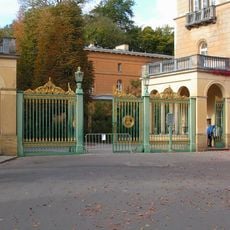
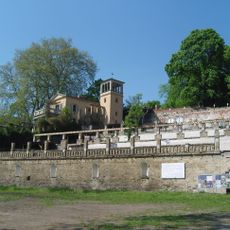
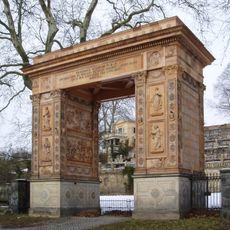
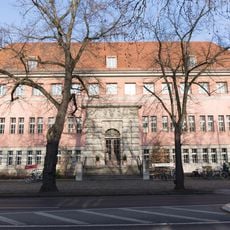
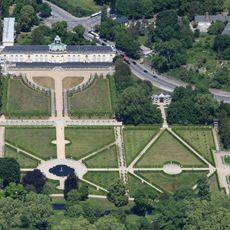
Obeliskportal, Eastern entrance gate of Sanssouci Park, Potsdam, Germany.
The Obeliskportal is a monumental sandstone entrance gate on the eastern boundary of Sanssouci Park. It features four Corinthian columns on each side, topped with decorative vases and cherubs along the curved entrance walls.
Frederick the Great had the eastern park exit built in 1747 to plans by Georg Wenzeslaus von Knobelsdorff, as a counterpart to the garden portal of Rheinsberg Palace, recalling his years as crown prince there. The sculptor Friedrich Christian Glume carried out the stonework. The obelisk marking the park boundary followed in 1748, designed by Knobelsdorff and cut by stonemason Johann Christian Angermann.
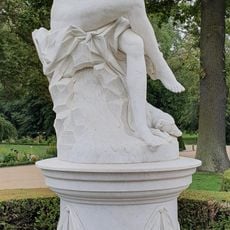
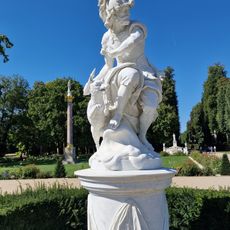
The sandstone figures of Flora and Pomona by Friedrich Christian Glume stand on the curved walls flanking the gate, not as reliefs. They face into the park because the portal served only as an exit in Frederick the Great's time, so the goddesses bid farewell to departing guests.
The gate stands a few steps inside the park from the obelisk on Schopenhauerstraße, which marks the boundary. From here the roughly 2 km main alley runs straight west to the New Palace, so the portal works as a starting point for crossing the park. The two column groups were dismantled for restoration from late 2024, with return planned by autumn 2025.
The obelisk beside the gate displays decorative hieroglyphs created in the 18th century without knowledge of actual Egyptian writing systems. These imagined symbols reflect how Europeans of that era romanticized ancient cultures.
The community of curious travelers
AroundUs brings together thousands of curated places, local tips, and hidden gems, enriched daily by 94,638 contributors worldwide.