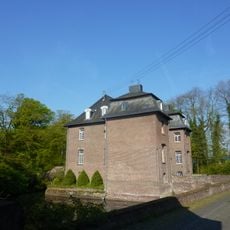
Burg Erprath, Medieval castle in Weckhoven, Neuss, Germany
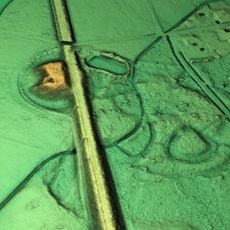
Burg Erprath is a two-part motte-and-bailey ruin at the mouth of the Gillbach on the Erft, about 850 metres west of St. Paulus Church in Weckhoven. The main castle consists of a four-metre-high mound, 18 metres across at its base, with a surviving 4.8-metre-high, 6.5-metre-long section of the residential tower's wall on its south side. The outer bailey lay 20 metres to the southwest on a plateau 20 by 30 metres and one to two metres high, with a five- to seven-metre-wide, now swampy section of moat on its southeast side.
Burg Erprath was built in the 13th century as the seat of the lords of Erprath, whose independent lordship was recorded as "Erproide" in 1391. After the family died out in the 14th century, the property passed to the Counts of Virneburg. On 21 December 1405 Ruprecht von Virneburg sold the castle to Archbishop Friedrich III von Saarwerden of Cologne, after which it served as a regional castle of Electoral Cologne until its destruction in the Truchsessian War in 1586.
The residential tower was built using Roman demolition materials, which was common practice in medieval times when builders reused ancient stone and brick. This approach shows how castle lords incorporated traces of earlier civilizations into their new structures.
The site lies about 850 meters west of St. Paulus Church in Weckhoven and is easy to spot at the point where the rivers meet. Visitors should expect uneven ground and bring weather protection, since the ruin sits in open terrain.
Excavations in 1984 uncovered the remains of a wooden bridge and oak palisade fence that connected the main castle to its outer fortification. These archaeological finds show how the site was divided into separate defensive zones.
The community of curious travelers
AroundUs brings together thousands of curated places, local tips, and hidden gems, enriched daily by 92,638 contributors worldwide.