St. Quintins-Kapelle, Romanesque church in Essen, Germany
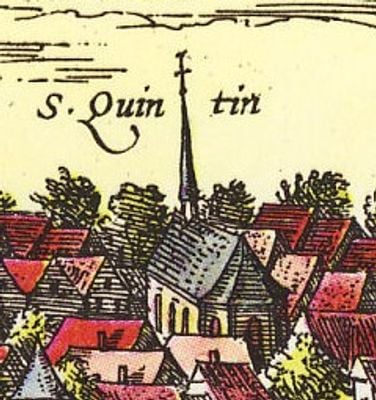
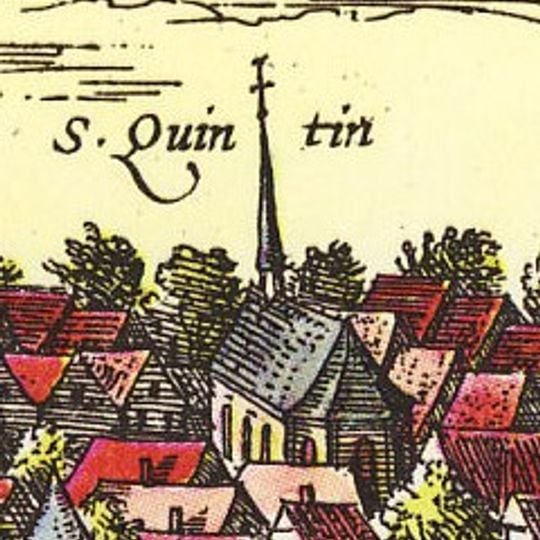
St. Quintins-Kapelle was a Romanesque church building with a rectangular layout and an extended choir section, documented through drawings before its demolition in 1823. The structure stood in the northwestern part of the city near other medieval religious buildings.
The chapel's construction date is unknown; long-held claims that Altfrid founded it around 835 and obtained Quintin relics are now doubted, since he is not named in the Miracula s. quintini. The first secure mention is Abbess Theophanu's testament of about 1050, ordering candles burned ad sanctum Quintinum; she may have been its founder. Thirteenth-century Consuetudines regulate its use, and it was demolished around 1823.
The chapel was called Quintchen in Essen dialect. It stood between the abbey gate and the atrium, where newly admitted canonesses were led to venerate the saint's relics and pray for the living and the dead. After death, the canonesses were laid out there, and the convent's memorial services were held in the chapel.
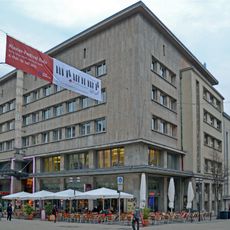
The location of the former chapel is marked by a commemorative plaque on a modern office building situated north of Essen Minster. An alley called 'An St. Quintin' between the business complex and St. John the Baptist parish church helps visitors understand where this structure once stood.
Detailed church regulations from the 13th century survive that describe the specific role of this chapel in the convent's daily worship routines and monastic life. These written records provide rare insights into how medieval religious buildings like this one functioned within their communities.
The community of curious travelers
AroundUs brings together thousands of curated places, local tips, and hidden gems, enriched daily by 94,031 contributors worldwide.