The German Pharmacy Museum, Historical pharmacy museum in Heidelberg Castle, Germany.
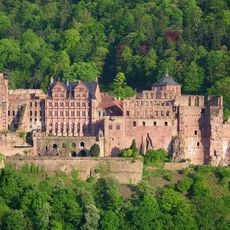
The German Pharmacy Museum occupies eleven rooms of Heidelberg Castle, spread across the Ottheinrichsbau, the Ludwigsbau and the Apothekenturm. Its displays include seven complete pharmacy interiors from the Renaissance, Baroque and Biedermeier periods, plus a 1930s officina, the world's largest collection of 18th-century enamel-painted glass, and majolica and faience from the 16th to 18th centuries.
The museum was founded in 1937 as a non-profit foundation, with Walter Heinrici's private pharmacy-history collection as its core, transferred on the order of Reich pharmacist leader Albert Schmierer. It opened in Munich in 1938; the building was almost entirely destroyed in 1943, though most of the collection had been evacuated. After the war the holdings were moved to the Neue Residenz in Bamberg, then to Heidelberg Castle in 1957, where they occupy eleven rooms.
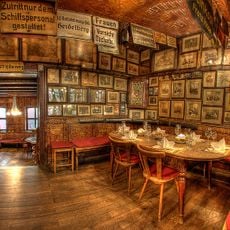
The collection includes intact interior spaces of pharmacies from different periods, showing how apothecaries were arranged and used in daily life. These preserved rooms reveal how medicines were displayed and sold, and what role these shops held in their communities.
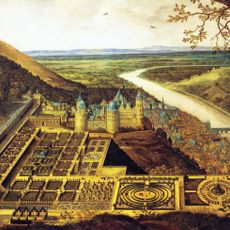
The museum occupies eleven rooms across the Ottheinrichsbau, the Ludwigsbau and the Apothekenturm of Heidelberg Castle. The Apothekengarten, planted after historical herbals such as the catalogue of court apothecary Philipp Stefan Sprenger, lies in a non-public part of the castle and can be visited only on a guided tour.
The Apothecary Tower's domed upper room holds a reconstructed historical laboratory with many original instruments. The museum also keeps the world's largest collection of 18th-century enamel-painted pharmacy glass, alongside technical glass of the 17th to 19th centuries.
The community of curious travelers
AroundUs brings together thousands of curated places, local tips, and hidden gems, enriched daily by 92,886 contributors worldwide.