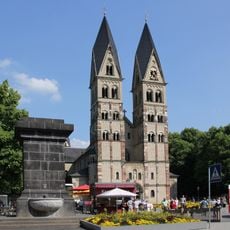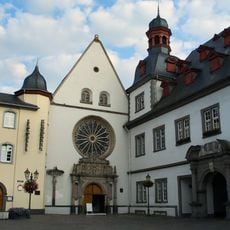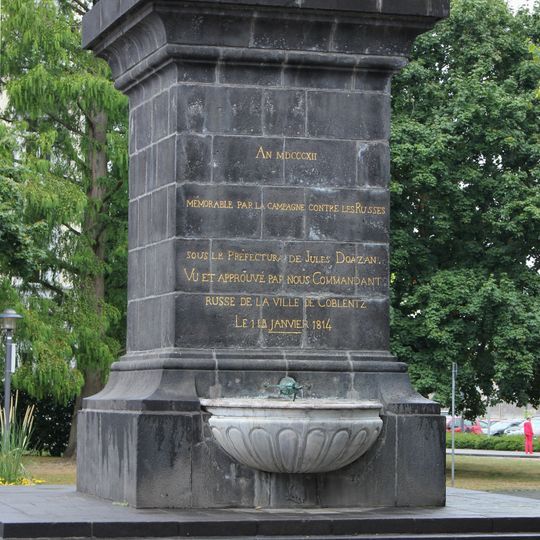
Kastorbrunnen, Water well in front of St. Kastor Basilica, Koblenz, Germany.
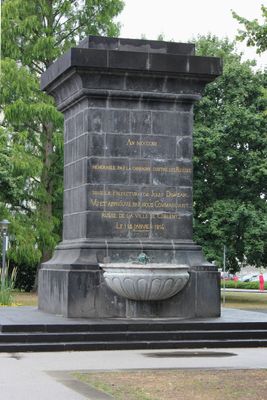
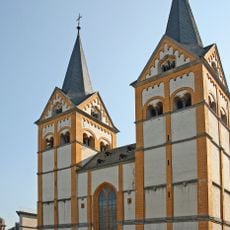
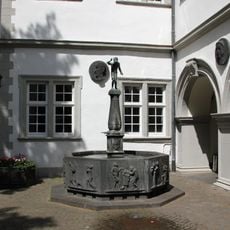
Kastorbrunnen is a water well made of basalt stone with two semicircular marble basins located in front of St. Kastor Basilica in Koblenz. The structure features inscribed texts on its surface that identify it as a functional water feature with historical significance.
Built in 1812 by French prefect Jules Doazan to commemorate Napoleon's Russian campaign, the well later received a response carved by a Russian commander. The twin inscriptions now mark this moment when military fortunes changed dramatically.
Two inscriptions in French appear on the fountain, one from French forces and another from a Russian commander, reflecting a moment when opposing armies met at this spot. The texts remain visible today, serving as a conversation frozen in stone.
The well is located in central Koblenz near St. Kastor Basilica and remains accessible throughout the day without restrictions. It works best to visit as part of exploring the surrounding plaza and the old town area nearby.
A Russian commander responded to the original inscription with text of his own, creating an unusual dialogue between enemies on stone. This rare moment of wit during wartime remains frozen in the inscriptions for visitors to read today.
The community of curious travelers
AroundUs brings together thousands of curated places, local tips, and hidden gems, enriched daily by 91,996 contributors worldwide.