Hunsrück-Hochwald National Park, National park in Rhineland-Palatinate and Saarland, Germany.
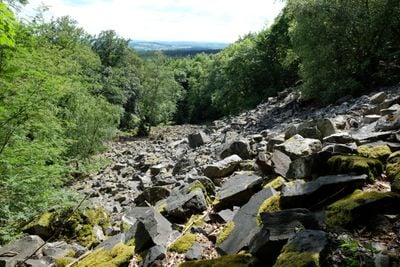
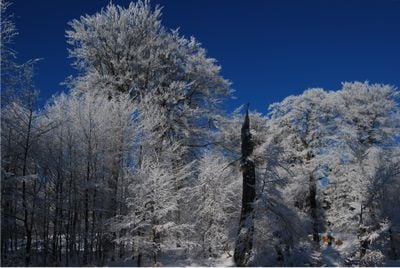
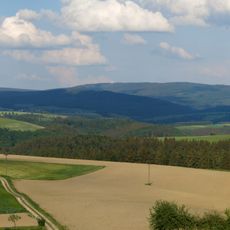
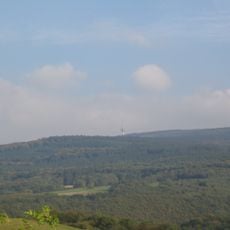
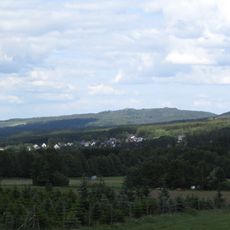
Hunsrück-Hochwald is a protected woodland area spanning around 10,000 hectares across Rhineland-Palatinate and Saarland, featuring ancient beech trees, moors, grasslands, and substantial changes in elevation. The landscape shifts between different altitudes and creates varied habitats that support diverse plant and animal life.
The national park was created by a state treaty between Rhineland-Palatinate and Saarland; both state governments agreed on the name in 2014, and most municipalities in the area had approved the concept in 2013. The official opening ceremony took place over the Pentecost weekend in 2015, making it Germany's 16th national park. About 986 of its 10,120 hectares lie in the Saarland, in the municipalities of Nohfelden and Nonnweiler.
The park operates under the motto 'Let nature be nature,' which shapes how visitors experience conservation through educational programs, ranger-led walks, and hands-on research activities. People come to understand how the forest manages itself without constant human intervention.
The park covers 10,120 hectares across the Idarwald and Schwarzwälder Hochwald, with about 986 hectares in the Saarland around Nohfelden and Nonnweiler. Enclaves inside the boundary include Börfink, Muhl, Thranenweier and Hujetsägemühle. Paths are to be made barrier-free for recreation and education, and 75 percent of the area is left to develop into wilderness within 30 years.
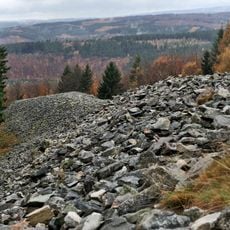
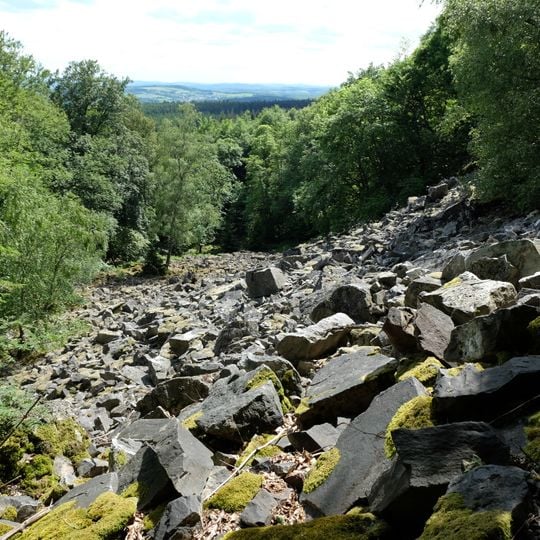
The park's forests shelter the black stork, which nests in old, undisturbed stands; the German source lists it among the area's protected bird species alongside the honey buzzard, grey-headed and black woodpeckers, and the pygmy owl. The Hochwald's beech woods on quartzite, its ravine and bog forests, and its scree slopes provide the cover these birds need.
The community of curious travelers
AroundUs brings together thousands of curated places, local tips, and hidden gems, enriched daily by 94,978 contributors worldwide.