Spitzbubenhöhle, Archaeological cave in Herbrechtingen, Germany.
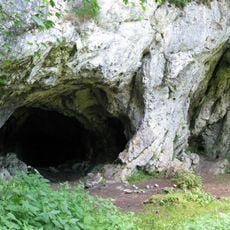
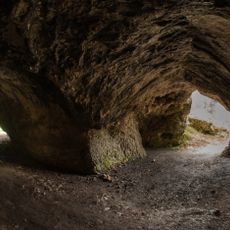
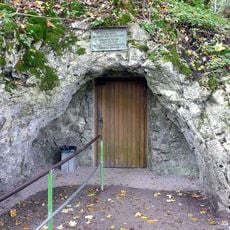
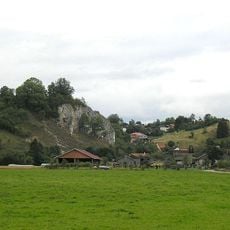
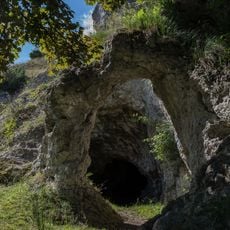
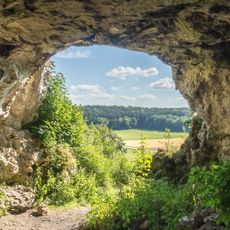
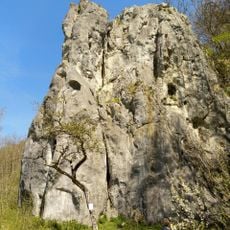
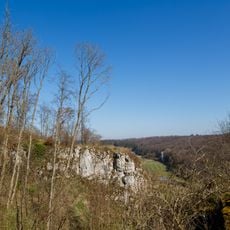
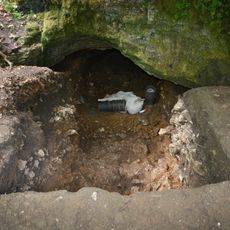
The Spitzbubenhöhle is an archaeological cave set into a limestone formation, with its entrance positioned roughly 6 meters above the valley floor. The cave passage extends about 30 meters into the rock and contains multiple layers holding ancient remains.
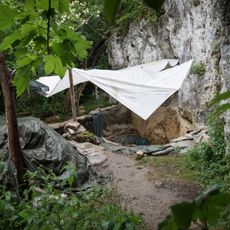
Excavations in the 1970s revealed that the cave was inhabited during the Late Paleolithic period when reindeer and horses roamed the region. The animal bones discovered there show what wildlife existed at that time.
The cave's name, Spitzbubenhöhle, refers to a "rascal" or "rogue" in German, a popular name rather than an archaeological term. The first written record of the cave appears in the 1844 Oberamtsbeschreibung of the Heidenheim district office. Excavator Eugen Gaus, founder of the Museum Schloss Hellenstein, equipped that museum partly with finds he dug here himself.
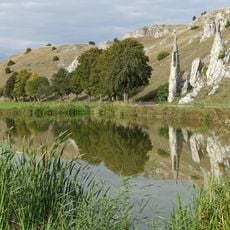
The cave is located in the Eselsburger Tal protected valley with marked hiking trails departing from the village of Eselsburg. A loop route of roughly 5 kilometers connects this site to other points of interest in the landscape.
The cave contains 14 distinct geological layers that document different time periods. Many tools were made from local jasper and flint, including possibly a bone tool used in fishing.
The community of curious travelers
AroundUs brings together thousands of curated places, local tips, and hidden gems, enriched daily by 94,237 contributors worldwide.