Areopagus, Ancient judicial rock formation near Acropolis, Athens, Greece
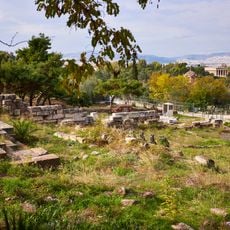
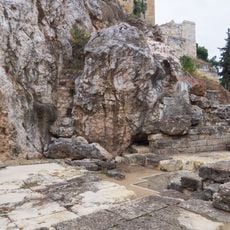
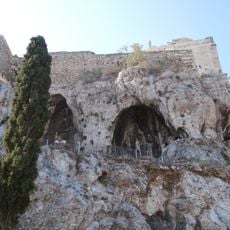
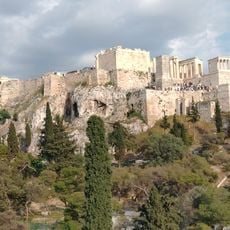
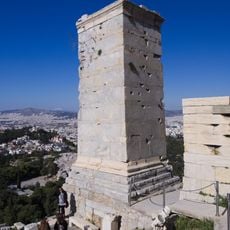
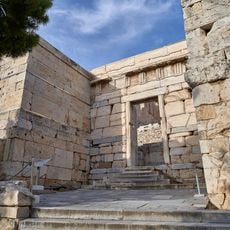
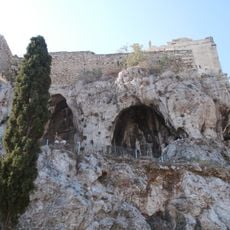
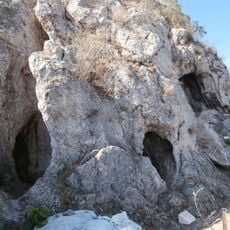
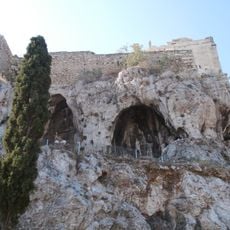
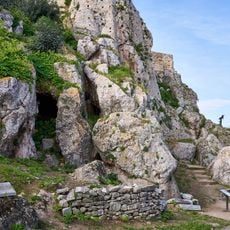
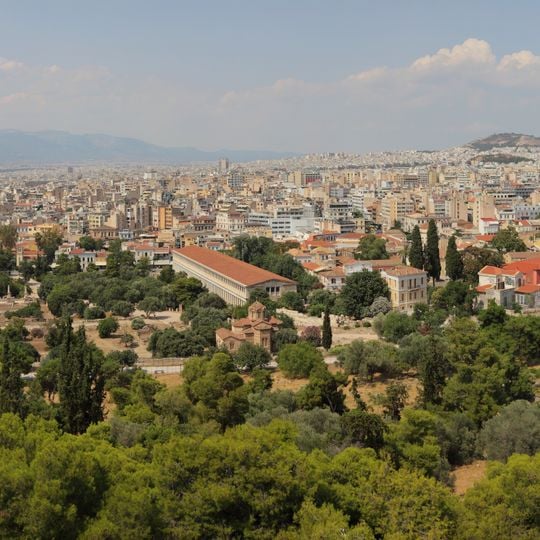
Areopagus is a gray marble hill northwest of the Acropolis in Athens, Greece. The flat summit measures roughly 30 meters (98 feet) in length and can be reached through steps carved into the stone.
Homicide trials were held on this hill as early as the 7th century BC, possibly the mid-8th. Solon restructured the council in 594 BC, and Ephialtes stripped it of most powers in 462/461 BC, leaving the murder tribunal. In Acts 17:16-34 Paul addresses Athenians here, though the council likely met in the agora by then.
The name comes from Areios Pagos, "Hill of Ares", after the war god tried here by the other gods for killing Poseidon's son Halirrhothius. In Aeschylus's Eumenides (458 BC) the hill hosts the trial of Orestes, and the court also heard the case of the courtesan Phryne, accused of profaning the Eleusinian Mysteries.
The steps are narrow and steep in places, especially slippery when wet. Early morning or late evening hours offer cooler temperatures and fewer people at the top.
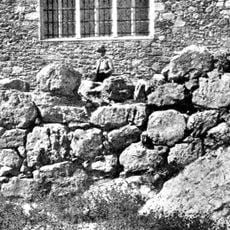
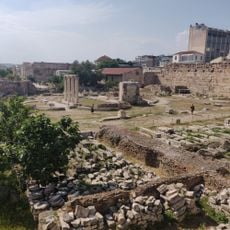
The surface shows rectangular cuts indicating foundations of buildings and altars from classical antiquity. These traces give clues about the spatial arrangement of the old courtroom and its religious structures.
The community of curious travelers
AroundUs brings together thousands of curated places, local tips, and hidden gems, enriched daily by 93,693 contributors worldwide.