Leonidaion, Ancient accommodation building in Olympia, Greece
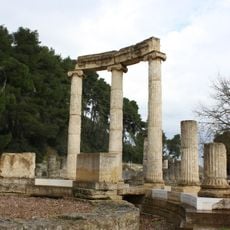
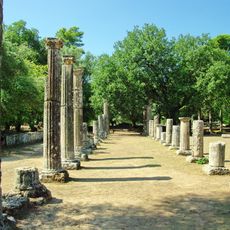
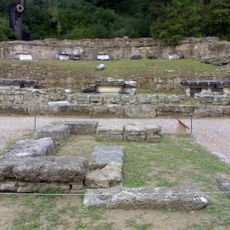
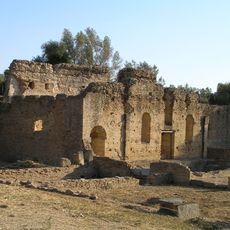
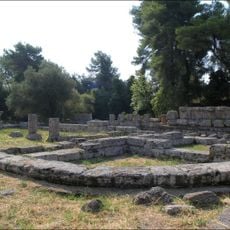
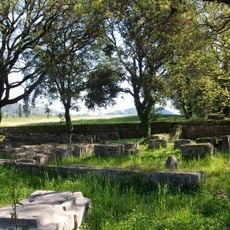
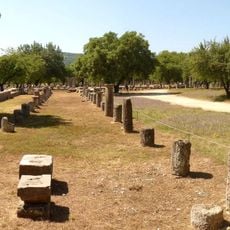
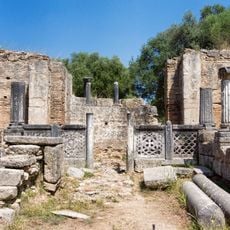
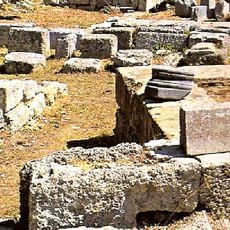
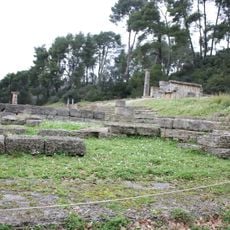
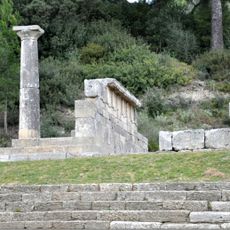
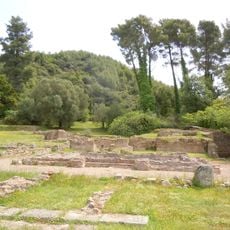
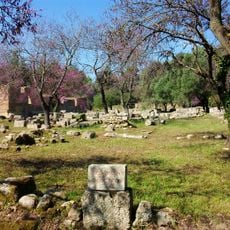
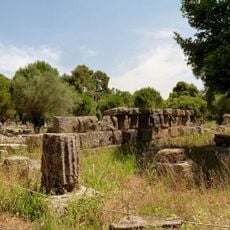
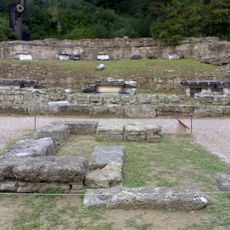
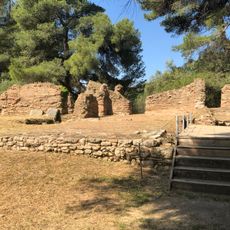
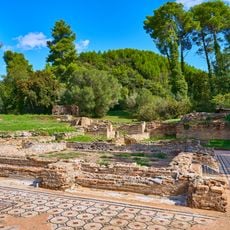
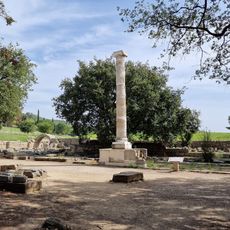
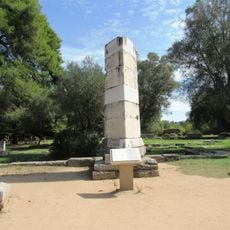
The Leonidaion is a nearly square building of conglomerate stone measuring 80.18 by 73.51 metres, with an outer colonnade of 138 Ionic columns and an inner Doric peristyle of 44 columns around a central courtyard. About 80 small rooms on two storeys opened onto the courtyard, and the architrave bore the name of Leonidas.
Built between 330 and 320 BCE at the southwest edge of the sanctuary, the Leonidaion was funded and designed by Leonidas of Naxos as lodging for official visitors and athletes. Under Hadrian it was modified and improved, and in the 1st century CE a separate athletes' house took over its role for Roman authorities. It was destroyed by an earthquake in the late 3rd century CE, and its wreckage went into the Late Antique wall built against the Herules.
The name comes from its benefactor and architect, Leonidas of Naxos, whose name was carved on the architrave of the outer colonnade. A statue of Leonidas stood in the northeast corner of the building. In Roman times the Leonidaion housed official visitors and athletes until a separate House of the Athletes, built in the 1st century AD, took over lodging Roman authorities.
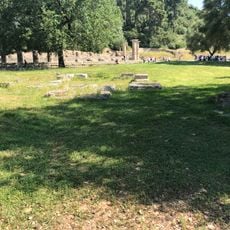
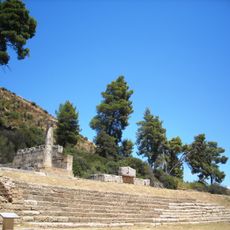
The Leonidaion lies at the southwest edge of the sanctuary of Olympia, at the processional entrance to the Altis, south of the Workshop of Pheidias. Its plan is a near-square of about 80 by 73 metres, so look for the four outer colonnades and the central court to orient yourself. The rooms opened onto the courtyard, with the west wing divided into six and the other wings into twelve.
The Leonidaion was excavated between 1937 and 1966 under archaeologist Emil Kunze. In its northeast corner stood a statue of Leonidas of Naxos, the architect who funded and designed the building; his name also appears in an inscription on the architrave of the outer colonnade.
The community of curious travelers
AroundUs brings together thousands of curated places, local tips, and hidden gems, enriched daily by 93,470 contributors worldwide.