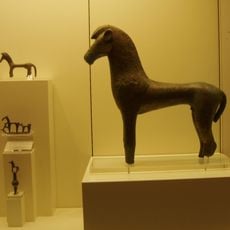
Temple of Zeus in Olympia, Ancient Greek temple in Olympia, Greece.
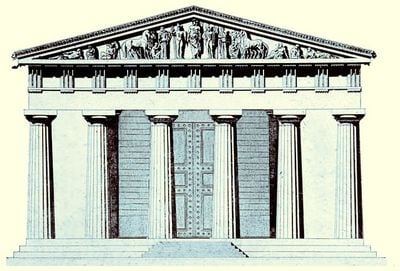
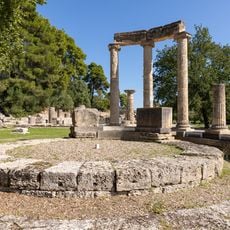
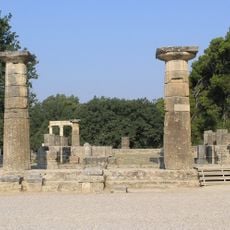
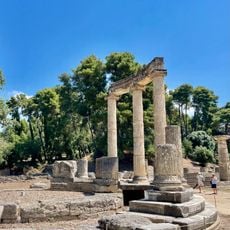
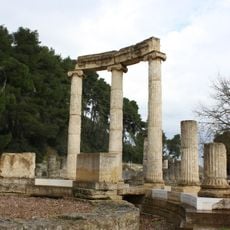
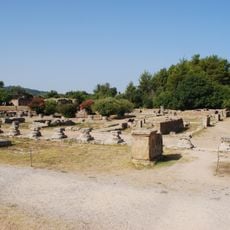
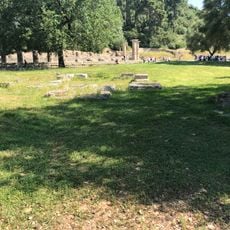
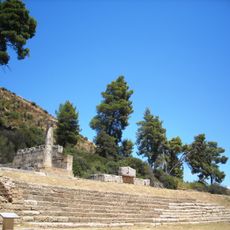
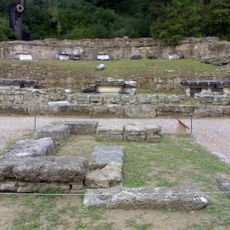
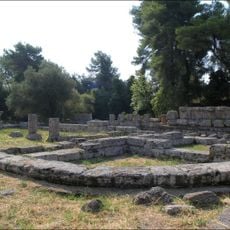
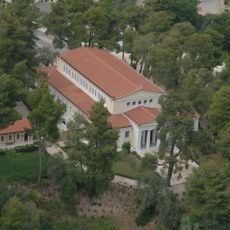
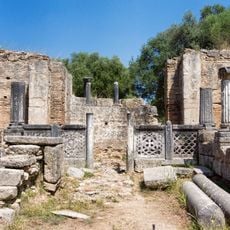
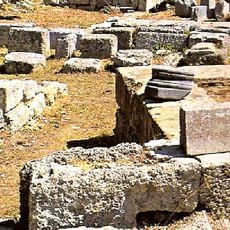
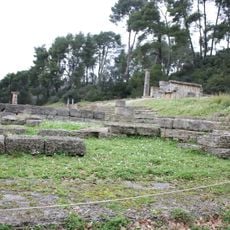
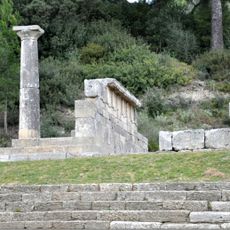
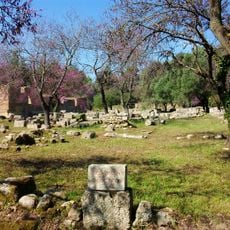
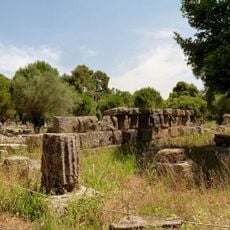
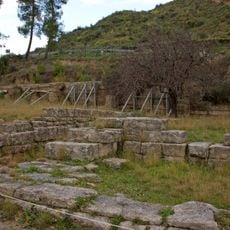
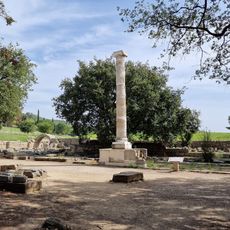
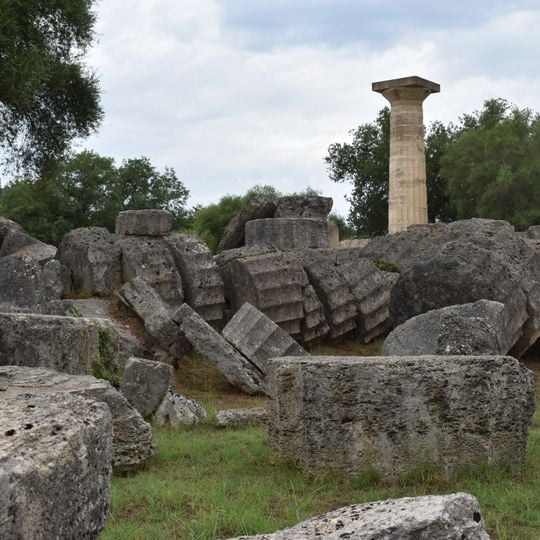
The Temple of Zeus stands in Olympia as a ruined Doric peripteral temple: one tall column of stacked, weathered beige drums with a plain square capital rises on the right, while large grey and beige blocks, some rectangular and some fluted column fragments, lie scattered and partly stacked on grassy ground. No roof or walls remain. The facade shown in the second photograph has a triangular pediment filled with sculpted figures above a frieze of alternating vertical grooves and plain blocks, four fluted columns with simple capitals, and a central set of tall studded double doors reached by a short flight of steps.
Construction began around 472 before Christ under architect Libon of Elis and continued until roughly 456 before Christ. An earthquake in the sixth century after Christ finally toppled the structure.
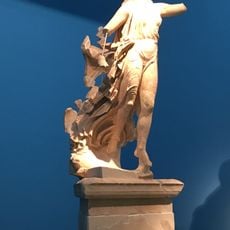
The temple's east pediment showed the chariot race between Pelops and Oenomaus, and the west pediment a battle of Lapiths and centaurs, with Apollo pointing toward the human side. Pausanias attributed the east group to Paeonius and the west to Alcamenes, while the metopes carried the twelve labours of Heracles. The Roman general Mummius hung twenty-one gilded shields on the eastern front after sacking Corinth in 146 BC.
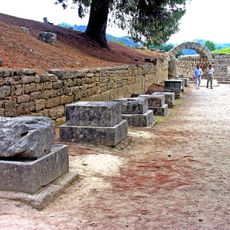
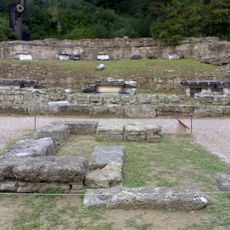
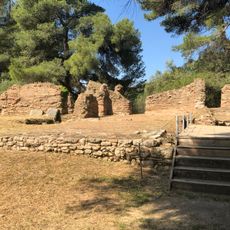
The temple platform is reached by a ramp on the east side, the same approach used in antiquity. The site is exposed and the ground between the fallen drums is uneven, so sturdy shoes help. Excavations by the German Archaeological Institute began in 1875 and continue intermittently, so some areas may be fenced off.
The temple once housed a statue of Zeus made from gold and ivory that was counted among the Seven Wonders. This figure disappeared in the fifth century after Christ without clear traces of its whereabouts.
The community of curious travelers
AroundUs brings together thousands of curated places, local tips, and hidden gems, enriched daily by 93,115 contributors worldwide.