Ολυμπία, Sanctuary and archaeological site in Ancient Olympia, Elis, Greece
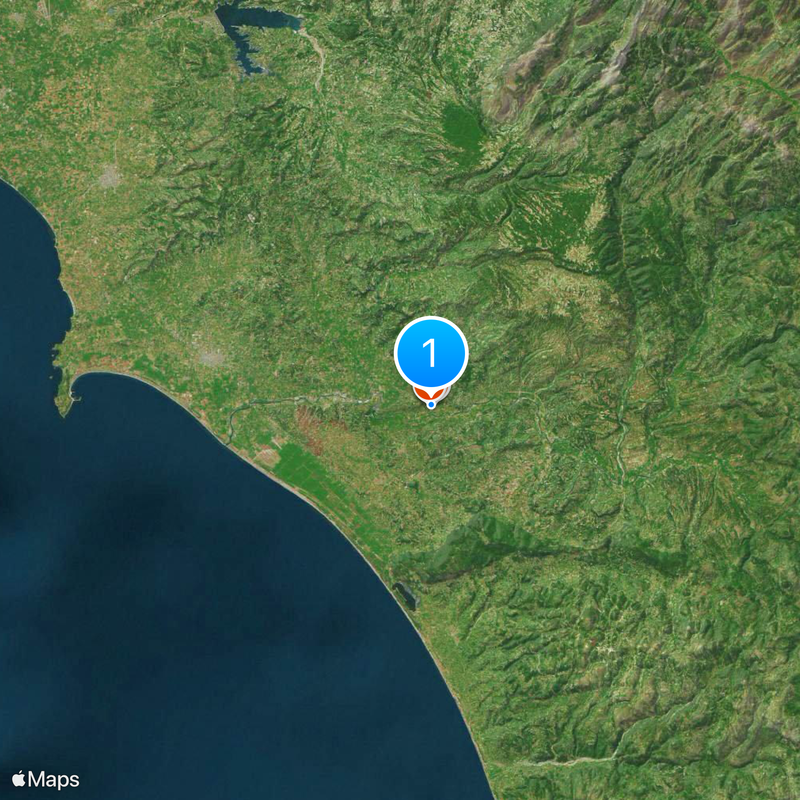
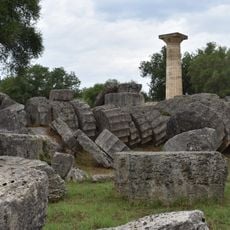
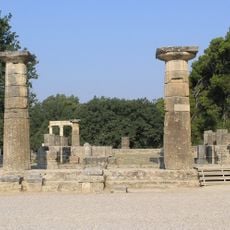
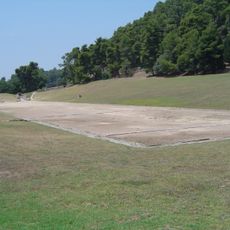
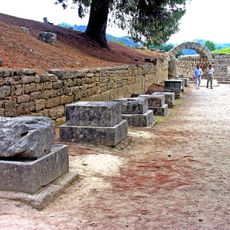
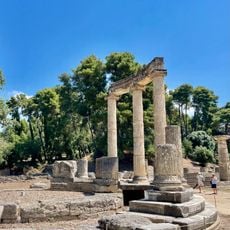
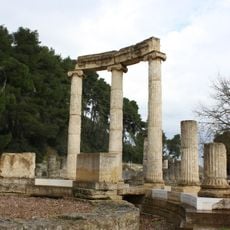
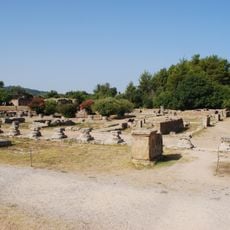
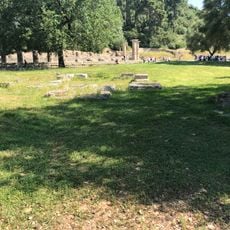
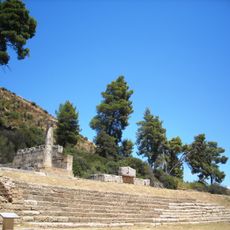
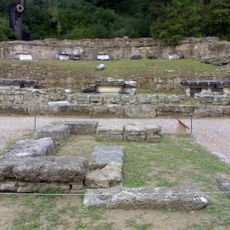
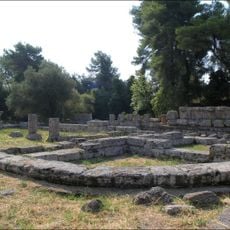
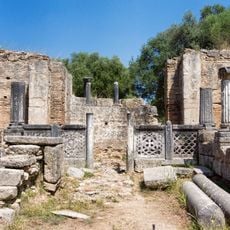
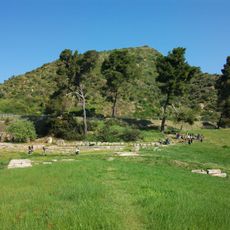
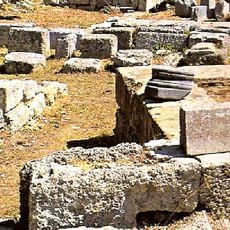
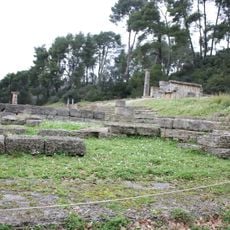
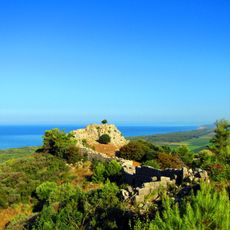
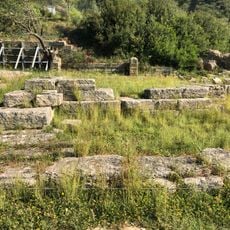
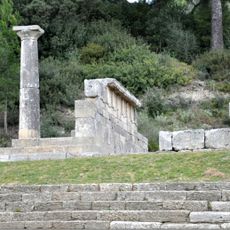
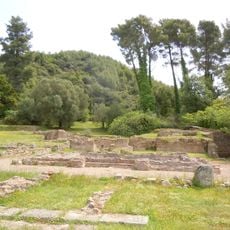
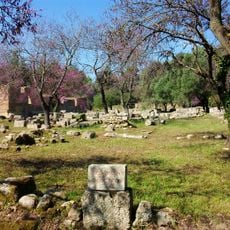
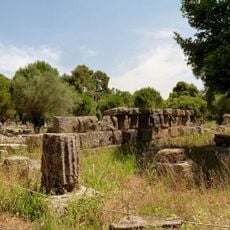
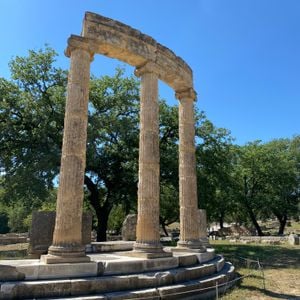
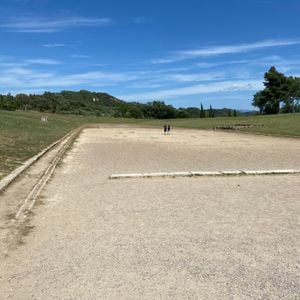
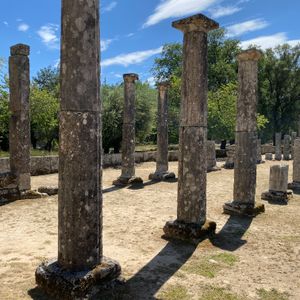
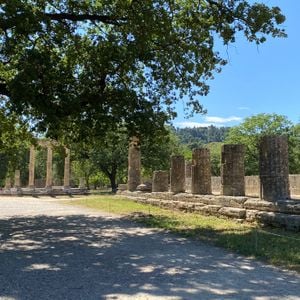
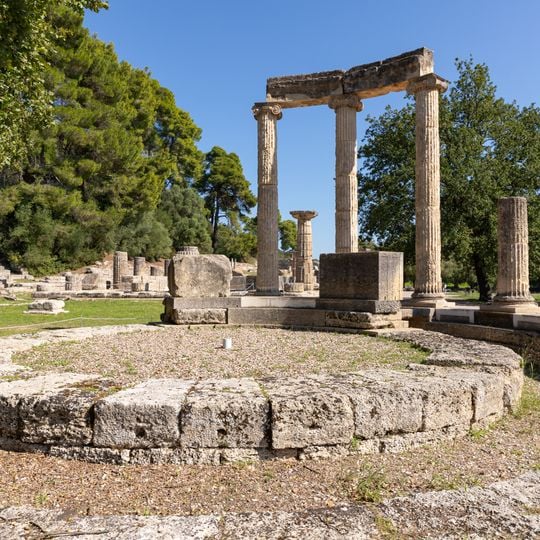
Olympia is an archaeological site in the valley of the Alfeios River, with the Kladeos bordering it to the west. The Altis precinct held the Temple of Zeus, the Temple of Hera, and the Pelopion, while the stadium east of the Echo Stoa is a field marked by start and end lines. Surviving ruins include a raised platform of weathered stone blocks, a partial colonnade of three fluted columns with carved capitals, and low walls of stacked rectangular blocks.
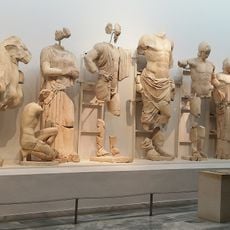
The complex developed from the 10th century BC as a cult site and became a panhellenic center through the games starting in 776 BC. Emperor Theodosius I banned the contests in 393 AD, after which earthquakes and floods buried the temples under mud.
The sanctuary's name Altis comes from the sacred precinct dedicated to Zeus, where the games were held during his festival. Pindar credits Heracles with founding the precinct beside Pelops' tomb and instituting the games. Visitors can still see the Pelopion, the tomb of Pelops, ancestor of Agamemnon and Menelaus.
The sprawling grounds require sturdy footwear and several hours to explore the scattered ruins. Shade is scarce, so a visit during cooler morning hours or late afternoon is advisable.
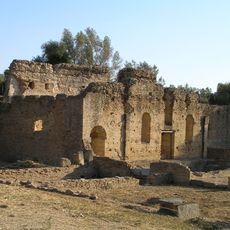
Archaeologists found tools and casting molds in the workshop of Phidias that were used to produce the gold plates for the Zeus statue. The room was later converted into an early Christian church, whose walls remain visible today.
The community of curious travelers
AroundUs brings together thousands of curated places, local tips, and hidden gems, enriched daily by 92,085 contributors worldwide.