Temple of Hera, Olympia, Doric temple in Olympia, Greece
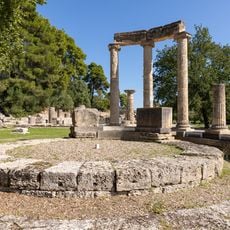
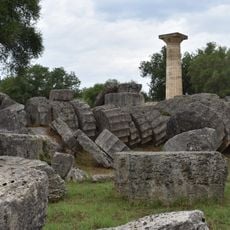
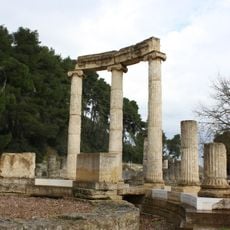
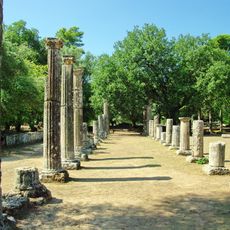
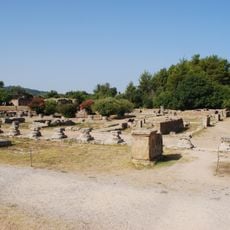
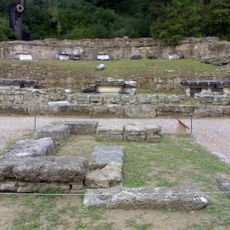
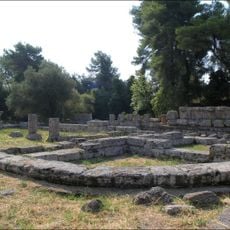
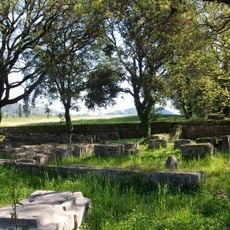
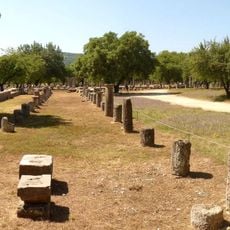
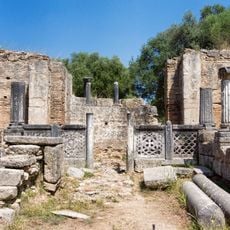
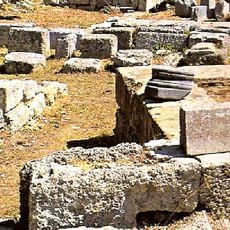
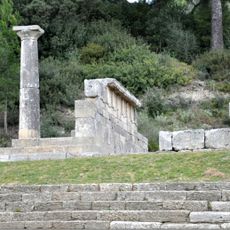
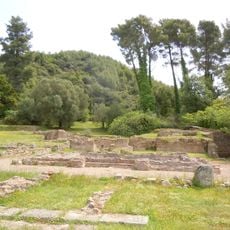
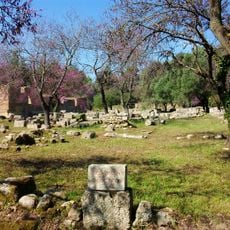
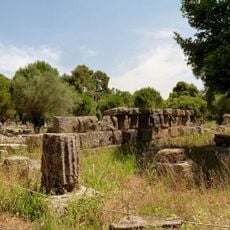
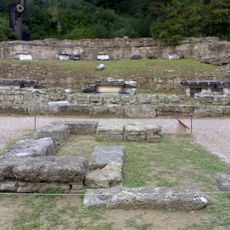
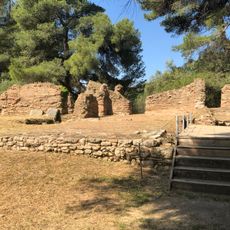
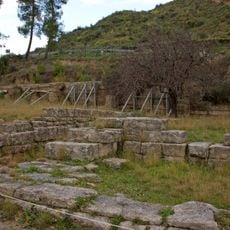
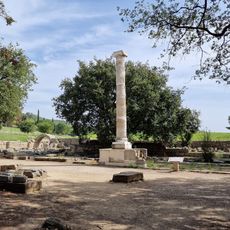
The Temple of Hera is a ruined Doric temple in the Altis at Olympia, built on a single stepped platform measuring about 50 by 18.76 m, with a peripteros of 6 by 16 columns. Two fluted columns with square capitals stand to full height, one topped by a block; between and behind them lie lower column drums, wall remnants and further stumps, with more standing columns partly visible to the left-rear. The surviving columns differ in diameter and capital form, and the walls had a stone base with mudbrick above.
Residents of Skillous constructed the building around 590 BCE, making it one of the earliest examples of large-scale temple construction in Greece. The design marked a turning point in Greek building methods through its systematic use of the Doric order.
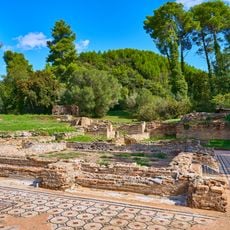
The structure bore the name of the goddess Hera and served as a repository for offerings brought by worshippers from across the Greek world. Today visitors walk among the foundations and column remains that mark this former place of worship.
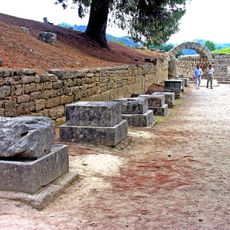
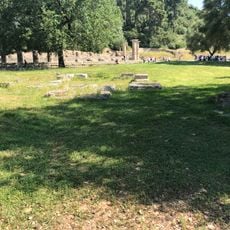
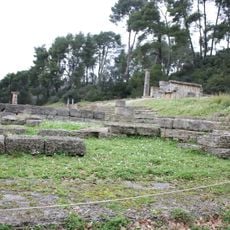
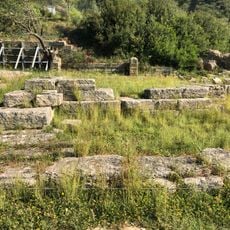
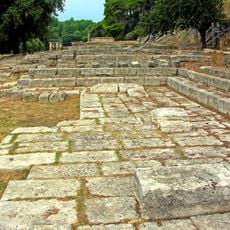
The temple sits in the northern part of the Altis, the sacred precinct, on a single stepped platform, so the columns are seen from below. Two columns stand upright, one with a block above its capital; the rest survive as drums and stumps. The ground is uneven stone and earth, and the ruins are exposed, so plan for sun and no shade.
An altar in front of the building serves as the site where the Olympic flame is lit every four years by a high priestess in a ceremony. The ritual uses a parabolic mirror to capture sunlight and ignite the flame before it begins its relay to the host city of the modern Olympic Games.
The community of curious travelers
AroundUs brings together thousands of curated places, local tips, and hidden gems, enriched daily by 93,564 contributors worldwide.