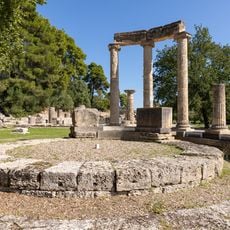
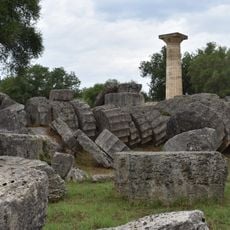
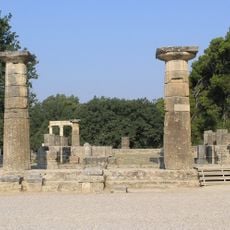
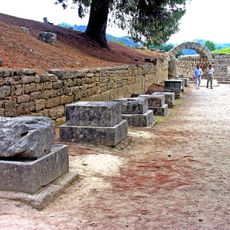
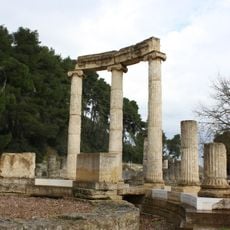
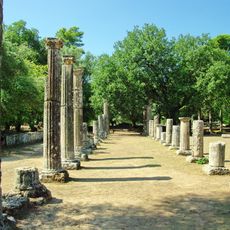
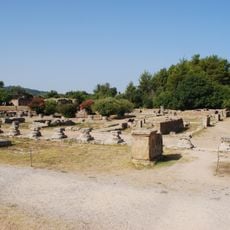
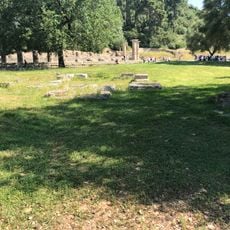
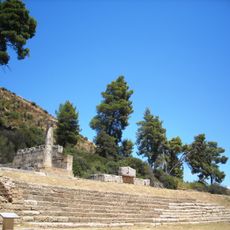
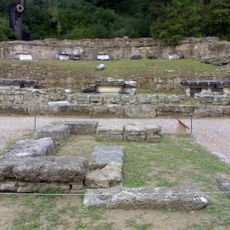
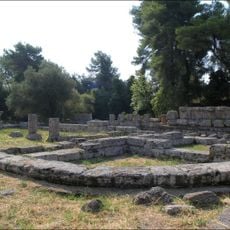
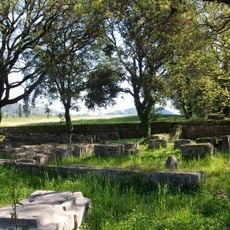
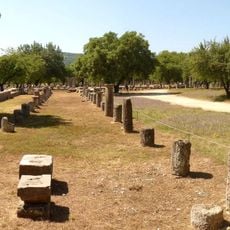
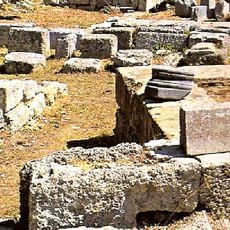
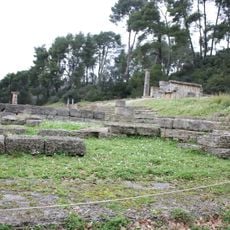
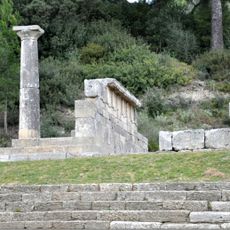
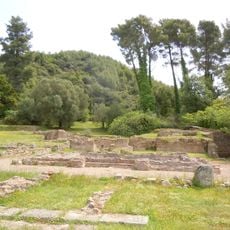
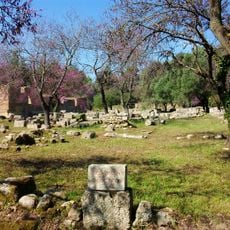
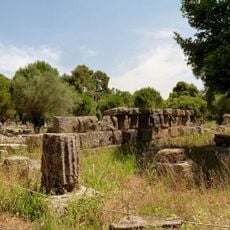
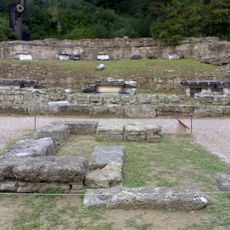
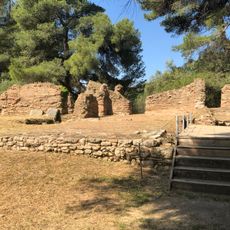
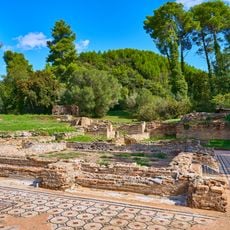
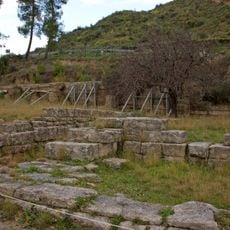
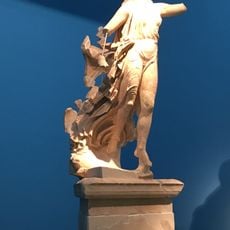
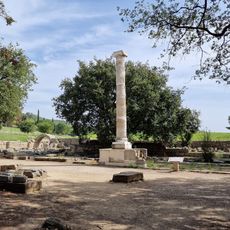
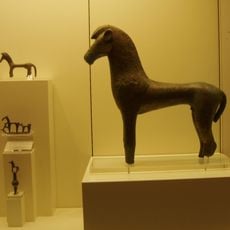
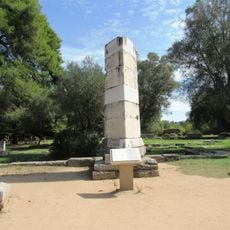
Workshop of Phidias, Archaeological site in Ancient Olympia, Greece.
The Workshop of Phidias is a rectangular building of local shelly limestone, about 32.2 m long and 14.6 m wide, west of the Temple of Zeus and outside the Altis. Its entrance faced east toward the temple; the western room had two rows of columns dividing it into three aisles, and a stone scaffold gave access to the statue at several levels.
Built around 430 BC, the workshop was erected when Phidias came to Olympia after finishing the Parthenon, to make the chryselephantine statue of Zeus for the temple completed in 456 BC. The statue was probably assembled from pieces inside the building. Around 435–451 AD a three-aisled basilica was built over its walls, the earliest known paleochristian basilica in Elis, destroyed by the earthquake of 551.
The workshop space was sized to accommodate the creation of the monumental ivory statue of Zeus, one of antiquity's most celebrated works. The proportions of the room reveal the technical challenges ancient artisans had to overcome.
Visitors should expect uneven ground and archaeological excavations that define the landscape here. The best time to visit is early morning or late afternoon to avoid heat and large crowds.
A small black-glazed oinochoe found in the workshop carries the incised inscription "ΦEIΔIO EIMI" ("I belong to Phidias") on its base. This single inscribed vessel, not scattered sherds, confirmed the building's identification. The German excavations led by Emil Kunze in 1954–1955 and the 1968 confirmation uncovered it.
The community of curious travelers
AroundUs brings together thousands of curated places, local tips, and hidden gems, enriched daily by 94,043 contributors worldwide.