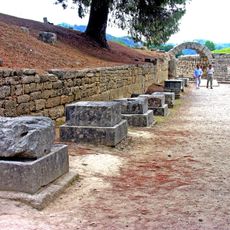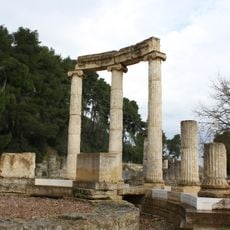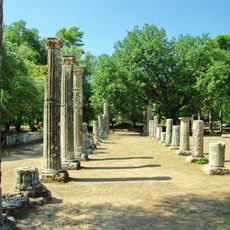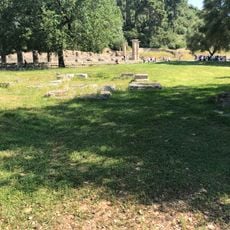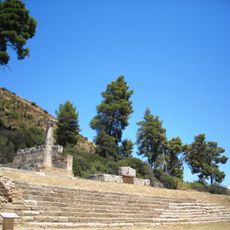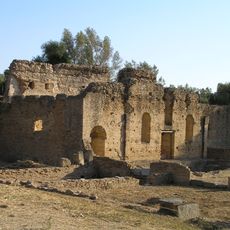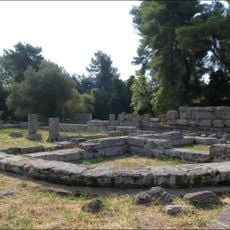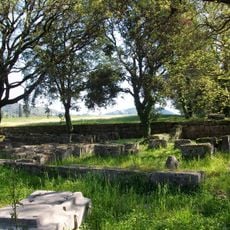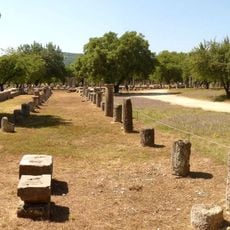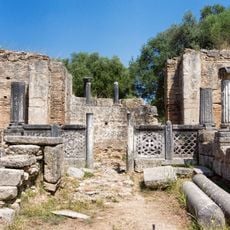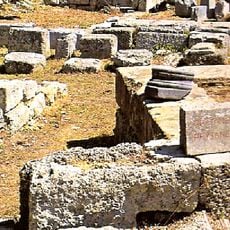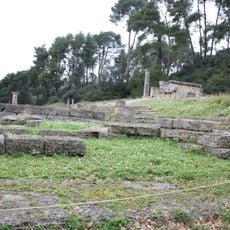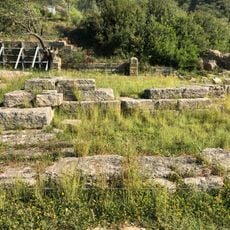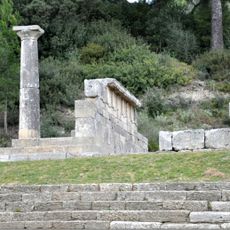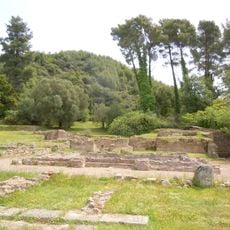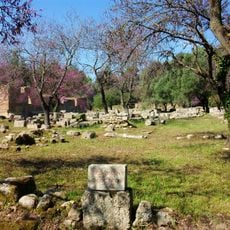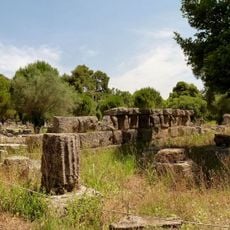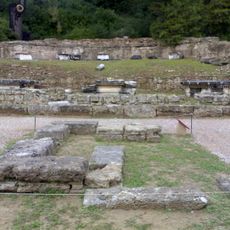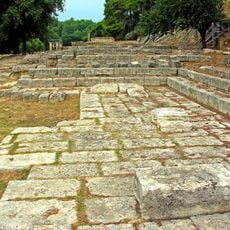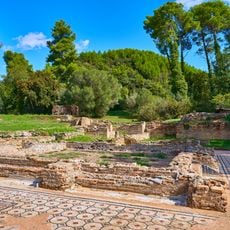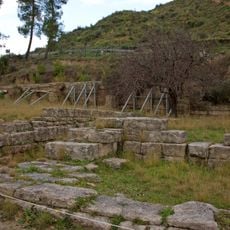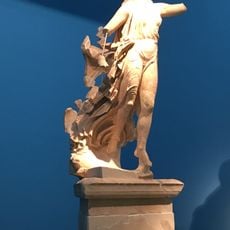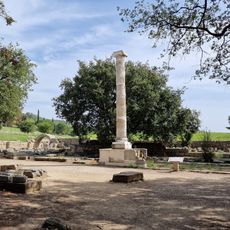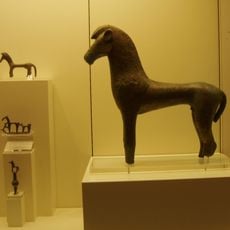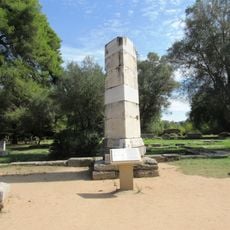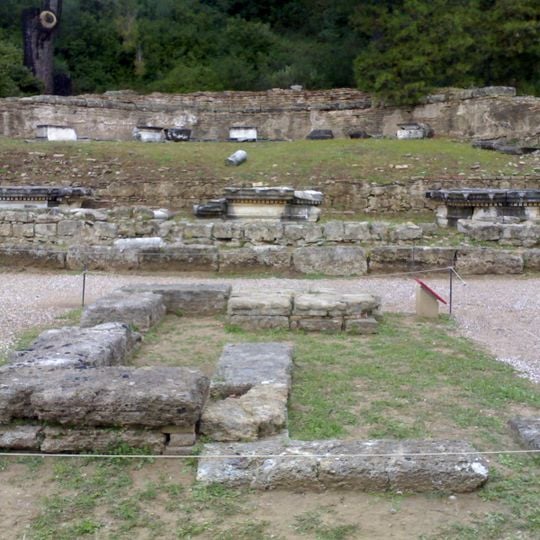
Nymphaeon of Olympia, Ancient water structure in Olympia, Greece.
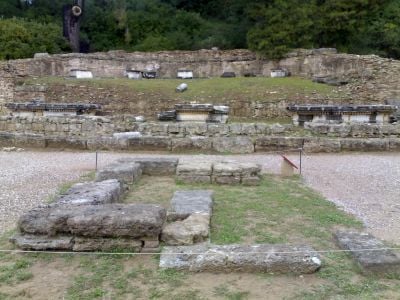
The Nymphaeum of Olympia is an ancient water structure composed of stone remains, channels, and decorative elements arranged in a semicircular layout near the Olympic stadium. The site preserves remnants of cisterns and distribution pipes that once delivered water to crowds during games held here.
The Nymphaeum was built around 160 AD by the wealthy Roman Herodes Atticus, who sought to solve water shortages during the Olympic Games. His advanced aqueduct system represented a major upgrade to the site's infrastructure.
Water held both spiritual and practical meaning at this site, with Greeks honoring water nymphs while Romans engineered a working supply system. The structure reflects how ancient societies blended worship with the need to serve large crowds.
The site is part of the broader Olympia archaeological complex and can be explored on foot with the remains relatively visible in the open. Using a map or guide before visiting helps you understand the different components and how the system worked.
The system used natural slope to move water through brick-lined channels downhill without needing pumps or machines. This simple solution was so effective it could supply thousands of people daily.
The community of curious travelers
AroundUs brings together thousands of curated places, local tips, and hidden gems, enriched daily by 91,178 contributors worldwide.