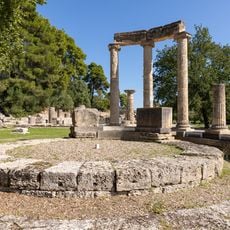
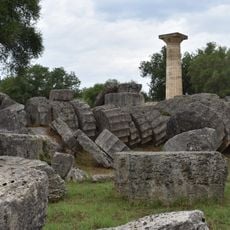
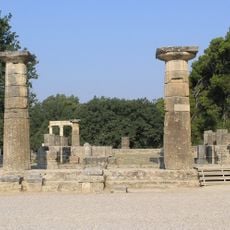
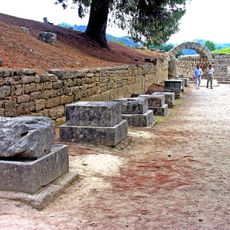
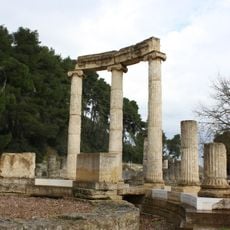
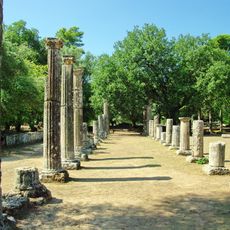
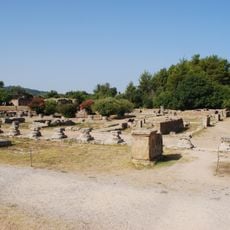
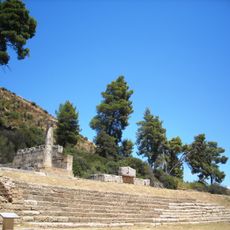
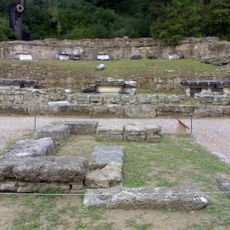
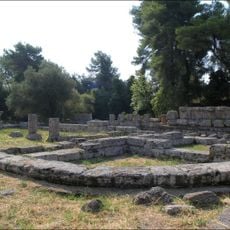
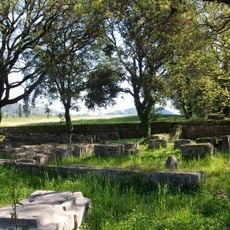
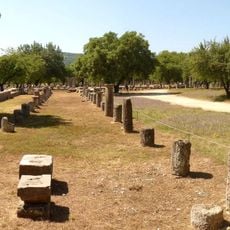
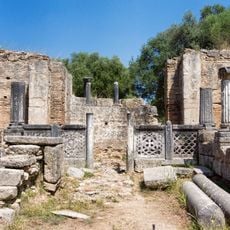
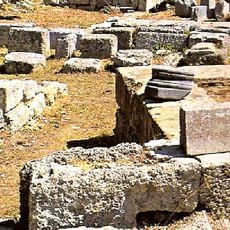
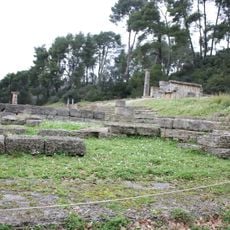
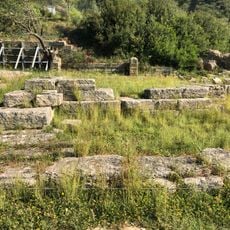
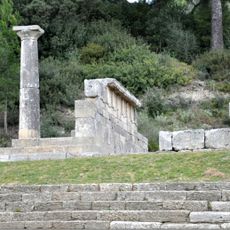
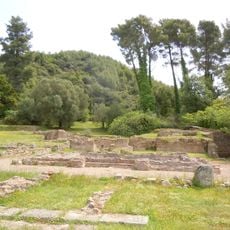
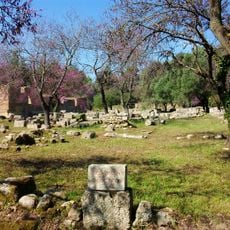
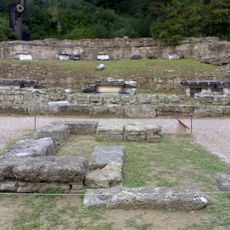
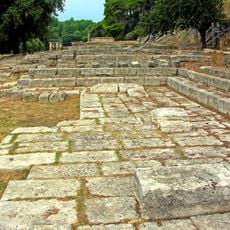
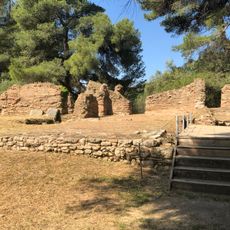
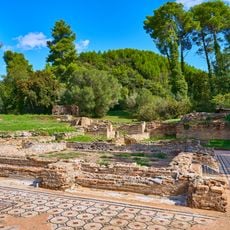
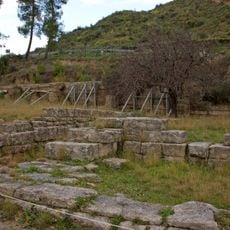
Pelopion, Archaeological altar in Ancient Olympia, Greece.
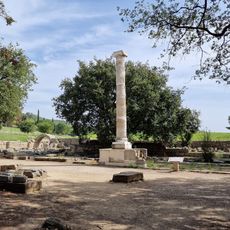
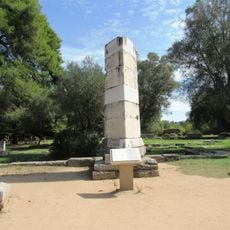
The Pelopion is an ancient cult site at Olympia, featuring an earthen mound surrounded by a pentagonal stone wall that once enclosed a sacred precinct. The structure incorporates visible foundation stones and architectural elements that reveal how the ceremonial space was organized.
The Pelopion began as a mound of ash and packed earth over a Bronze Age apsidal house, built in the post-Mycenaean period, around the late second millennium BC. In the sixth century BC it was rebuilt as a hexagonal enclosure of porous stone with a propylon, the Pelopion II, above the earlier circular Pelopion I. It served as an altar into Roman times, when the propylon was enlarged, until it fell into disuse with the advent of Christianity.
The mound of ash and packed earth served as an altar, and a black ram was sacrificed on its peak each year in honour of Pelops. Priests cut steps into the mound to reach the top, a form of earthen altar older than the stone altars at Delphi and the Acropolis of Athens.
The remains lie within the Altis complex alongside other ruins, so bringing a site map helps with navigation and understanding the layout. Take time to walk around the structure and observe the foundation stones from different angles to grasp its original form.
The altar was a mound of ash and packed earth, not stone, and priests cut steps into it to reach the top. This earthen form was already ancient in the Archaic period, unlike the stone altars at Delphi and the Acropolis of Athens. Excavations found its first phase resting on the foundations of an apsidal Bronze Age house.
The community of curious travelers
AroundUs brings together thousands of curated places, local tips, and hidden gems, enriched daily by 94,032 contributors worldwide.