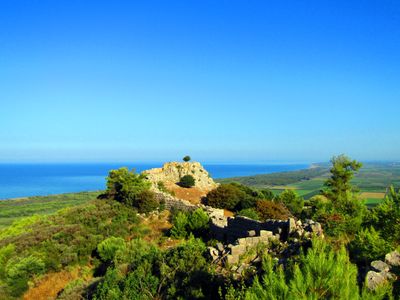
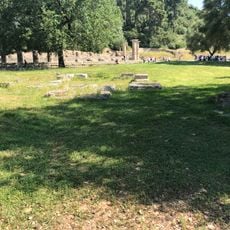
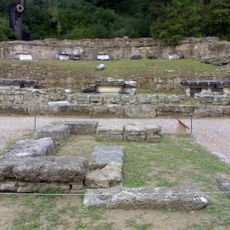
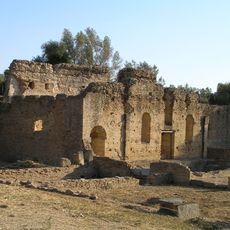
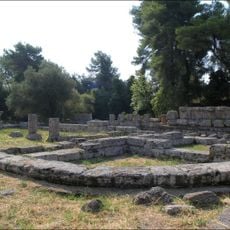
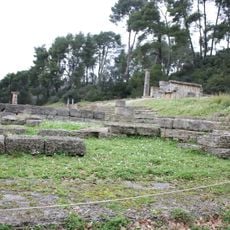
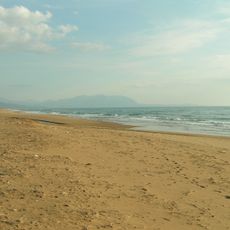
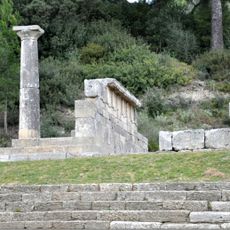
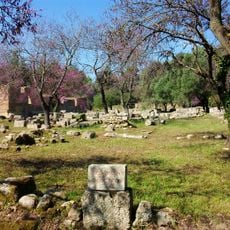
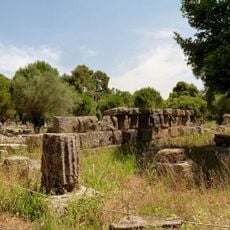
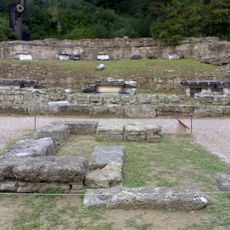
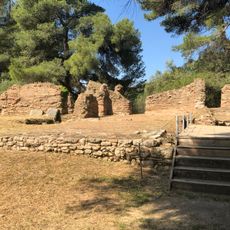
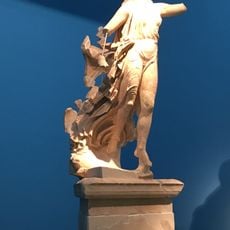
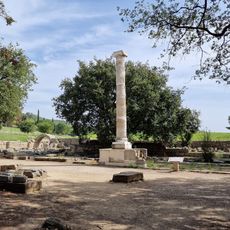
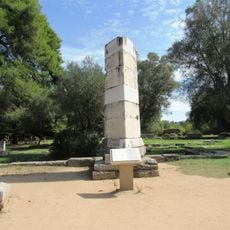
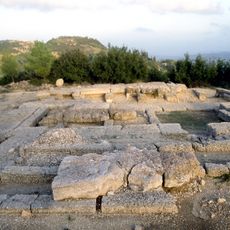
Samiko, Archaeological site at Kato Samikon, Greece
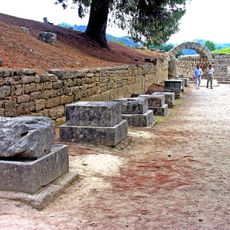
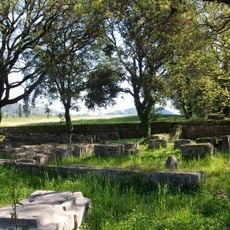
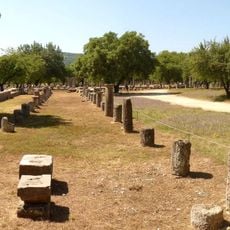
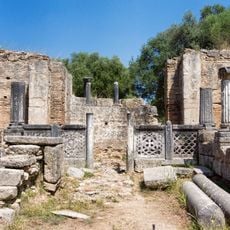
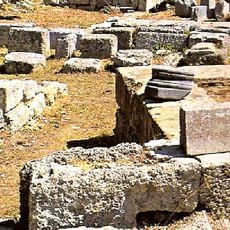
Samiko is the acropolis of ancient Samicum, on Kleidi Hill about 2 km from Kato Samiko, at 200 m on the last spur of Mount Lapithas. Its walls, roughly 1,600 m around and 2 m thick, enclose a triangular sloping area; they are built of huge titanolithos blocks in isodomic masonry and survive up to 5 m high. Three small windows with jambs and bar holes remain intact.
Samicum was identified with Homer's Arene, near the mouth of the Minyeius, and Strabo says the name Samos came from its hilltop site. The Aetolian Polysperchon used it against the Arcadians, and Philip V of Macedon took it in 219 BCE. Its sanctuary of the Samian Poseidon, ringed by wild olives, was the centre of the six Triphylian cities and was overseen by Macistus.
The temple of Samian Poseidon stood by the coast in a grove of wild olives and served as the meeting place of the six Triphylian cities, which sent delegates and funded its upkeep. During an annual festival, a sacred truce called the Samian ekecheiria was proclaimed and nine black bulls were sacrificed to Poseidon Kyanochaites. The priestesses of Samia wove the god's linen and cotton robe.
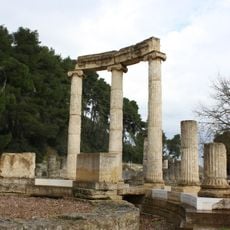
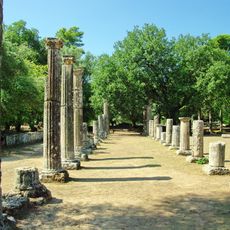
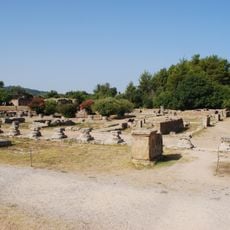
The site is best explored on foot, and sturdy footwear is recommended due to uneven terrain and loose stones. Spring and autumn offer the most comfortable conditions for walking through the ruins and examining the stonework in detail.
The two caves of the Anigrides and the Atlantides still open just above the surface of the Kaiafas lagoon, reachable only by boat. General Gordon, visiting in 1835, found water distilling from the rock in one of them, carrying pure yellow sulphur. Bathers once prayed in the cave before wading the Anigros river.
The community of curious travelers
AroundUs brings together thousands of curated places, local tips, and hidden gems, enriched daily by 94,607 contributors worldwide.