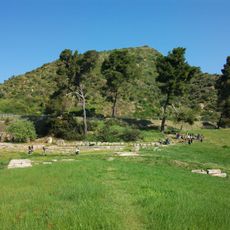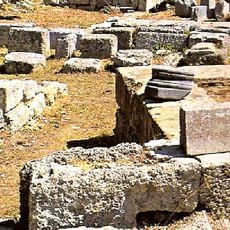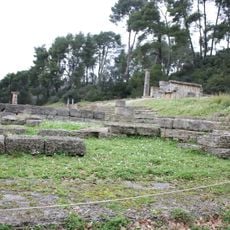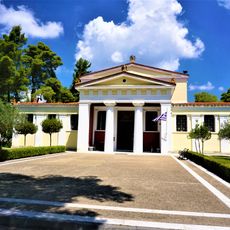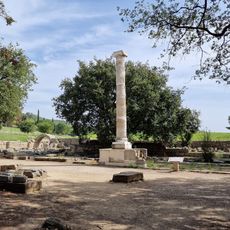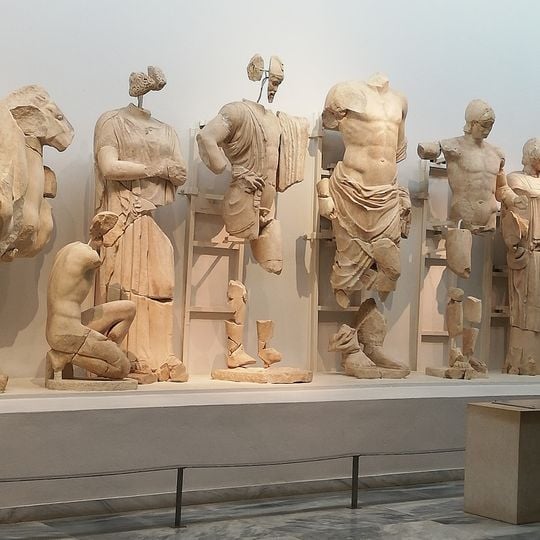
Archaelogical Museum of Olympia, Archaeological museum in Ancient Olympia, Greece
The Archaeological Museum of Olympia is a building with twelve exhibition halls displaying artifacts spanning from prehistory through the early Christian period. The rooms are arranged by historical era and present sculptures, pottery, metalwork, and other finds from the region.
The first museum building was completed in 1888 on the Drouva hill, funded by the banker Andreas Syggros with 220,000 drachmas and designed by Wilhelm Dörpfeld and Friedrich Adler; it was the first Greek museum outside Athens. Damaged by an earthquake in 1954 and too small for the growing collections, it was replaced by a new building designed by Patroklos Karantinos, begun in 1966 and inaugurated in 1982 by culture minister Melina Mercouri. The old building has housed a museum of the history of the ancient Olympic Games since 2004.
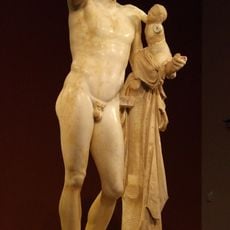
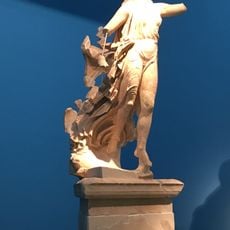
The collection displays statues and reliefs from different periods, including the famous Hermes sculpture and pieces depicting athletic contests. Visitors encounter how ancient artists represented gods and the human form in stone and bronze.
Visitors should plan several hours to explore the different halls carefully and read the object labels. It is advisable to arrive early in the day since the rooms can get crowded, and comfortable shoes are important because there is considerable walking involved.
The bronze collection is among the most important in the world, not the largest. It includes a miniature bronze horse and a bronze discus (IvO 240/241) awarded to an Olympian in 241. A cast bronze griffin's head taken from the museum between 1930 and 1936 reached the Metropolitan Museum of Art, which agreed to return it in 2025.
The community of curious travelers
AroundUs brings together thousands of curated places, local tips, and hidden gems, enriched daily by 92,798 contributors worldwide.